Archive for April, 2026

Nyström HUM 2 Sensory Synth Sneak Preview


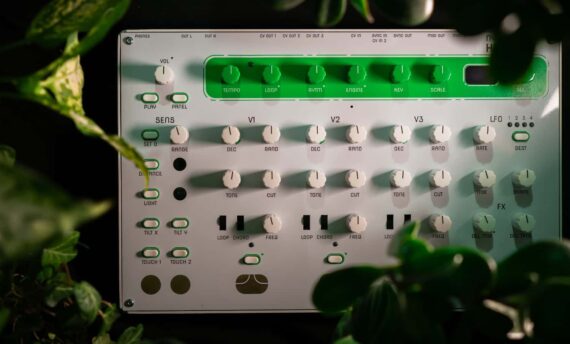
Developer Albert Nyström shared this preview of the Hum 2 3-Voice Sensory Synth.

The HUM 2 is a multi-timbral synthesizer designed for expressive performance and sonic exploration. It features six built-in sensors: Distance, Light, Tilt X/Y and Touch 1/2, which are mappable to any knob for interactive modulation.

The synth offers three independent voices that allow you to create complex textures and control three separate sequences simultaneously.
Features:

  • Multitimbral Architecture: Three voices with the ability to assign independent synthesis engines, melodies and parameters to each voice. Each voice is controlled with touchpads for expressive control.
  • Synthesis Engines: Features a wide range of synthesis modes, including Subtractive synthesis, FM, Wavetables, Organ and experimental engines.
  • Expressive Sensor Integration: the synth has six built-in sensors: Distance, Light, Tilt X/Y and Touch 1/2, mappable to any knob for interactive modulation.
  • Sequencing: Create generative patterns or fixed loops with three independent 64-step sequencers. Generated notes are quantized to one of the 17 scale options.
  • FX & Modulation: Features 4 LFOs mappable to any knob. Independent sends to the built in Delay, Reverb and Overdrive.
  • Connectivity: Features 3 CV outputs, 2 CV inputs. Sync In/Out, MIDI in/out. Headphone out, L/R line out and MIDI + Audio over USB

Details on pricing and availability are to be announced.
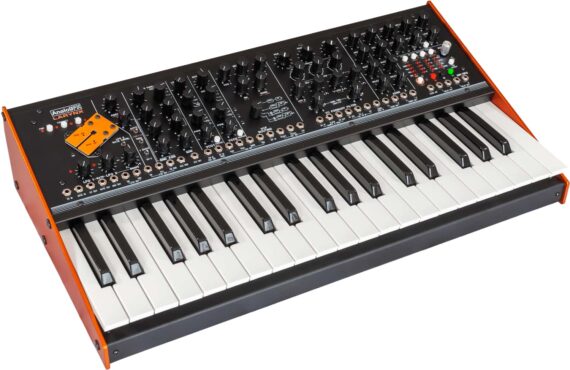
 

AnalogFX Introduces Larynx Semi-Modular Keyboard Synthesizer


Ahead of Superbooth 2026, AnalogFX has introduced the Larynx, a new semi-modular monosynth keyboard, based on the ‘DNA’ of their SER-2020 modular system.

The Layrnx features a unique vocal sound architecture, a premium 37-key keybed, Eurorack compatibility and deep analog modulation options.

An example of the Layrinx synth voice in action:

Features:

  • Sound Design
    • 2 VCOs + Sub Oscillator
    • Ring Modulator & Noise
    • 3 VCFs
    • 2 ADSR + 2 LFO
    • Sample & Hold
    • Auto Glide
  • Performance & Connectivity
    • 37-key keybed with aftertouch
    • Touch’n’Bend performance control
    • Real-time modulation across the entire signal path
    • Arpeggiator & Sequencer
    • Stereo delay
    • MIDI + USB MIDI
    • MPE support
    • Expression / hold pedal
    • Headphone + line out
  • Eurorack Compatible
    • CV inputs and outputs

Here’s a hands-on demo of the SER-2020 synth voice:

The AnalogFX Larynx is available now to pre-order for €929.00 Euro (normally €1,032.23).


The Bob Moog Foundation Expands Their Archives With Unique Rensitron Keyboard


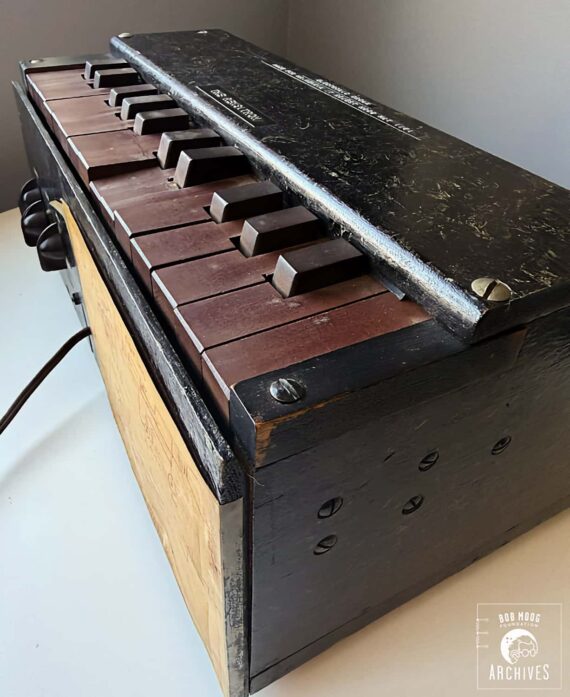
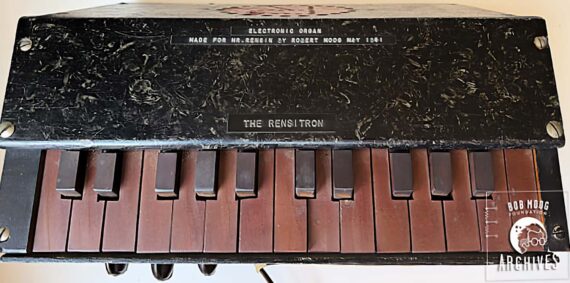
The Bob Moog Foundation has announced another unique addition to their Archives – Bob Moog’s earliest known keyboard instrument design, the Rensitron.

Moog founder Bob Moog created the Rensitron, a tube-based electronic organ, when he was 16 years old. It was commissioned by his music teacher at Bronx High School of Science, Hymen Rensin.

“The Rensitron offers a glimpse into some early ideas that would later shape Bob’s approach to electronic instrument design,” said Michelle Moog-Koussa, Executive Director of the Bob Moog Foundation. “It’s remarkable to see that level of creativity and technical aptitude already present at sixteen years old.”

In addition to the Rensitron, a check dated May 21, 1951 has been added to the archives. It is in the amount of $10.00, made out to Robert Moog from Rensin for payment for the Rensitron. The check is endorsed on the back by Moog. Moog’s hand-drawn schematic of the Rensitron also accompanies the instrument.

Here’s what they have to say about the unique piece of Moog history:

“The Rensitron is a vacuum tube-based two octave electronic organ, featuring hand-carved wooden mini-keys and a built-in 5-inch speaker with a hand-made stylized “R” speaker grille, all encased in a slanted wooden cabinet.

The front panel has controls for output volume, tone, and pitch using the classic R.A. Moog chicken head knobs, a preview of things to come. The top of the instrument features a Dymo Labeler tape that reads, “Rensitron,” along with a second label reading, ‘Electronic Organ Made For Mr. Rensin By Robert Moog May 1951,’ both in the same Dymo Labeler tape style as the early R.A. Moog modular systems.”

The Rensitron is the latest in a long line of rare, vintage Moog instruments added to the Bob Moog Foundation Archives, including an R.A. Moog Co. Model 201 theremin from 1954, an R.A. Moog Troubador theremin from 1962, two Moog modular synthesizers from 1967, Herb Deutsch’s Melodia theremin from 1961 and his R.A. Moog Co. Minimoog from 1971, a Musonics Minimoog, Gary Wright’s Moog Liberation keytar, the Moog Apollo prototype, the first Minimoog Voyager ever sold, and more.

The Bob Moog Foundation Archives is a vast and growing collection of over 15,000 pieces of historical materials related to the life and work of Bob Moog and those who worked with him. The Foundation protects and preserves these items to share with researchers, journalists, and museums, as well as featuring them in their own Moogseum, located in downtown Asheville, NC.

The Bob Moog Foundation is an independent non-profit organization, dedicated to carrying on the innovative legacy of synthesizer pioneer Bob Moog.

You can find out more about the Foundation at their site.