Roland Launches Bridge Cast X Dual Bus Streaming Mixer and Video Capture


Roland’s Bridge Cast X adds video support to the dual-bus USB-C gaming/streaming mixer.

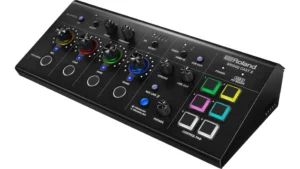
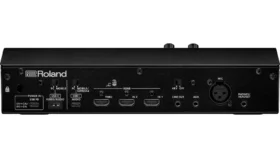
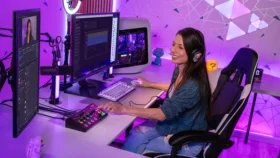
2024 NAMM Show: Roland clearly thinks that it’s on to something with its Bridge Cast mixer concept, because it’s just launched a new model in the shape of the Bridge Cast X. The enhanced version trumps the original Bridge Cast by featuring HDMI ports and assignable control pads.

Launched just over a year ago, the original Bridge Cast is a dual-bus USB-C audio streaming interface and mixer that’s suitable for online gamers. It enables you to create two mixes – one for you and another for your online audience – and contains vocal transformer effects derived from Roland’s VT series. There’s also an aux input for music playback, sound effects and an XLR input for high-quality mics.

Bridge Cast X offers all of this but adds video into the mix as well. There are two HDMI inputs, plus an HDMI Thru connector to feed an external gaming monitor. So, you can combine computers, consoles and cameras in a way that suits your workflow.
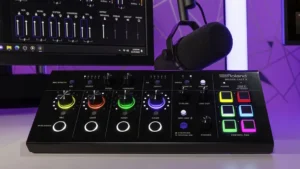
This new model also sports six assignable control pads that can be used to trigger sound effects, background music, OBS commands and more.

In addition, you can find plenty of music and sound effects on Roland’s BGM Cast platform. Anyone with a Roland Account can access 36 background music tracks and 16 sound effects, and signing up to at least a Roland Cloud Core membership ($3 a month) unlocks an ever-growing library of content.

There’s also the Bridge Cast app, where you can tweak the audio processing and voice transformer settings, select game EQ presets, re-assign the hardware controls and save/recall different setups for specific games and audiences.

Bridge Cast X is available now priced at $499.99 via Amazon. Find out more on the Roland website.
Nord Grand 2 Updated With Hammer Action Keyboard & More Debuts Ahead Of 2024 NAMM Show

A new Kawai keybed makes the Nord Grand 2 feel like a piano, but with advanced layering options, it can also sound like a synth – ‘A genuinely unique experience’

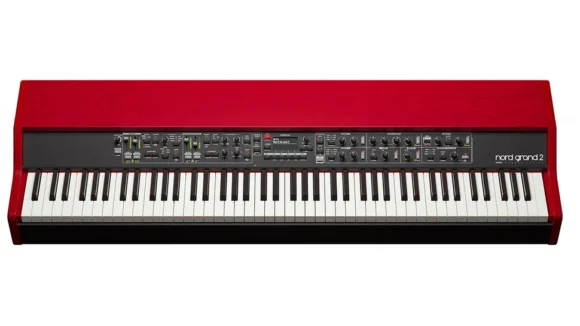
Ahead of the 2024 NAMM Show, being held January 25-28, 2024 in Anaheim, California, Clavia has announced the Nord Grand 2, with the latest generation premium Hammer Action keybed from Kawai.

Here’s what they say about it:

“We are happy to introduce a new generation of our acclaimed Grand series, the Nord Grand 2!

The Nord Grand 2 features the latest generation premium Hammer Action keyboard from Kawai. Combining the responsive feel of an acoustic grand piano with our world renowned Sound Libraries and a tactile user interface, the sleek and elegant Nord Grand 2 offers a genuinely unique experience”.

Clavia has so many great Nord keyboards, each of which is designed for a slightly different kind of player, that it would be hard to classify one as the definitive ‘flagship’. The Nord Grand is certainly in the mix, though, and it’s now been updated to version 2.

This is no mere software revision, either: the Nord Grand 2 has a new and improved Kawai responsive hammer keybed with triple sensors for accurate tracking of hammer movement. As such, you can expect the instrument to feel even more like an acoustic piano.

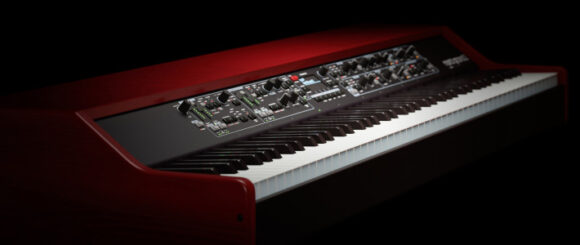
Advanced layering options have also been added: you can now stack two pianos and two sample synths (as opposed to one of each on the original Nord Grand), and you get dedicated LED faders for each layer. There are further easy-access knobs and buttons for configuring layers and splits, adding effects or transposing.

Each layer has its own dedicated effects section (there are new reverb, delay, amp sim and modulation processors), and you can set up to seven split points across the keyboard. These are indicated with LED lights, and Split Point Crossfades enable you to transition smoothly between them.

This being a Nord instrument, it almost goes without saying that the sounds will be top-notch. The grands, uprights and electric pianos come from the Nord Piano Library, also benefiting from new features such as Dynamic Compression and Unison.

The Sample Synth section has almost twice the memory of the one in the original Nord Grand, and includes a raft of new and updated sounds. You can control the attack, decay/release and dynamic velocity response, while the Soft and Bright settings give you another fast tone-shaping option.

You can expect greater realism from the wind, brass and string instruments, too, with a Tru-Vibrato feature promising to accurately model each one’s vibrato characteristics. Unison, meanwhile, can create ensemble-type sounds by blending multiple sample voices.

Given the continued absence of pitch and mod wheels, it’s clear that Clavia is still targeting the Nord Grand 2 at pianists rather than deep synthesists.

The Nord Grand 2 price around $3,699/£3,599. Find out more on the Nord Keyboards website.


Korg Reissuing Rare PS-3300 Semi-Modular Polysynth


One of the rarest and most coveted synthesizers in music history is coming back.

We thought that Korg might have been done with its pre-NAMM announcements, but the company had just added a ‘PS’ to its list of releases.

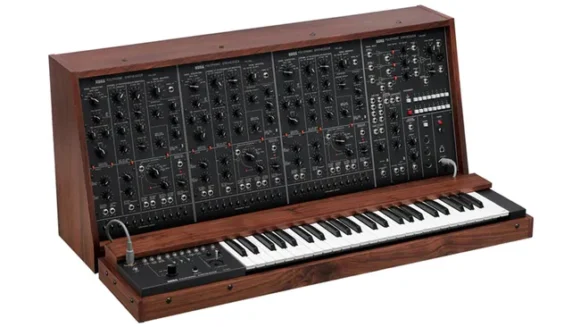
Today, Korg has announced the new product is a full-scale reissue of the rare PS-3300, an ultra-rare synth that Korg produced between 1977 and 1981. In fact, only 50 were ever made, and far fewer than that still exist today. In keeping with this history of scarcity, Korg will be making its new PS-3300 to order, and with an anticipated price of $13,000.

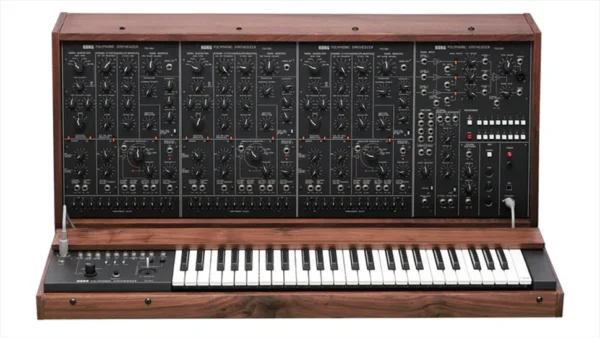
The new semi-modular PS-3300 FS will have 49 keys and 49-voice analogue polyphony, up from 48 of each on the original. There are three PSU-3301 synth units in there – effectively three of Korg’s smaller PS-3100 synths – plus a mixer and utility section.

What makes the PS-3300 so special is the fact each key can access three oscillators plus filters, envelopes and amplifiers, giving you 147 analogue synth voices to work with.

There’s also a 3-band resonator that can be used to emphasise three frequency bands. On the original PS-3300, this used a cadmium sulphide circuit, but this has been replaced with modern components to comply with regulations.

Each PSU-3301 unit has its own microtuning knob, and a new 16-program, 16-bank memory function means that you have 256 patch storage slots. USB/MIDI jacks are another modern nicety, as is a dedicated librarian app for easy preset management.

A non-playable prototype of the PS-3300 FS will be on display at the NAMM Show, with production on orders set to take place later this year.

“Bringing back to life these legendary machines is not only a process of reproducing circuits and sounds, but also of learning and embracing the essence of the philosophy and development of synthesizers,” notes Yoshihito Yamada, Chief Engineer of Korg Analog Synthesizers. “Through this project I was able to relive the history of Korg and a critical moment in the evolution of our synthesizers. This was an extremely valuable experience that provided an opportunity for Korg’s philosophy and technology to be carried on to future generations.”

Suddenly, that price tag doesn’t sound so ridiculous.

Features:

  • 49 keys / 49 voice analog polyphony (the original model had 48 keys / voices)
  • 3 Layers: The PS-3300 consists of three synthesizer units (PSU-3301) and a mixer & utility section (PSU-3302)
  • Three independent oscillators, plus multiple filters, envelopes and amplifiers for every note on its keyboard, for a total of 147 synth voices of raw analog power
  • Microtuning knob x12 on each PSU-3301 unit
  • New panel memory function (16 programs per bank and 16 banks = 256 slots)
  • Modernised for contemporary music use with the inclusion of USB / MIDI jacks, and a dedicated librarian app for easy preset management
  • Semi-modular
  • 3-Band Resonator: Three frequency bands can be emphasised, a feature unique to the PS-3300 (original was a Cadmium sulfide circuit, but it was replaced with modern components for safety and to comply with regulations)
  • Keyboard unit (PS-3010) included

Find out more about the PS-3300 FS and sign up to receive updates on the Korg website.