Soundcraft Launches Signature Plus Series Analog Connected Mixing Consoles


Soundcraft Signature Plus mixers pack Lexicon effects and dbx compression into an analogue console from $799.

Soundcraft has announced the Signature Plus Series, a new range of analogue mixing consoles built for modern production that succeeds the company’s Signature line. As the next generation of the acclaimed Signature Series, it adds more professional workflows and flagship features, aimed at studio engineers, live performers, podcasters and content creators.

There are four models, offering 12, 16, 22 and 32 channels configurations, and Soundcraft says the feature set is consistent across the range, meaning you don’t lose functionality by opting for a smaller desk. The 12- and 16-channel models are equipped with rackmount ears.

The channel strips are built around Soundcraft’s Ghost mic preamps, which the company says deliver smooth overload behaviour and rich harmonics while providing up to 65db of gain. These are paired with Sapphyre EQ and dbx one-knob compressors with harmonic enhancement, and insert points are onboard for patching in outboard gear.

Signature Plus’s headline feature is the built-in Lexicon hardware effects processor, which Soundcraft claims is unique at this price point, and now features both preset storage and Tap Tempo. The effects available span multiple styles of reverb, delay, and modulation effects.

Soundcraft has also redesigned the layout of the mixers, separating the input and output sections to make navigation more intuitive. Colour-coded buttons and what the company is calling “squircle” knobs are designed to make adjustments quicker and more accurate in low-light and high-pressure environments.

Recording and playback are handled by a 4×4 USB-C interface capable of operating at up to 192kHz. USB returns can be routed into channel strips like any other input, or sent directly to the main output for playback between acts or DJ sets.

In addition, there are four aux sends with a Mix to Auxes function, a Listen bus for monitoring individual channels without disturbing the main mix, and Talkback To routing. Headphone and control room outputs each get configurable monitoring options covering mute, dim and mono sum, while a QR code on the mixer links to manuals, training videos and support resources.

“Developing this new series was first and foremost driven from listening closely to what engineers and content creators needed,” HARMAN Product Manager Scott Wood said in a press release.

“We included all the features that users can most often utilize and added many others they always wanted to. With this lineup and this feature-set, users have everything they need to bring out their best work.”

Soundcraft Signature Plus 12

Soundcraft Signature Plus 16

Soundcraft Signature Plus 22

Soundcraft Signature Plus 32

The Soundcraft Signature Plus 12 is priced at £699/$799, the 16 at £799/$899, the 22 at £1,099/$1,199 and the 32 at £1,299/$1,499.

Find out more on Soundcraft website.


The Bob Moog Foundation Announces Summer Raffle For Vintage Memorymoog Plus and Moog Muse Synthesizers


The Bob Moog Foundation has announced its latest fundraising raffle for a vintage Memorymoog Plus synthesizer and a brand new Moog Muse synthesizer. The Memorymoog Plus, serial number 3067, will be awarded to the first prize winner, and the Moog Muse will be awarded to the second prize winner. The raffle began last week, and ends at 11:59 pm (EDT) on Monday, September 21, 2026. Tickets are $25 each, five for $100, 12 for $200, or 35 for $500. Tickets can be purchased at this link.

The Memorymoog Plus was Moog Music’s 1983 follow-up to the original 1982 Memorymoog, adding an integrated sequencer, CV outputs, and MIDI In/Out/Thru to the instrument. The Memorymoog was one of Moog’s first production instruments to offer programmable patches saved to a memory bank, enabling users to recall up to 100 pre-programmed sounds instantly.

The synthesizer boasts a massive sound, made possible by six-voice polyphony with three voltage-controlled oscillators per voice like the Minimoog Model D — a distinguishing topology of the Memorymoog that set it apart from its two-oscillator-per-voice competitors like the Sequential Prophet-5, Oberheim OB-Xa and Roland Jupiter-8.

This Memorymoog Plus, valued at $12,500, has the Bell Tone Synth Works Liberator F-RAM Upgrade installed, which eliminates the need for a battery. It comes with an Anvil flight case and an original Memorymoog manual, written by industry luminary Dominic Milano. It has been serviced by Rob Rosen of Rosen Sound, and is in excellent physical and technical condition.

“The Bob Moog Foundation is proud to be offering two massive synthesizers representing a continuum of Moog ingenuity over a 40-year period,” noted Michelle Moog-Koussa, Executive Director of the Bob Moog Foundation. “We are especially pleased to provide an opportunity to win these synths to two very lucky winners.”

The Moog Muse, valued at $3,500 and originally released in the summer of 2024, is a groundbreaking synthesizer that combines vintage character with modern technology. Featuring cutting-edge digital controls, an array of creative effects like Diffusion Delay and modulation, plus tools including an arpeggiator and sequencer, this versatile synthesizer offers a flexible digital control surface, perfect for quickly dialing in precise parameter adjustments. Its rugged build quality makes it equally at home on stage or in the studio.

The Muse’s integrated OLED programmer, along with an expansive array of 44 knobs, 16 sliders, and 129 buttons, allows for dynamic interaction with every parameter, giving the player granular control over tone, modulation, and effects. With 61 piano-size semi-weighted keys that offer rapid responsiveness and durability, this synthesizer delivers a tactile experience that can endure the rigors of touring. Connectivity options, including dual back-panel control voltage in/out, ensure that the Muse integrates seamlessly with both traditional analog setups and modern digital rigs.

All proceeds from the fundraising raffle benefit the Bob Moog Foundation’s three hallmark projects: Dr. Bob’s SoundSchool, the Bob Moog Foundation Archives, and the Moogseum.

The Bob Moog Foundation fundraising raffle for a vintage Memorymoog Plus synthesizer and a brand new Moog Muse synthesizer is open now, and runs through Monday, September 21, 2026. Tickets are $25 each, five for $100, 12 for $200, or 35 for $500. Tickets can be purchased at this link.

For more information about the Bob Moog Foundation, visit the foundation website.

Bjooks Celebrates 909 Day With Shipment of BEAT GEMS: Drum Machines in Modern Music


Bjooks is celebrating 909 Day with a “major milestone for drum machine lovers”: physical copies of BEAT GEMS: Drum Machines in Modern Music will begin shipping this month.

The celebration also includes an early look at the book’s TR-909 feature for PATCH & TWEAK CLUB members, as well as new online content exploring the people and machines behind electronic music.

BEAT GEMS Starts Shipping

Written by electronic instrument historian Oli Freke, BEAT GEMS: Drum Machines in Modern Music is a 336-page journey through six decades of drum machines, rhythm boxes, and grooveboxes, from early home-organ accompaniment to the machines that ultimately shaped hip-hop, house, techno, and modand modern electronic music.

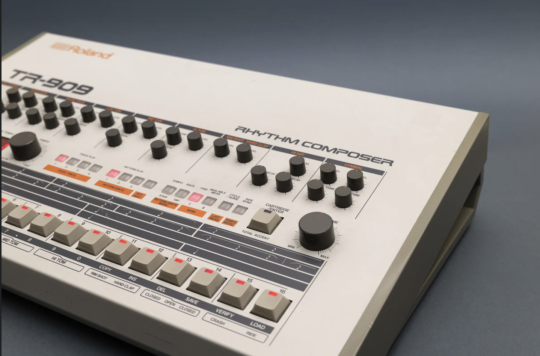
Appropriately for 909 Day, the Roland TR-909 appears on the cover, while the book opens with a foreword born from a conversation with Detroit techno pioneer and drum machine virtuoso Jeff Mills. Throughout the book, readers can explore around 100 rhythm machines and the artists, engineers, and ideas that transformed these boxes into instruments capable of defining entire genres.

The TR-909 occupies a particularly important place in that history. Released in 1983 as the successor to the TR-808, its combination of analog synthesis and digital samples helped create a distinctive rhythmic vocabulary that became inseparable from house and techno. Like the 808 before it, the 909 would ultimately transcend its original purpose to become one of the defining instruments of electronic music.

Electronic music and synth enthusiasts are also invited to join PATCH & TWEAK CLUB to access the feature and discover more exclusive content celebrating the machines, techniques, and people behind electronic music.

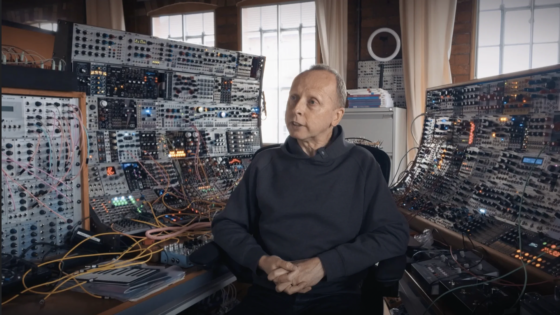
The 909 Day celebration also arrives as Bjooks completes another deep dive into electronic music culture. All three parts of Capturing the Invisible: A Conversation with Robin Rimbaud/Scanner are now available to explore on PATCH & TWEAK.

The three-part series follows the pioneering British electronic artist through a wide-ranging conversation about sound, technology, experimentation, and a creative career built around finding music in unexpected places, continuing PATCH & TWEAK’s mission of documenting electronic music through the artists who continually push its boundaries.

For more information, visit the Patch & Tweak website.