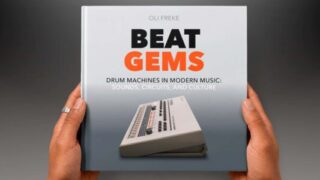
Bjooks is celebrating 909 Day with a “major milestone for drum machine lovers”: physical copies of BEAT GEMS: Drum Machines in Modern Music will begin shipping this month.
The celebration also includes an early look at the book’s TR-909 feature for PATCH & TWEAK CLUB members, as well as new online content exploring the people and machines behind electronic music.
BEAT GEMS Starts Shipping
Written by electronic instrument historian Oli Freke, BEAT GEMS: Drum Machines in Modern Music is a 336-page journey through six decades of drum machines, rhythm boxes, and grooveboxes, from early home-organ accompaniment to the machines that ultimately shaped hip-hop, house, techno, and modand modern electronic music.
Appropriately for 909 Day, the Roland TR-909 appears on the cover, while the book opens with a foreword born from a conversation with Detroit techno pioneer and drum machine virtuoso Jeff Mills. Throughout the book, readers can explore around 100 rhythm machines and the artists, engineers, and ideas that transformed these boxes into instruments capable of defining entire genres.
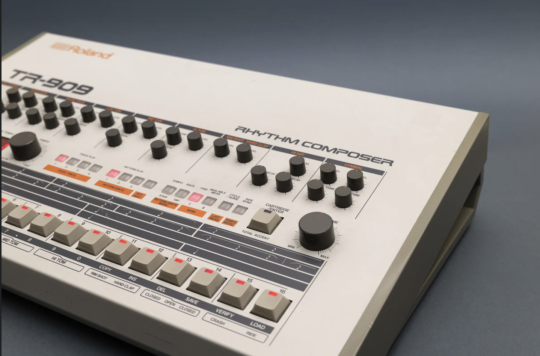
The TR-909 occupies a particularly important place in that history. Released in 1983 as the successor to the TR-808, its combination of analog synthesis and digital samples helped create a distinctive rhythmic vocabulary that became inseparable from house and techno. Like the 808 before it, the 909 would ultimately transcend its original purpose to become one of the defining instruments of electronic music.
Electronic music and synth enthusiasts are also invited to join PATCH & TWEAK CLUB to access the feature and discover more exclusive content celebrating the machines, techniques, and people behind electronic music.
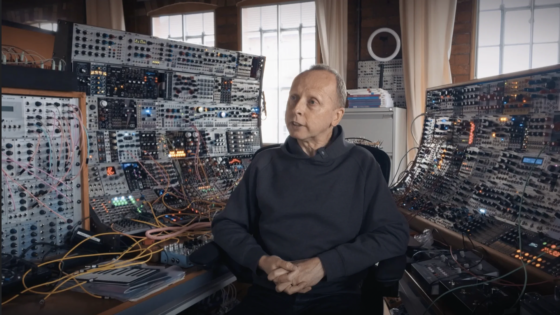
The 909 Day celebration also arrives as Bjooks completes another deep dive into electronic music culture. All three parts of Capturing the Invisible: A Conversation with Robin Rimbaud/Scanner are now available to explore on PATCH & TWEAK.
The three-part series follows the pioneering British electronic artist through a wide-ranging conversation about sound, technology, experimentation, and a creative career built around finding music in unexpected places, continuing PATCH & TWEAK’s mission of documenting electronic music through the artists who continually push its boundaries.
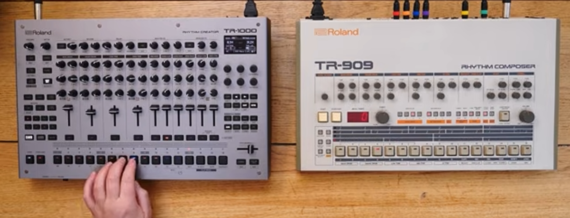
Synthesist Starsky Carr – in his latest video – shares a head-to-head comparison between the classic Roland TR-909 and the new TR-1000 drum machine.
“I put the Roland TR-1000 head-to-head with my original Roland TR-909 to see how close we can actually get”, notes Carr, “and more importantly, where the differences really matter.”
Topics covered:
Kick, snare, clap, rim & tom comparisons
Analogue voices vs ACB models (and why that’s ironic…)
The real difference between main outputs and individual outs
Why the 909 sounds more “band-limited” and less hi-fi
Frequency analysis & Match EQ deep dive in Logic
The exact EQ curve to give your 909 samples that crusty main-out character
Why obsessing over 1:1 matching might be missing the point
Carr argues that the key to recreating the classic 909 sound isn’t tweaking the TR-1000, but band-limiting the output. He demonstrates to how to recreate this, using Logic’s Match EQ.
Is the Roland TR-1000 close enough to replace the TR-909? Check out the comparison and share your thoughts in the comments!
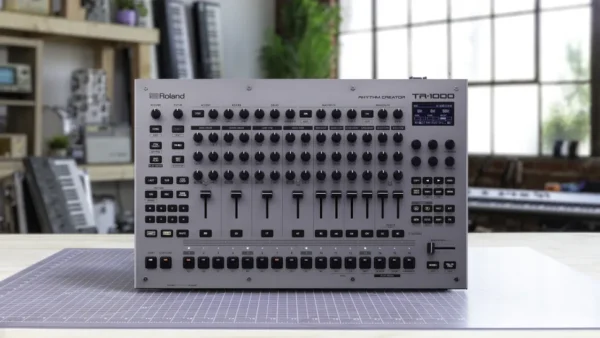
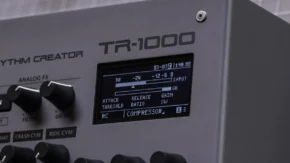
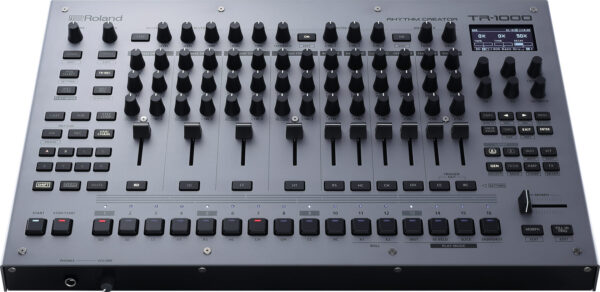
Last week, Roland posted a teaser to its website headlined by the words ‘tomorrow returns’ accompanied by what sounded like a processed TR-808 drumbeat. Today, the company officially introduced its new flagship TR-1000 Rhythm Creator, a new drum machine that they say is the most advanced drum machine that they’ve ever made.
The TR-1000 is not only a feature-packed, multi-functional instrument that sits right at the top of the company’s range of drum machines and grooveboxes, but it’s also the first Roland drum machine in over 40 years to come equipped with true analogue voices.
Those analogue voices are powered by 16 circuits based on elements of the iconic TR-808 and TR-909 drum machines, which Roland says have been “faithfully recreated from the original designs with detailed engineering and carefully selected modern components.”
The original TR-808 and TR-909, released in 1980 and 1983 respectively, are two of the most influential electronic instruments of all time, and likely need little introduction to most music makers thanks to the pivotal role they played in the evolution of genres including house, techno and hip-hop.
This is far from the first time Roland has returned to the sound of those classic drum machines, having released a multitude of Aira, Boutique and Cloud-branded iterations over the past few years. Those instruments have all been powered by a combination of the company’s virtual analogue ACB (Analog Circuit Behavior) tech, or its sample-driven Zen Core engine.
While Roland boasts about the authenticity of the TR-1000’s analogue engine, several of the voices add capabilities that go beyond the simplistic parameters of the original units.
This includes adding things such as tuning controls and amp envelopes to sound elements that didn’t previously have them, allowing the TR-1000 to create things like tuned 808 basslines and refined, punchy beats.
The analogue voices are only part of the story here though. The TR-1000 also features a powerful array of digital elements that build on the capabilities of the impressive TR-8S.
These include virtual analogue voices that make use of ACB tech to replicate a variety of circuit bent iterations of the TR-808 and TR-909 sounds. The TR-1000 also comes stocked with a variety of FM and PCM-powered drum sounds.
What’s more, the drum machine is capable of stereo sampling via its rear panel external inputs, or internal resampling. The machine comes with a 64GB internal memory stocked with 2000 factory samples, leaving 46GB free for user sounds.
The sample engine itself bears a fair similarity to that of Roland’s SP-404 MkII, allowing for the playback of both one shots and tempo synced loops. Loops can also be sliced and played across the TR-1000’s tracks, with the ability to warp and timestretch both full loops and individual slices.
The TR-1000 has ten drum tracks in total, the first four of which are layered tracks, which allow users to pair two different analogue or digital sound generators and blend between them.
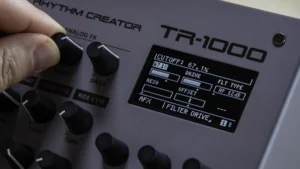
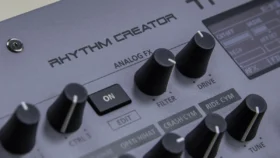
The mix of analogue and digital continues in the TR-1000’s effects section. This includes an analogue state variable filter based on the OTA designs used in Roland classics such as the Jupiter-6. There’s also an analogue drive circuit for adding grit and saturation.
On top of these analogue effects are a comprehensive range of digital processors, including delay, reverbs, modulation effects, a compressor, bitcrushing, a DJ-style looper and the glitchy Scatter effects found on Roland’s Aira drum machines.
The sequencing workflow has its roots in the classic button sequences of Roland’s X0X boxes, with all the refinements found on the more recent TR drum machines including parameter automation, rolls and ratchets, and a comprehensive song mode.
The TR-1000 expands on these capabilities further still with so-called ‘next gen’ features that facilitate off-the-grid sequencing as well as options to set step probabilities and adjust the length of individual loop cycles.
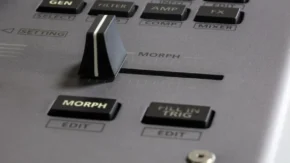
There’s also a new crossfader-controlled Morph control, which allows users to fluidly move between multiple parameter configurations. A Snapshot function can be used to quickly recall saved parameter settings.
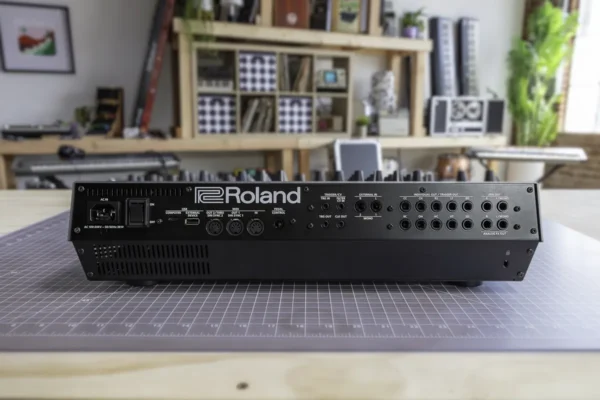
The TR-1000 hardware – which comes in an angular silver and black chassis – is well stocked with connectivity options. There are individual audio/trigger TRS outputs for each of its ten drum channels, plus a master stereo pair of TRS outputs and a secondary pair of analogue effects outputs.
There is a pair of TRS audio inputs, plus trigger and filter CV inputs and mini-jack trigger and clock outputs. These are joined by MIDI in, out and thru ports, plus a pair of USB connections for hooking the drum machine up to a computer and external MIDI device.
The final element of the TR-1000’s setup is its desktop companion app, which allows users to edit the sound engine from an onscreen interface and acts as a librarian for presets and samples.
Here’s an example of the TR-1000 in action with Egyptian Lover:
The TR-1000 certainly looks like a comprehensive and capable machine, and one that’s clearly aimed at being the centrepiece of your studio workflow. The TR-1000 has a price of $2,699.99
The TR-1000 is available now. Visit Roland website for more details.