DNIPRO Modular x Sinevibes Radiant Morphable Effect Processor
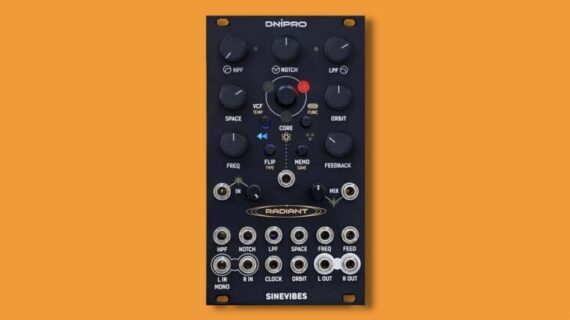

DNIPRO Modular has introduced Radiant, a Eurorack morphable effect processor, created in collaboration with software effects specialists Sinevibes.

The Radiant is a powerful multi-effect processor that they say is designed to bring “unique and dynamic sound-shaping capabilities to modular synthesis setups.”

The official intro video:

It offers six core algorithms:

  • Dub Delay
  • Pole Phaser
  • Chord Wrapper
  • Feedback Shifter
  • Distortion
  • Re-Trigger

Other key features:

  • Morphing Between Presets – One of Radiant’s unique features is its ability to morph between presets. This allows for seamless transitions between different effect states, creating evolving and dynamic sounds. They say that the morphing feature makes it ideal for live performances, as users can shift smoothly between various sonic textures.
  • Three-Band Filter – Radiant includes a three-band filter that lets users shape their sound by adjusting the low, mid, and high frequencies. This is useful for fine-tuning effects or isolating specific frequency ranges for more controlled sound sculpting.
  • Reverb and Sound Reverse – In addition to the core algorithms, Radiant provides a built-in reverb, adding space and depth to the sound. The sound reverse function allows for experimental sound manipulation by reversing the audio signal, creating backward effects that can be synced to the external clock.
  • Preset System and Save Function – Radiant has a straightforward preset system that allows users to save and recall different effect configurations across 3 available slots. These presets can be morphed in real-time, offering expanded creative possibilities.
  • User-Friendly Interface – Radiant is designed with a simple and intuitive user interface. The module offers easy-to-use controls, allowing for quick adjustments and real-time tweaking of effects. This makes it accessible for both experienced modular users and those new to modular synthesis, providing a powerful yet approachable tool for creative sound design.

Radiant Sound Examples:

The DNIPRO Modular Radiant is available now for $380.
Serato Launches Hex FX, a Magic All-In-One Multi-Effect Plugin


Serato has expanded its scope in recent years to encompass both DAWs and sampler plugins.

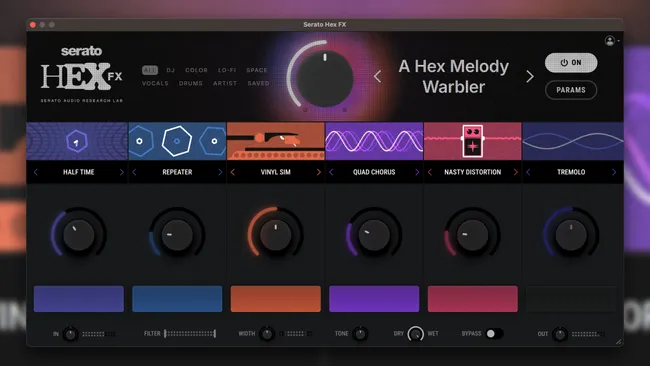
Today, the company turns its attention to the world of audio effects with the releases of Hex FX, a multi-effects plugin that Serato says is “designed to transform every track with unmistakable color, energy, dimension and movement”.

Hex FX packs a generous selection of 45 audio effects into a single plugin, including bitcrusher, compressor, delay, distortion, reverb and modulation, along with time-stretching and stutter effects. Also on offer are a number of Performance FX taken from Serato DJ.

Up to six effects can be chained together, blended and rearranged using Hex FX’s interface, and the plugin’s Hex Dial can be used to tweak every effect parameter at once with a single macro control. Along the bottom of the main panel you’ll find a basic filter, and controls for stereo width, tone, and mix blend, along with input and output gain.

Hex FX is equipped with more than 100 presets, many of which were designed by a list of artists that includes Disclosure’s Guy Lawrence and hip-hop producer Lord Finesse. “I love the sounds within Hex FX, especially the pitch reverb, saturators, and slap-back tape delays – really inventive,” Lawrence says. “It’s very me. It’s staying in my DAW.”

Priced at $99, Hex FX is compatible with macOS and Windows and available in VST3/AU formats. Find out more on Serato website.

The Sound Of Dune: Part Two – Hans Zimmer Redefines Film Scoring With Osmose


“This should have been built 100 years ago – it may well become the story of 21st-century music”: Hans Zimmer on the next-gen synth he used for the Dune: Part Two score

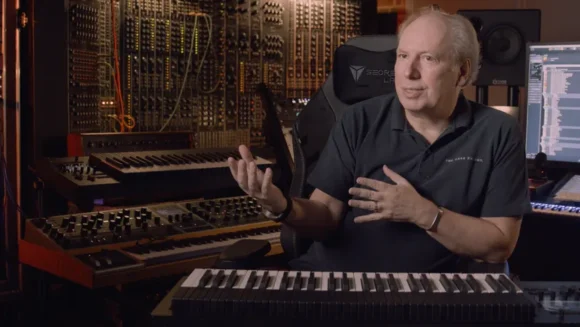
Synth manufacturer Expressive E has released a new mini-documentary, Behind the Music of Dune 2, with Hans Zimmer, giving viewers an insight into how Zimmer and his team composed the film’s epic and futuristic score.

If you’ve seen either of the two recent Dune movies, you know that the scores, by Hans Zimmer, are an evocative mix of futuristic synthesized sounds, otherworldly ambiences and musical influences from around the world.

With Dune: Part 2, Zimmer created a score that is at the cutting edge of film soundtracks, using state-of-the-art expressive synthesizers to orchestrate his music, with sounds that blur the edge between electronic and acoustic sound.

The video, embedded below, explores how Zimmer created a unique orchestra for the soundtrack:

In the documentary, Zimmer explains that he wanted to avoid composing a traditional orchestral score for the Dune series, in order to place the film, a sci-fi based on Frank Herbert’s 1965 novel Dune, in a different universe. “Why can’t we believe that there will be new instruments, there will be new sonic textures?” Zimmer says. “Why can’t we go and invent new things that don’t remind us, in a peculiar way, of the past?”

In his quest to discover “unique sounds” for the score, Zimmer employed the Osmose, an instrument developed by Expressive E and Haken Audio that he said empowered him to “play the music of an imaginary future”. “We had one or two [Osmoses],” says collaborator Steven Doar, “and we started playing with it, then Hans said ‘we need five more!'”

Announced in 2020 but released last year, Osmose is an MPE-enabled synthesizer and controller that offers performers three dimensions of control from every single key, thanks to its AKA (Augmented Keyboard Action) technology. The first dimension is the initial key press, the second is the synth’s polyphonic aftertouch and the third is the lateral movement of its keys, made possible by the Osmose’s raised keybed. Along with Zimmer, Osmose has earned a number of famous fans since its release, including Flying Lotus and Jean-Michel Jarre.

Rather than having a piece of technology in the room, you suddenly have another musician in the room, that you’re having a conversation with,” Zimmer says of Osmose. “For us, it was an obvious thing once it existed. You’ve built an instrument for Dune, so we should take advantage of that. You guys spent an enormous amount of time building exactly the instrument that should have been built 100 years ago.”

The documentary provides a fascinating glimpse into how Osmose was used to create synthesized vocal lines for the score. “Hans had an idea for this very long vocal part that would just continue throughout a few scenes, and would constantly be evolving,” Doar says. “It was this idea that within one note, so much can happen. That’s what [the Osmose] does,” adds Zimmer. “This instrument allows us to play the music of an imagined future,” notes Zimmer about the Osmose.

Christophe Duquesne, instrument designer for Haken Audio, explains how the team transformed a sample of musician Molly Rogers’ voice into a synth patch using Osmose’s resynthesis feature, giving them the ability to not only play the vocal, as you would with a sampler, but also manipulate its timbral characteristics in real time via the instrument’s expressive keyboard.

“This is an important instrument,” Zimmer says of the Osmose. “It’s an important step forward in what can become the history of 21st-century music. While nations are fighting and politicians are useless, and television programs like The Bachelor are ruining any culture that we might still have left, you guys [Expressive E] went and built something that can actually create beauty and rage and emotion, and all sorts of things that amplify who we are at our best.” High praise indeed.

Find out more about Osmose at Expressive E website.