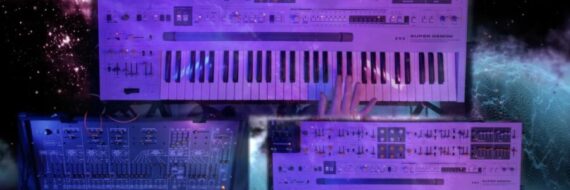
Zed AudioLab shared this take on the Blade Runner Main Titles, from the soundtrack by Vangelis.
The video features the UDO Super Gemini, an original synth design that shares some important features with the Yamaha CS-80, including a dual-layer synth engine, polyphonic aftertouch, and a ribbon controller – all of which are used in recreating the sounds of the Vangelis score.
Watch the video and share your thoughts on this take in the comments!
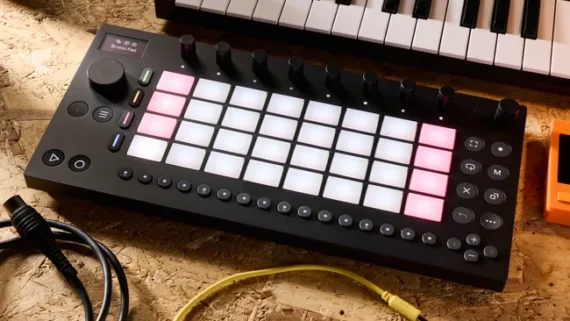
Ableton Move is a standalone groovebox and Live controller that makes a portable and affordable alternative to Push, the company’s MPE-equipped flagship instrument.
Since its launch in late 2024, Move has received a handful of firmware updates that have improved its MIDI sync capabilities and fixed some minor workflow issues, but the latest marks its most significant update yet.
Move’s 1.3.0 update allows users to sample using its USB-C port, letting you record audio directly to Move from a smartphone, tablet, computer, or any device acting as a USB host that supports audio over USB.
This opens up an array of possibilities for Move users: Ableton suggests playing a song from your phone and sampling to one of Move’s drum pads, or sampling a synth app from A tablet into its Melodic Sampler. Devices with a USB-C port should work without any fuss, but phones or tablets with a Lightning connection will require the use of an adapter, as Lightning to USB-C cables aren’t supported. Find out more info here.
Another welcome improvement bundled with Move’s 1.3.0 update is the ability to send out polyphonic aftertouch from its 32 pressure-sensitive pads through the device’s MIDI out port when controlling external instruments and gear.
Find the full list of improvements below, or check out the release notes over at Ableton website.
You can now solo tracks by pressing and holding the Shift and Mute buttons simultaneously and then pressing a track button.
Longer entries in the browser, such as sample or preset names, now scroll on the display so that the full name is visible.
When used as an audio interface, Move now defaults to outputting its internal microphone and line-in. Move’s main output can still be selected in Setup; however, doing so will disable Move’s speaker when a USB-C cable is connected.
Move now sends out polyphonic aftertouch when set to MIDI Out, which lets you play expressively when using external MIDI controllers.
A wider selection of presets is now used when creating a new Set.
Uploads to Ableton Cloud are now faster.
Triggered one shot samples and long release note phases now stop when playback stops and when clips are retriggered. Additionally, an “All Sound Off” MIDI message (CC 120) is sent to the MIDI output.
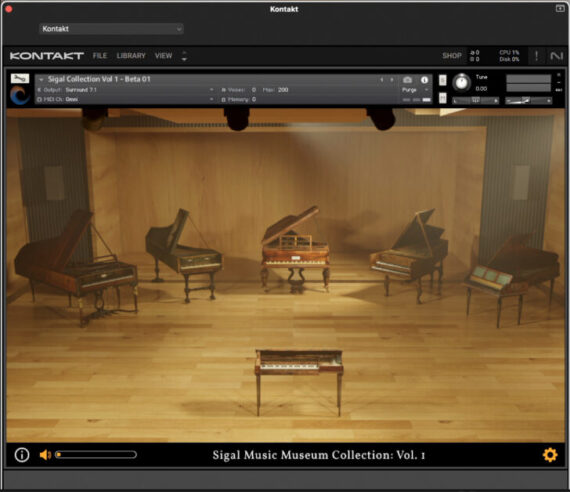
Synthesist Chris Stack (ExperimentalSynth.com) let us know about a new sound library that lets you play a collection of one-of-a-kind, historically significant keyboard instruments, including instruments played by Chopin, Mozart & Beethoven.
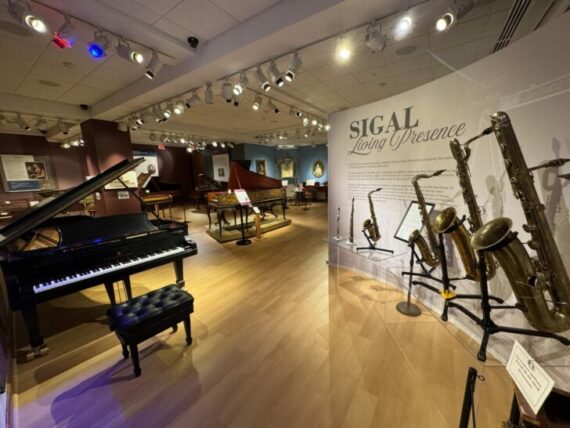
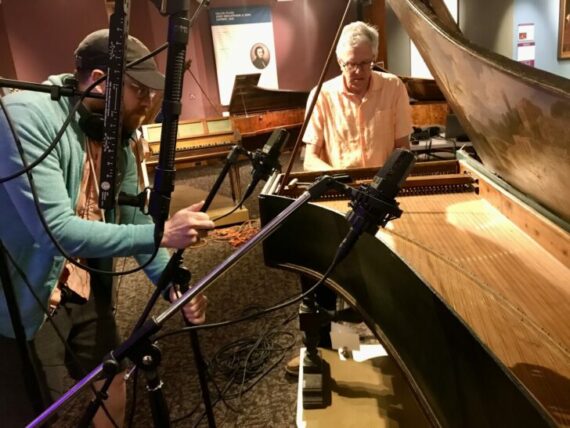
Stack is Director of Marketing at the Sigal Music Museum, a Greenville, SC museum that features a huge collection of rare musical instruments. Stack says that the Museum has been collaborating with Alex Davis of Tempest Instruments to sample these rare instruments, to both preserve the sound of the instruments for future generations and to make them available virtually to musicians around the world.
Sigal Collection Volume 1 is the first product from this collaboration. It features an 1845 Broadwood Grand Piano that was played by Chopin. When you play the virtual version, you’re playing and hearing a piano that was used by one of the greatest composers and musicians of all time.
Other instruments in the library include:
A 1761 Dual-Manual Kirkman Harpsichord that was King George III’s wedding present to Queen Charlotte;
An 1815 Walter Grand Piano;
A 1660 Italian Harpsichord;
A 1784 Stein Grand Piano; and
A 1780 Spanish Clavichord.
The library is a unique solution to the curator’s conundrum.
When you have a large collection of historically significant musical instruments going back as far as 1575, many of which are still in playable condition, how do you let musicians make music with them, without the possibility of damaging irreplaceable historical artifacts?
While many musical instrument museums let visitors hear a piece of music recorded on the rare instruments, the Sigal Music Museum is pioneering a different approach, making virtual versions of these instruments available, so that everyone from young music students to seasoned performers and composers can make music with them.
Here’s the intro to Sigal Collection Volume 1:
This project has some really interesting applications.
Music Education – The Museum, in collaboration with the Institute of Museum and Library Services, has made complete workstations for exploring these instruments available in ten Greenville County Schools. The Museum hopes to expand this program to more schools, making it possible for music students to play classical music with historically accurate instruments.
Soundtracks – the library features three centuries of keyboard instrument, making it an interesting new option for composers that want to use the sound of historically appropriate instruments for scoring television and film projects set in the past.
Music performance and composition – finally, the project makes these instruments available to musicians that want to play and compose using instruments that they would otherwise never have an opportunity to work with.
Tempest Instruments has shared detailed information on the instruments, along with video and audio demos, at their site. Here’s a preview of their virtual version of a harpsichord that Mozart played:
Sigal Collection Volume 1 is available now, with an intro price of $129 (normally $149). You can learn more about the Museum and their mission at the Sigal Music Museum site.