Audient EVO SP8 “the mic preamp of the future”
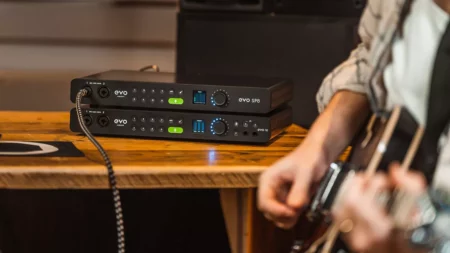
 

If you are looking to expand the I/O on your current audio interface rather than buy a new one, Audient wants you to consider its new EVO SP8, and says that it’s the perfect I/O expander for your audio interface. Billed as “the mic preamp of the future”, this is an eight-channel box that could come in very handy when you want to take on larger projects such as recording a full band.

The SP8 offers eight mic/line inputs, eight line outputs and 2 x ADAT I/O. As with other EVO products, it also includes Audient’s Smartgain feature, which enables you to set the appropriate gain level automatically just by pressing a button. What’s more, you can do this for all eight channels simultaneously.

“If you’re expanding your current non-EVO audio interface, you get up to eight channels of simultaneous Smartgain with SP8, which not only takes the guesswork out of setting your levels, but also saves you time,” says Audient/EVO marketing director, Andy Allen, adding that “If you are pairing two SP8s with your EVO 16 then you have Smartgain on all 24 channels!”
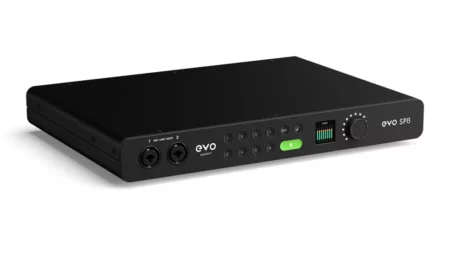
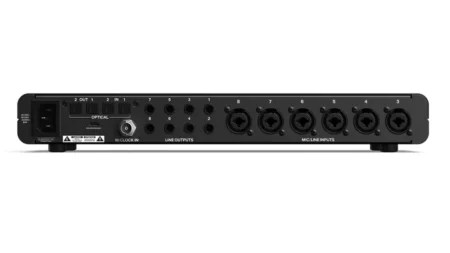
 

The SP8 includes a high-res, full-colour LCD screen that promises a wide viewing angle. This promises to intelligently display the most relevant information, and everything can be controlled using a single, centralised knob. In addition, the display includes the option to view the currently selected channel’s status and to show metering levels.

Each of the EVO mic preamps offers 58dB of mic gain and 121dB of dynamic range. The EVO SP8 is designed to sit nicely on your desktop, or can be situated in a rack using the optional ears.

The EVO SP8 is expected to ship in the first quarter of 2023 priced at $499/£399/€499. Find out more on the Audient website.
 

Waldorf Quantum Mk2 adds Polyphonic Aftertouch, Improved Synthesis Capabilities and More


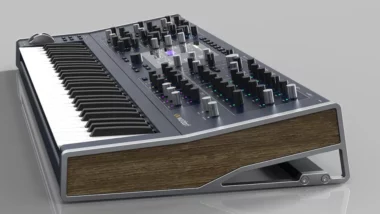
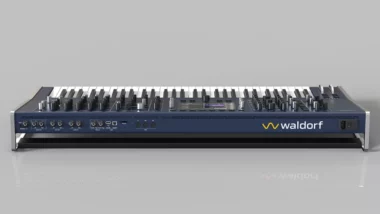
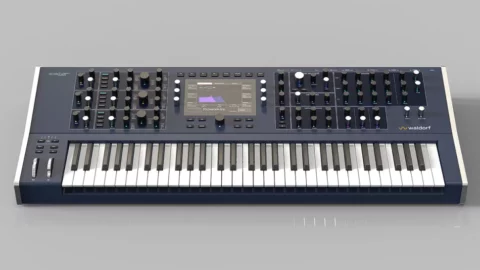
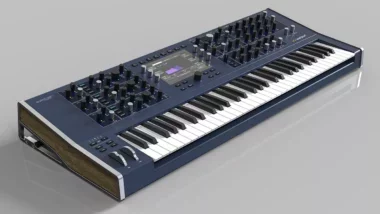
Waldorf Quantum synth takes a big leap forward with a polyphonic aftertouch keyboard, increased polyphony and more storage. The Quantum Mk2 version promises some significant improvements.

Released in 2018, Waldorf Quantum is a bona fide supersynth. Each of its three oscillators can draw on one of five synth algorithms – including the classic Waldorf-style wavetables – and you get both digital and analogue filters. A wealth of modulation possibilities is included, as well.

Now, five years on, we have the Quantum MK2, a reimagining of the original synth that tweaks the already powerful formula in a variety of ways.

What’s new in the Waldorf Quantum mk2:

There’s now polyphonic aftertouch. Quantum MK2 is the first instrument to feature a 61-key version of Fatar’s TP8/SK keybed, and enables you to assign aftertouch parameters on a per-key basis. As such, there is huge potential for expression.

If you want to take your control a step further, you can also play the Quantum MK2 using an MPE controller. Just plug one in via the USB port and you should be good to go.

In addition, you now have 16 voices of polyphony to play with. This has been achieved by combining the eight analogue filters with the digital dual multimode filters. A new set of allocation modes enables you to control what goes where.

Sample storage has also been increased – from just 4GB to 59GB. This will come as great news to those who want to take full advantage of Quantum’s granular and multi-sampling engines, and gives sound designers much more room to flex their creative muscle.

Quantum ships with 2GB of sample content and presets from the likes of Richard Devine, Howard Scarr, Reinhold Heil, BT, Matt Johnson, Joerg Huettner, Kevin Schroeder, Sascha Dikiciyan, Kurt Ader, Mike Huckaby, Thorsten Quaeschning and others. You can also transfer sounds to and from Waldorf’s Iridium synth – in fact, we are told that the new Quantum firmware (3.0) has been combined with the Iridium firmware to create what is known as the Waldorf Synthesis Platform.

A few design tweaks have also been made to Quantum – improved mounting of the touch display is said to mean wider viewing angles for example, and we are promised a more intuitive way of controlling some of the synth’s more advanced features.

Quantum MK2 is expected to be available at the end of this month priced at €4.819,00 (incl. German VAT). Find out more on the Waldorf website.


Here is the final version of Behringer AKS Mini, a tiny version of the classic VCS3 synthesizer

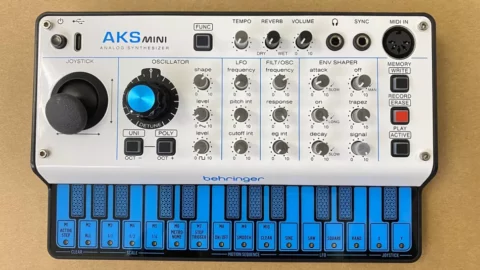
Behringer has informed us that the AKS Mini, a miniaturised version of the EMS VCS3, this was shown as a prototype in May 2022, but now we can take a look at what we are told will be the “final version”.

This promises the “exact same” oscillators and filters as those in the original VCS3. There are three VCOs, to be precise, plus a built-in arpeggiator and a 16-step motion sequencer.

One thing that is missing, is the VCS3’s 16×16 pin matrix (if you want that, you’ll have to wait for Behringer’s promised full-size clone), but we can forgive that omission on such a tiny synth, particularly when you take into consideration the fact that the AKS mini is slated to cost just $99. And you do get a joystick.

When AKS Mini will be available to buy remains to be seen, but Behringer currently anticipates that the AKS mini will be shipping in the summer.