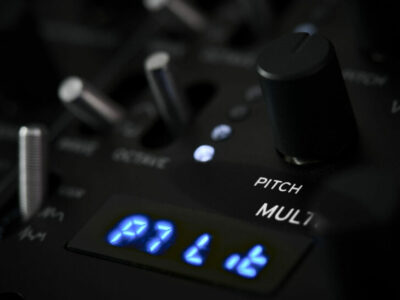
tsoniq has introduced a new user-oscillator for the Korg Minilogue XD and Prologue, Phase7.
Phase7 is a supersaw oscillator that works with the Logue’s front panel controls. At its simplest, it simply replicates the current VCO waveform and waveshape, but with a digital stack of seven oscillators.
There is a free ‘lite’ version that is controlled entirely from the front panel, and a ‘pro’ version (20€) that adds more waveforms, filter effects and a second LFO.
Features:
two super-oscillators, each with 7 independent wave generators
accurate modelling of the JP-8000 super-saw
emulation of the Logue VCO waveforms, including shape modulation
seven additional waveforms, including windowed-sync and filter effects (pro)
optional phase synchronization for percussive sounds
a second LFO with 4 modulation destinations and 25 patterns, include sample-and-hold effects (pro)
optional velocity modulation of wave shape (pro)
extensive front-panel control to avoid menu diving
In addition, the code that Phase7 uses to access to the Minilogue or Prologue front-panel controls has been released as open source on GitHub, allowing new user-oscillators to read VCO, VCF and LFO front-panel control settings. The code includes a complete sample phase-modulation oscillator.
Phase7 is available now for €20. A free ‘lite’ version is also available.
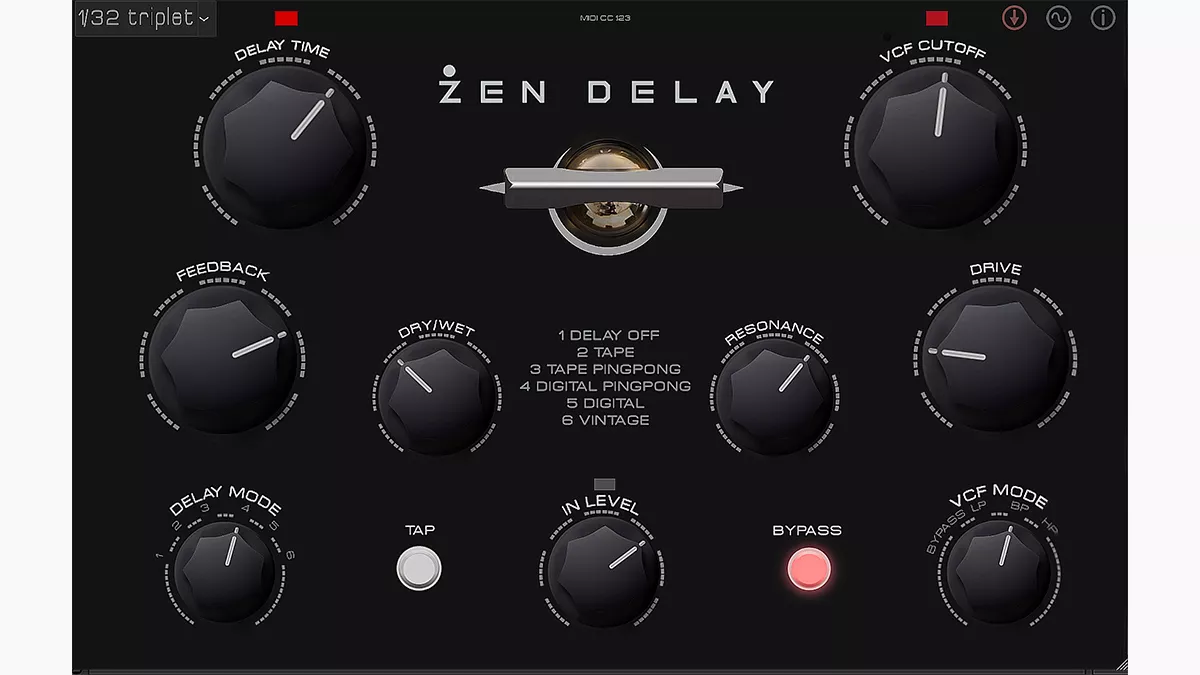
ZDV is more than just a replication of the hardware. Erica Synths’ Zen Delay gets a software successor in the shape of the ZDV plugin.
ZDV is described as “not simply a digital replica or replacement” of its Zen Delay hardware, Erica Synths’ new ZDV plugin is an “addition” and a “virtual successor” to it.
The reason? Because as well as adding the flexibility of DAW operation, such as full automation possibilities, there are also several new features to play with.
That said, Zen Delay Virtual does look very similar to the hardware, and it does indeed model the Zen Delay’s analogue filter and valve overdrive. And, its digital stereo delay has been recreated, as well.
But ZDV offers more: a dedicated modulation page, custom routing options, triplet and dotted rhythms in sync mode and clean and soft clip modes at the input gain stage. In addition, there are also presets, plus the option to save your own.
As such, it seems like the claim that ZDV is effectively a sequel to Zen Delay is justified. ZDV is available now for the introductory price of €99 and runs on PC and Mac in VST/AU formats.
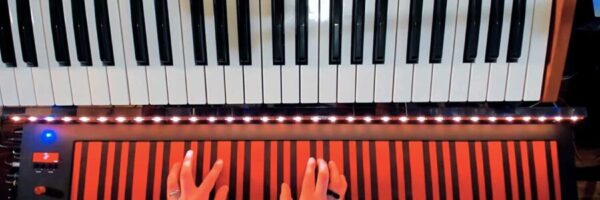
Josh Madoff shared this live performance of Somewhere Over The Rainbow, arranged for solo Haken Continuum.
It’s a virtuosic performance, and a showcase for the expressive possibilities of the Continuum. Madoff incorporates several techniques that would be natural to an ensemble of instruments, but impossible to play on a standard keyboard.
What Josh Madoff shared about the technical details of his performance:
“Here’s an arrangement for Haken Continuum featuring many techniques that are completely unique to this instrument (including counterpoint with polyphonic moving and sliding chords). I wanted to explore the potential of the Haken Continuum as a true solo instrument.
I really wanted to explore what is possible when treating the amazing Haken Contiuum as a solo instrument. The range of dynamics and expression it is capable of is unbelievable.
In this performance, I demonstrate several techniques that are only possible to play on a Continuum. I find it especially inspiring when I find harmonies that normally only work when they are spread across an entire orchestra, yet they work beautifully on the Continuum.
There is no other solo instrument on earth that can achieve many of these sounds!”