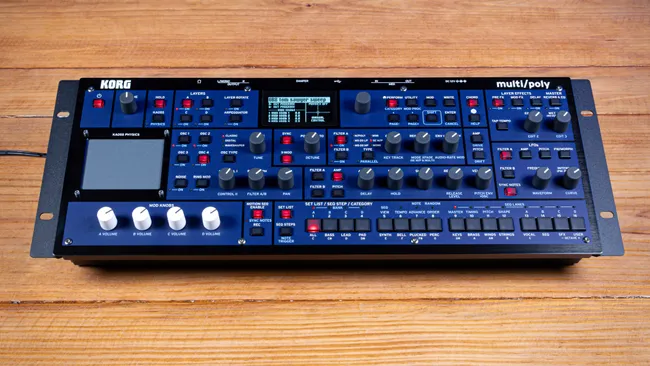
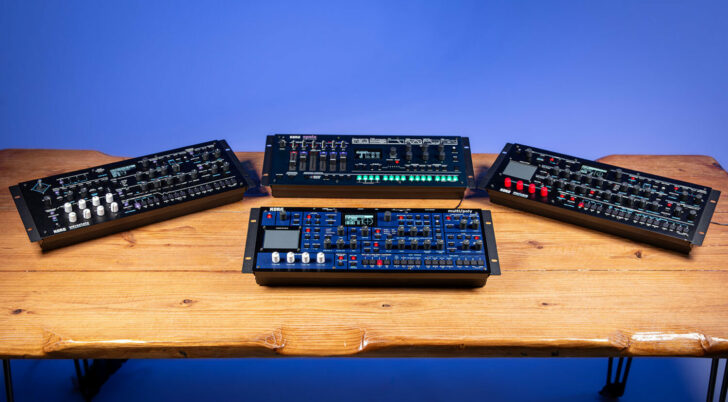
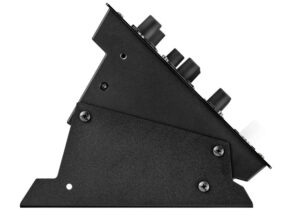
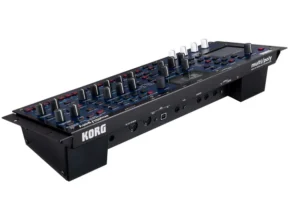
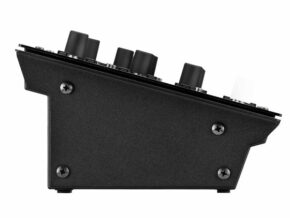
Ahead of the 2025 NAMM Show, Korg has introduced the multi/poly module, a new version of the multi/poly that can be used as a desktop or rackmount synth.
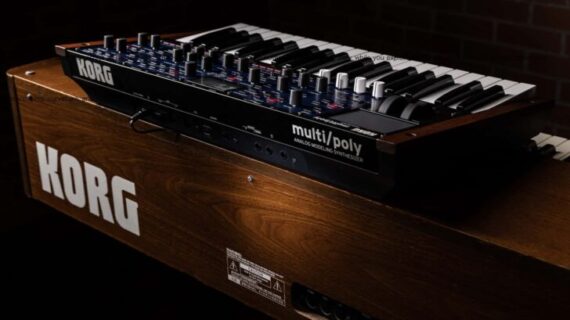
Korg Multi/Poly was one of our favourite new synth of last year. Loosely inspired by the company’s classic Mono/Poly analogue synth, the Multi/Poly is a multi-timbral digital polysynth that Korg describes as an analogue modelling synth.
The original Multi/Poly landed in a 37-key unit matching the design of Korg’s Modwave, Opsix and Wavestate. Like those synths before it, it’s now available in a rack-mountable module version too, and perfect for modern studio setups.
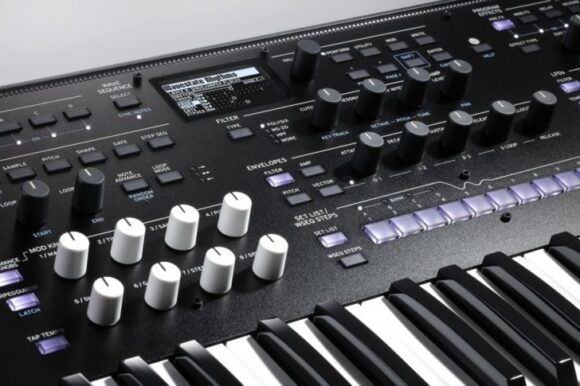
The Multi/Poly features four timbral layers, each with four oscillators. These oscillators can make use of virtual analogue waves – complimented by dual analogue modelling filters and envelopes – as well as a flexible wavetable and waveshaping modes. While it’s certainly possible to create some convincing faux-analogue sounds, these various modes can do far more besides this, including rich atmospheric textures, oddball FX and multi-timbral sequences.
The official multi/poly module intro video:
Its best feature is its Layer Rotate function, which allows the four synth timbres to be triggered in a round-robin manner inspired by the original Mono/Poly. Other feature highlights include an X/Y pad with a fun virtual physics engine, which can be used for creative modulation, a multitude of modelled filter types, flexible effects and a deep multi-lane sequencer.
The Multi/Poly module is 60 voice polyphonic and equipped with MIDI 2.0 capabilities. In terms of I/O, it has balanced stereo outputs, MIDI connectivity and USB, which allows the synth to make use of Korg’s desktop editor/librarian application.
The Korg Multi/Poly Module will arrive with RRP of £709/$850 at Amazon site. Visit Korg website for more.
Synthesist Ian Dixon shared this look at sequencing using the Pitch Lane on the Korg modWave, wavestate, and the new multi/poly.
His examples focus on the modWave plugin, but the technique are relevant to the hardware and software versions of these synths:
Here’s what he has to say about the video:
“I demonstrate how you can use the pitch lane feature of the motion sequencer to build your own complex sequences. You’ll learn how to use the motion sequencer to re-trigger envelopes, control the filter, and manipulate pitch. I also show how the Fit to Scale option ensures your sequences play in your chosen scale, and how the Shape Control lets you fine-tune pitch transitions smoothly.
The video includes examples on the Modwave (the process is identical on the Mono/Poly) as well as the Wavestate.
This technique will unlock a world of sonic possibilities for you on these incredibly powerful synthesizers.”
Here’s a roundup of early reviews and demos for the new Korg multi/poly synthesizer, a new synthesizer in their opsix/wavestate format that offers 60-voice polyphony, three types of oscillators, Kaoss Physics, Motion Sequencing 2.0 and more.
Synth guru Ziv Eliraz – In his loopop video, above, – reviews the Korg multi/poly, offering an in-depth look at the new synth, audio demos, and his take on the instrument’s pros and cons. “It sounds great,” notes Eliraz, praising the synth’s synthesis capabilities and sound. On the cons side, he cites the smallish screen, the size of the keyboard and its lack of aftertouch.
The BoBeats doesn’t go quite as deep, but has an extended section demonstrating how to create sounds from scratch on the multi/poly. He recommends the multi/poly for people that really like to dig deep into sound design, but recommends that people that want a more immediate synth look elsewhere.
In the last video, below, sound designer John “Skippy” Lehmkuhl (PlugInGuru) shares his take on the Korg multi/poly, with an emphasis on sound design:
Lehmkuhl is one of the sound designers that created patches for the multi/poly, so his video showcases some of his work, and is probably the best video of the bunch for showcasing the synth’s sound.
He calls the multi/poly ‘a monster’, and praises its sound and capabilities.
Watch the videos, and share your thoughts on the new Korg multi/poly in the comments!