Gershon Kingsley – Popcorn (Live Cover on a DIY Analog Modular Synthesizer)

Synthesist Andreas Remshagen has shared this arrangement of Gershon Kingsley’s archetypal happy synth pop tune, Popcorn.

Kingsley released the original Pop Corn in 1969 on the moogsploitation classic, Music to Moog By. But it became a worldwide novelty hit in 1972, with the cover version by Stan Free and Hot Butter.

Remshagen’s arrangement, which stays close to the original, is performed live (with sequenced parts) on a large DIY analog modular synthesizer. Technical details are included in the video.


Strange’s Book on Electronic Music getting another Reprint


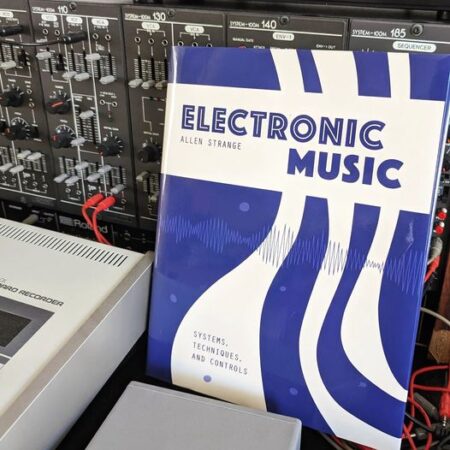
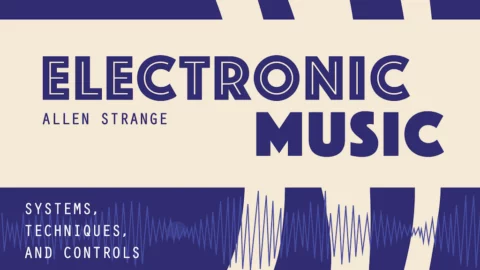
Dr. Jason Nolan has announced a Kickstarter project to fund a second printing of a classic book on electronic music, Electronic Music: System, Techniques and Controls, by Allen Strange.

The book was unobtanium for decades, until Nolan published a new edition in 2022.

What Nolan say about the new edition:

“Republishing Allen Strange’s Electronic Music: System, Techniques and Controls, has been a four-year project since its inception. The goal, from the beginning, has been to bring this important work back into the hands of fans of the original, students and teachers of the history of electronic music, musicians and electronic music practitioners, and designers of electronic music systems.

We have permission to make Allen’s work available in print and electronic form from Pat Strange who holds the copyright, and Pat has been actively guiding our efforts through much of the project. At present, Allen Strange’s Electronic Music: System, Techniques and Controls, will only be available through this Kickstarter.

In Pat’s own words (from the preface): “Since it’s first edition in 1972, Electronic Music: Systems, Techniques and Controls has been acknowledged as the definitive text on modular synthesis. In today’s musical community analogue techniques have made a resurgence among many musicians and composers. The idea of a republication has been in the works for many years and the timing of doing it now just made sense. I am very grateful to Jason Nolan, Ann Ludbrook and the team at Toronto Metropolitan University who saw the importance of this endeavor as well as taking on the task of bring this book back to life. I am so appreciative of their attention to preserving the quality of the book and respecting its content. I know that this project would have meant a lot to Allen, specifically in knowing that his techniques and teachings are continuing to influence the future of electronic music.”

This is a non-profit project. Costs involved are royalties, production, logistics and shipping costs. Any residual funds will be donated to community music initiatives focusing on electronic music and electronic music learning.”

Walker Farrell from Make Noise sharing his take on the book:

The printing of Electronic Music: System, Techniques and Controls is being done via a Kickstarter project, and the book is available to backers starting at about $30 for the softcover edition. The project has already met its funding goal.

*Note that crowd-funded projects can involve risk, which is detailed at the project website.

Image: System80

Stability AI Launches Stable Audio AI Music Generator

The new AI music generator looks genuinely useful for music producers.

Rivalling generative AI-powered music tools from Meta and Google, Stable Audio can create musical clips of up to 90 seconds.

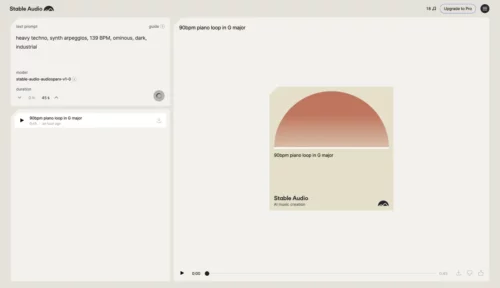
Stability AI has announced the launch of Stable Audio, a new text-to-music sound generator powered by generative AI. Stable Audio can generate high-quality clips of music and sound effects up to 90 seconds and respond to detailed instructions on genre, instrumentation, mood, BPM and more.

Stable Audio was trained on a dataset of over 800,000 audio files from the stock music library AudioSparx. Its creators have published a blog post that shows several impressive examples of what Stable Audio can do. Judging from these, it looks like it could be set to surpass the capabilities of MusicGen and MusicLM, AI music generators developed by Meta and Google that were released over the past year.

Stability AI say that Stable Audio is “ideal for musicians seeking to create samples to use in their music”. The examples published by its creators show that the tool can generate clips of any given BPM, something we found its competitors unable to do: the prompt “116 BPM rock drums loop clean production” produced a clean, usable rock drum loop at exactly 116 BPM. It doesn’t seem to understand tonality, though, as we asked it to give us a piano loop in G major and received something in A minor.

Stable Audio can create clips of varying lengths and is particularly effective at creating structured musical ideas, due to the fact that it was trained to account for “audio file duration and start time” in addition to musical attributes like genre and instrumentation. Which means that it’s less likely to generate random sections of a song that start or end in the middle of a phrase, something that other AI music generators often do.

Stable Audio is available in two tiers. The free tier, which is available now for anyone to use, will generate audio clips of up to 20 seconds, while the Pro tier is available to subscribers at $11.99 a month. Pro subscribers can generate up to 500 tracks a month of up to 90 seconds in duration and these can be used in commercial projects.

“As the only independent, open and multimodal generative AI company, we are thrilled to use our expertise to develop a product in support of music creators,” said Emad Mostaque, CEO of Stability AI. “Our hope is that Stable Audio will empower music enthusiasts and creative professionals to generate new content with the help of AI, and we look forward to the endless innovations it will inspire.”

Stability AI is the company behind Stable Diffusion, the popular image-generation tool released in 2022. Stable Diffusion was previously used to generate music by the creators of text-to-music AI tool Riffusion.

Find out more or try out Stable Audio on Stability AI website.