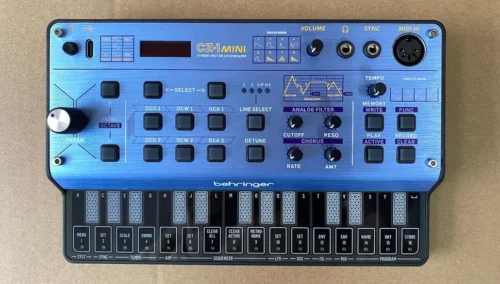
Today, Behringer shared a preview of the CZ-1 Mini, a minisynth that copies the sound engine used in Casio’s famous vintage CZ synth line of ’80s.
The CZ-1 Mini adds an analog filter not found on the original, which used Phase Distortion Synthesis, Casio’s response to Yamaha’s implementation of FM synthesis.
“The momentum keeps building as we introduce CZ1 Mini,” Behringer says, “an extraordinary reproduction of Casio’s CZ synthesizer engine, combined with an analogue filter. With its exceptional phase distortion synthesis, the sound the CZ1 Mini produces is unparalleled.”
Behringer says that the CZ-1 Mini is ready for beta testing, and that it has a target price of $99.
The campaign to open it up to everyone starts here – ‘A gamechanger for musicians’.
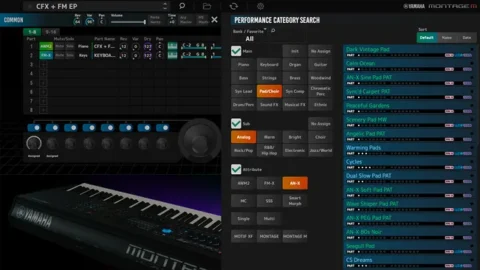
2024 NAMM Show: One of the great things about workstation synths like the Montage M is that they enable you to do a lot of playing, performing and production work without using a computer, but now, in a move that it’s describing as “a gamechanger for musicians,” Yamaha has released a free plugin version Expanded Softsynth plugin (E.S.P) that runs in your DAW. The plugin is free for all Montage M users.
Released last year, the Montage M contains Yamaha’s new AN-X virtual analogue engine, which is designed to emulate the classic synth sounds of yesteryear (the name itself is a nod to the AN1x, a classic Yamaha VA keyboard from the ‘90s). The AWM2 and FM-X engines from the previous iteration of the Montage are in here, too.
Now, these sounds can be accessed via the Expanded Softsynth Plugin (ESP), which replicates the Montage M in software. As you’d expect, it syncs nicely with the keyboard itself, but once installed, it can also be used without the hardware, so you can take your Montage M sounds with you wherever you go.
“This is a great feature for touring musicians, worship players or anyone who needs to use multiple MONTAGE M keyboards for whatever reason,” notes Yamaha’s Blake Angelos.
“Of course, the real benefit of the Expanded Softsynth Plugin for MONTAGE M is the considerable power it adds. You can open multiple instances in a DAW and drastically increase your music making potential. With modern computer systems, the horsepower needed is completely within reach and won’t cost a fortune.”
A limited edition of the plugin is available now, with the full version (which will offer more comprehensive editing capabilities) landing in the summer.
ESP sounds like an excellent bonus for Montage M owners; the question, of course, is whether it will ever be made available to everyone else, too? There is precedent for this – Arturia initially said that its MiniFreak V soft synth would be an exclusive for owners of the hardware, but then changed its mind a few months later – so if you’re desperate to get in on the Montage M action but don’t want to buy the keyboard, we wouldn’t give up hope just yet.
Those who do already own a Montage M, meanwhile, can find out how to download and install the Expanded Softsynth Plugin on the Yamaha Synth website.
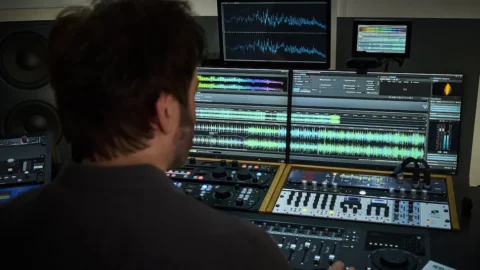
2024 NAMM Show: Steinberg has updated its flagship audio editor WaveLab to version 12. It comes with nearly 80 extra features and is the biggest update the iconic software platform has had in years. And how many years has WaveLab been doing its audio thing? More than you might think…
Indeed, can you believe that Steinberg’s WaveLab – a software workstation that expertly tackles sample editing, audio mastering and sound restoration – has been with us since 1995? Any software title with that amount of history must be doing something right, and WaveLab’s genius has always been remaining a step ahead of the trends and fashions.
Version 11, released a few years ago, featured handy podcasting extras, and this latest release claims to have more new additions than any previous one, including improved editing, workflow and mastering features.
The biggest of these additions comes in the form of ARA support so you can effectively use the WaveLab editor in any ARA-supported DAW. Taking this further, it’s now easy to copy and paste audio edited within WaveLab – with or without effects on top – between applications.
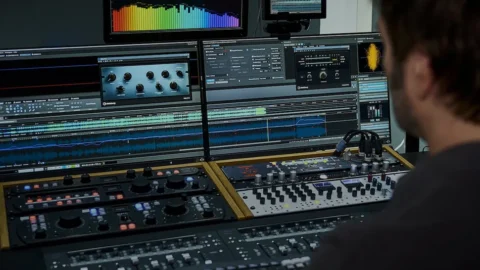
Within the software itself a new Rainbow Waveform view enables you to separate and identify troublesome frequencies, making it easier to spot artefacts like sibilance, excess bass and a lot more.
The audio editing process has also been refined, with automatic transient markers and automatic crossfade options that help snap audio to transient and release points, so helping reduce clicks and pops.
Loudness management has always been an important process in mastering and this latest WaveLab offers extra tools to help monitor all aspects of loudness and peak levels within audio files. It is now much easier to match loudness with reference tracks, for example, and a new reporting feature delivers all the information you need when mastering for specific broadcast platforms such as Netflix.
There are also a lot of other extras. Tracks can be hidden to help declutter the screen and reduce CPU loads, and there are new plugins like the Black Valve and VoxComp compressors, and EQ-P1A and EQ-M5 EQs (likely aimed at Pultec fans by the sounds of those names). Plus there are “myriad improvements” to the Audio Editor, Audio Montage, and Batch Processor.
WaveLab is available in two forms, Pro 12 and the cut-down Elements 12, which are $/€499 and €/$99.99 respectively. There are various upgrade offers from previous versions, and all of these pricing details – and a lot of other WaveLab info – are available from the Steinberg website.