Computer Music & Jazz Combine In The Work Of Guitarist Stanley Jordan


The second season of the Composers & Computers podcast has launched, with an in-depth look at the work of jazz legend Stanley Jordan, and how his computer music studies at Princeton informed his unique approach to playing the guitar.

The Composers & Computers podcast series, produced by Princeton’s School of Engineering and Applied Science, explores the school’s role in the early development of computer music. Host Aaron Nathans interweaves stories about science, art, friendships, and the links between the computational and musical realms at Princeton.

This episode is a fascinating interview – Jordan discusses granular synthesis, how his interest in building a custom keyboard guitar synthesizer led to the development of his unique polyphonic guitar technique, the influence that Pink Floyd and Wendy Carlos had on him, and more.

You can listen to the latest episode via the embed below, and at the Princeton website:

Summary:

“In Episode 1 of the new season of “Composers & Computers,” we begin our deep dive into the technology-filled life story of Jordan, who went on to a career as an acclaimed jazz musician. We explore how he was initially drawn to Stanford to work with John Chowning, inventor of the Yamaha digital keyboard, but through a twist of fate at the admissions office, found himself headed to Princeton instead.

Chowning himself told Jordan that it was a fortuitous outcome, and Jordan explains why this ended up being true, through meeting two mentors who would have a major effect on his musical path, Milton Babbitt and Paul Lansky.

We’ll look at how he developed his trademark two-hand percussive “touch technique” while he was a student at Princeton. And he’ll talk about his time at the Computer Center and the Engineering Quadrangle, including the time he dropped his punch cards on the floor.”
Hands-On Demo Of The LinnStrument With Creator Roger Linn


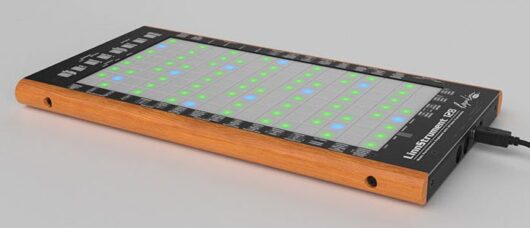
Composer, guitarist and electronic music gear pioneer Roger Linn recently shared this hands-on demo of the LinnStrument, an expressive MIDI controller for musical performance.


Linn is best known as the creator of the LinnDrum and other seminal drum machines, and the MPC. In recent years, he’s turned his attention to developing the LinnStrument, a MIDI controller that’s designed to accurately track your fingers’ movements in five ways. Unlike traditional keyboards, the LinnStrument gives you expressive control over electronic instruments that’s comparable to what’s possible with traditional acoustic instruments.

Details on the LinnStrument are available on Linn’s website.


GForce Introduces VSM IV Virtual String Machine


GForce Software delivers another dose of seductive ‘70s sounds with Virtual String Machine 4, ‘the perfect solution for creating the sound bed of your next track’. So, prepare to be beguiled by these classic instruments all over again.

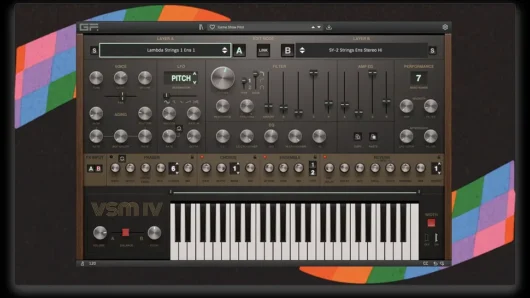
GForce Software is back with another update to one of its existing synths – version IV of VSM (AKA Virtual String Machine 4) – which it’s calling “the perfect solution for creating the sound bed of your next track.”


This features sounds from 46 classic string machines, including models from the likes of Solina, Elka, Logan and Korg. This is significantly more than the 17 that VSM started with in version 1, and you can create hybrid patches thanks to the twin layer architecture. You get in excess of 1,900 presets, more than 200 of which are new, and 11.5GB-plus of sample data.

In addition, there are new features – a fully scalable UI and new patch and instrument browsers that are designed to make it easier for you to find the sound you’re looking for. Undo, redo, copy and paste functions are included.

Alongside these practical enhancements, you’ll find new ways to shape your sounds: wow and flutter; an alternative state-variable filter and ensemble effect; new LFO shaping possibilities; a chorus; and a matrix reverb. The poly aftertouch and velocity controls have been expanded, too, for even greater levels of expression.

VSM IV runs on PC and Mac in VST/AU/AAX formats, and has an introductory price of £84. The regular price will be £120. Find out more on the GForce Software website.