Wave Stream Service Remote Audio Collaboration Service Now Available
Waves Audio is now shipping Waves Stream, a remote audio collaboration service that allows music and audio creators to share audio directly from their DAW with their co-creators or clients, in real time.
Whether you want to share your latest production ideas with a co-writer, share a mix for instant real-time feedback, or receive audio for collaboration, you can now easily share your DAW audio with producers, musicians and mixers working remotely, as if you were in the same room.
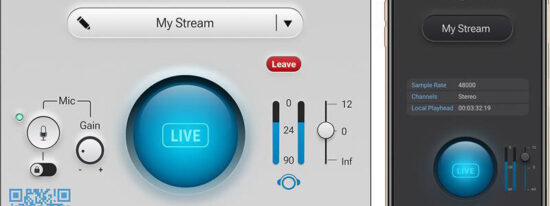
Waves Stream offers low latency, secure link sharing, and unique features such as integrated mic control – all within a streamlined UI that makes remote audio sharing as easy as clicking the big “stream” button.
The Waves Stream Send plugin includes a Mic talkback function which allows you to provide real-time commentary on a song or mix you’re sharing while playing it – similar to a studio’s talkback function. By sidechaining any channel that has a mic connected to Waves Stream, you can share your thoughts with easy gain control.
Waves Stream is private and Secure, ensuring that your audio will reach ONLY whomever you intended. First, every stream is a one-time, single-use link guaranteeing privacy and confidentiality. Second, if someone doesn’t click on a link within five minutes of you sending it, the stream will terminate. For added protection, you have the option to easily password-protect your links.
With Waves Stream, you can start sharing pro-quality audio from your DAW audio within seconds, without disrupting your creative flow. Simply load the Waves Stream plugin onto your master bus or on a designated track, press the big play button, and share the link.
Listening via the Waves Stream web player requires no license. The Waves Stream web player is readily available to anyone with a Waves Stream link. Furthermore, you can choose to listen either via a web player or a DAW. If you prefer to listen to incoming audio through your DAW, you simply use the “Receiver” plugin included in your Waves Stream license.
You an also use Waves Stream to check your own mixes outside of your usual environment. Just pull out your phone, scan the Waves Stream QR code, loop your audio – and listen through your AirPods, car speakers, or anywhere else.
Features:
- Collaborate remotely by sharing your DAW audio in real time
- User-friendly UI for easy one-click audio sharing
- Listen anywhere via web player (desktop, laptop, tablet, phone)
- Also listen in your DAW: ‘Receiver’ plugin included in your license
- Mic talkback function: Communicate directly via Waves Stream
- Check your own mixes away from your studio via easy QR code
- Lossless audio powered by proprietary Waves Falcon codec
- Secure & private: One-time links, optional password protection
- Low latency via peer-to-peer connection
- As an internet-based service that relies on a dynamic web infrastructure for real-time remote communication, Waves Stream is offered on a SaaS (software-as-a-subscription) model.
Waves Stream is available to users either as a standalone monthly or annual subscription (separate from any other Waves subscription), or as part of the larger Waves Creative Access.