Cherry Audio introduces Wurlybird 140B Electric Piano


Cherry Audio has introduced Wurlybird 140B, a sample-based virtual instrument, modeled after the classic 1964 Wurlitzer 140B.

While most Wurlitzer electric piano emulations focus on the 200 series models, Cherry Audio has chosen to jump back a generation and bring you the sound of the 140B, which they say many enthusiasts consider to be the jewel in the Wurly crown.

Wurlybird 140B promises to be a faithful emulation of the original hardware – it samples a professionally restored unit owned by keyboard player and songwriter Tom Hammer. These were captured by sound designer Mike Martin.

It is a virtual Wurly that offers ultra-realistic response with subtle randomisation of key release and pedal sounds. The sound of the original preamp has been modelled, and the vibrato/tremolo emulated.

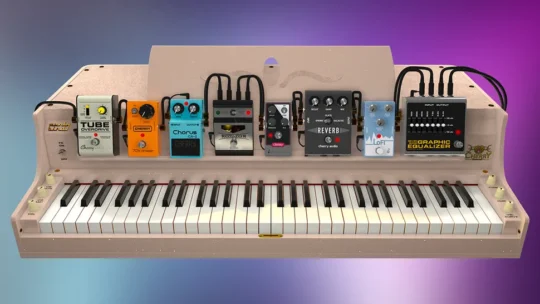
There are also eight stompbox-style effects: Tube Overdrive, Chorus, Rotator, Delay, Reverb, Seven-Band Graphic EQ, ‘70s Phaser and a LoFi vinyl/noise unit. The 50 presets take in both classic and contemporary tones, and the rendered interface adds to the vintage vibe.
What they have to say about it:

“Wurlybird 140B has been crafted by Cherry Audio through deep expert sampling of a professionally restored 140B, along with subtle randomization of key release and pedal sounds, precision modeling of the original preamp, faithfully emulated vibrato/tremolo, and even adjustable background hum.

Additionally, Wurlybird 140B includes a broad spectrum of tonal-enhancing stompbox-style effects, ranging from subtle to extreme.

Intro and performance demo, from synthesist and composer Michael Whalen:

Wurlybird 140B Features:

  • Virtual instrument based on the rare 1964 Wurly 140B model electronic piano
  • Deep multi-sample programming by sound design virtuoso Mike Martin meticulously captures the response of every key and reed
  • Recorded from keyboardist and songwriter Tom Hammer’s exquisite reference model
  • Subtle randomization of key release and pedal sounds for ultra-realistic response
  • Precise modeling of the original preamp
  • Gorgeously rendered resizable UI
  • Easily accessible controls for Vibrato (Tremolo), Tune, Hum, and Velocity Curve
  • Exceptional stompbox-style effects array: Tube Overdrive, Chorus, Rotator, Delay, Reverb, Seven-Band Graphic EQ, and all-new effects algorithms for 70’s Phaser and LoFi with discrete vinyl and noise
  • Over 60 fabulous presets by veteran sound designers James Terris and James Dyson spanning from classic to modern tones
  • Complete MIDI control and DAW automation with effortless MIDI learn mapping

Wurlybird 140B runs standalone and in VST/AU/AAX plugin formats and is available for Windows and Mac. There’s a 30-day demo, and is available now for just $39.
 

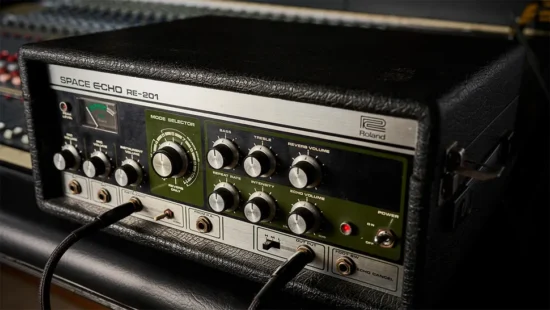
Roland RE-201 Space Echo Now Available As Roland Cloud Plug-in


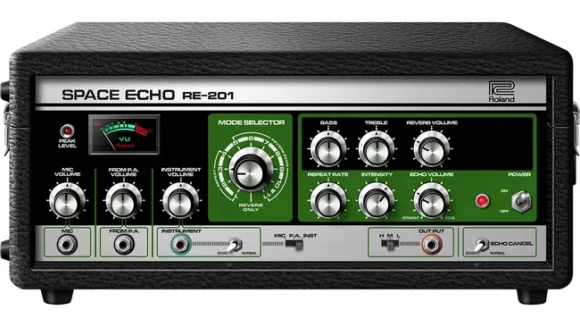
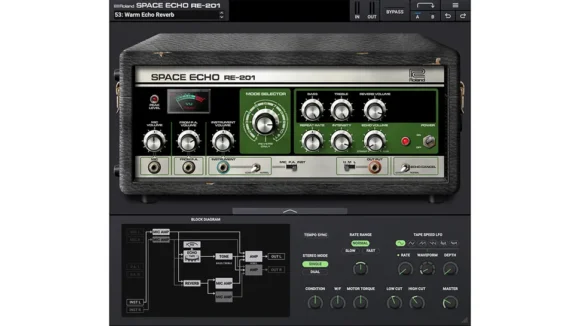
Today, Roland introduced RE-201 Space Echo, an official software reboot of the iconic 1974 tape echo and spring reverb.

Lovingly crafted by the makers of the original Space Echo, you can now have the genuine character of this ultra-versatile and transformative effect in your DAW.

Available via Roland Cloud, this offers multiple tape head combinations and has a resizable, hi-res interface that replicates the look and feel of the original hardware. There’s an extended set of parameters for those who want to go beyond the original controls, along with six tape-speed LFO shapes with tempo sync and adjustable rate and depth.

As with many of Roland’s other recent ‘vintage’ plugins, you can adjust the condition of the unit to vary the sound. The amount of tape wow and flutter and motor torque can also be controlled.

Features:

  • The only authentic Roland RE-201 Space Echo plug-in
  • Iconic tape delay and echo sounds with multiple head combinations and spring reverb
  • Resizable, high-resolution interface brings the feel of using the original hardware
  • Highly detailed and historically accurate graphics with pristine and aged appearances
  • Explore over 50 expertly crafted presets
  • Perfect for all kinds of sources, including keyboards, guitars, drums, vocals, and more
  • Extended parameters for new sounds and modern production techniques
  • Six tape-speed LFO shapes with tempo sync plus rate and depth controls
  • Adjust the physical condition of the unit, tape wow and flutter, and motor torque
  • Support for VST3, AU, and AAX plug-in formats

Audio Demo:

Roland Cloud Ultimate subscribers can download the RE-201 Space Echo plugin now, and it’ll be available to buy as a Lifetime Key from 13 August.

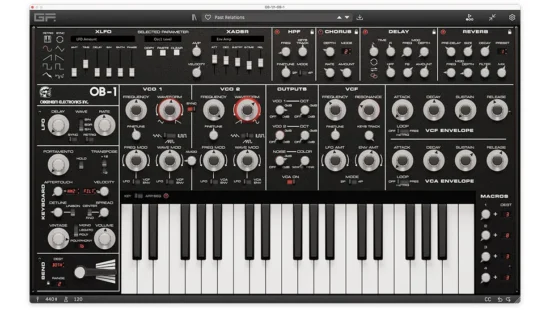
GForce Oberheim OB-1 Puts Classic Oberheim Synth In Your DAW


GForce Software today releases an authentic but enhanced version of the Oberheim OB-1 synth.

Said to offer a sound “as full and robust” as that of a Minimoog and “as aggressive and snarling” as what you’d expect from a Korg MS-20, GForce has released its plugin emulation of the Oberheim OB-1, and it comes with a warning that ‘it’s angry and ready to bite’.

Launched in 1978, the original OB-1 was the world’s first programmable monophonic synthesizer (it enabled you to create and store your own sounds) but, even in these days of retro revivalism, has remained somewhat under the radar. That could be about to change, though; GForce’s software reboot was developed in collaboration with Oberheim and adds a number of new features to the original features.

Promising an authentic sound, the GForce OB-1 also offers an enhanced signal path that includes a new waveform as well as waveshape modulation, discreet level control for the oscillators, sub and noise, LFO sync & retrig, envelope looping, discreet key tracking, cross-mod, pan spread and more.

Further to this, the OB-1 is now 16-voice polyphonic and has a unison mode, while the X-Modifier opens up modulation options aplenty. A high-pass filter has been added, as have chorus, delay and reverb effects. Four macros give you quick control over key parameters, and there’s a built-in arpeggiator and sequencer.

The 300 presets come from a diverse range of sound designers and can be easily sorted and searched in the flexible browser.

The OB-1 has a regular price of £120 but is currently available for the intro price of £60. It runs on PC and Mac both standalone and in VST/AU/AAX formats. Find out more on the GForce website.

You can learn more about the original OB-1 in the company’s mini documentary below: