Softube Intros Model 77 Dual Layer Synth


45 years on from its release, Yamaha CS-80 synth seems more popular than ever. Ownership of the original hardware, though, is the preserve of the lucky few, so the market for software emulations is potentially huge.

Now Softube has joined the likes of Arturia and Cherry Audio in releasing its own version of the CS-80. In fact, the Model 77 (the number denoting the year in which the CS-80 was released) actually emulates a couple of other CS synths, as well: the CS-50 and CS-60.

Softube claims to have “component modelled and accurately articulated every detail” of the three instruments, but up on the surface, it has also simplified the interface to make it easier to tweak your sound. While the Model 77 is dual-layer, the focus stays on one layer at a time, and the various sections are laid out to reflect the signal flow.

There is also an additional ageing slider that you can adjust to dial in oscillator drift and variations in filter cutoff, pulse width and envelope time. So you can go for a stable, modern sound or a wobbly, vintage one (or something in between).

If you want those classic CS sounds – they’re all over Vangelis’s Blade Runner and Chariots of Fire soundtracks and ‘80s classics such as Billie Jean, Africa and Human Nature – you’ll be delighted to know that all the factory presets from the three original synths are here, as is support for polyphonic aftertouch.
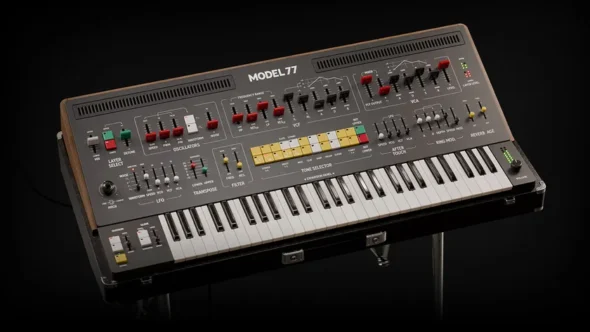
Stereo processing, DAW sync and a reverb are onboard, too, and you also get seven modules from Softube’s Modular and two from its Amp Room guitar and bass software.

Model 77 Dual Layer Synth Walkthrough:

The Model 77 is available now for the introductory price of $99 (regular price $159) and runs on PC and Mac in VST/AU/AAX formats. Find out more and download a demo on the Softube website.
Modular Synths Behind The Berlin Wall – East Germany’s Massive Modular Synthesizer


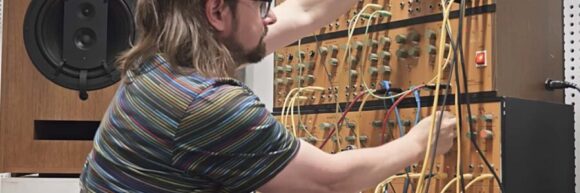
German synthesist Hainbach – in his latest video – takes a look at a rare modular synthesizer system from behind the iron curtain.


What he has to say about it:

“Synthesizers had it hard in Socialist East-Germany – Socialist Realism was for a long time the prevailing art form. An instrument that creates unreal sounds was not endorsed by the SED leadership. Only in the waning years of the GDR (or DDR as it is called in German) that changed, with the Vermona Synthesizer coming out in 1982.

The first officially sanctioned modular synthesizer, the Audiotronic AMS3 featured in this video was built between 1986 and 1988 for the Electro-Acoustic Studio of the Akademie der Künste.”

The Basics Of Subtractive Synthesis For Beginners


In the video, synthesist Starsky Carr offers his take on the basics of subtractive synthesis for beginners.

If you aren’t sure where to get started when it comes to making your own synth sounds, this tutorial covers subtractive synthesis, which is at the heart of most modern and vintage synths.

“Over 99% of synthesizers use the same fundamental building blocks,” notes Carr, “and the secret to programming synths is that they’re all pretty much the same. Learn the basics and everything else falls into place.”

Topics covered:

0:00 Really? Any Synth?

5:21 1. Oscillators

9:24 2. Filters

11:29 3. Envelopes

13:48 Make an Acid Sound

14:31 Program a Funky Bass

15:21 Create a Sequence Bass

15:45 A ‘real’ electric bass (not a synth bass… well it is…)

16:21 Pianos and Keys

18:59 Rich Pads and Strings

21:44 Tricks with Resonance

23:01 4. Pumping Filters with the LFO

24:38 Juno DS Menu Diving – It’s all there

27:44 Performance Controls

28:22 what to do with 2 envelopes

30:19 You Got This.. More complex tones with 2 oscillators

39:40 Arpeggiators – Quick Look with Stranger Things

41:54 Was that OK?

43:24 Intro Track.. now you can do it