ROLI Unveils Airwave, An Expressive New Way Of Learning And Creating Using Its MPE instruments


ROLI Airwave Gestural Controller – Innovation or D-Beam on Steroids

ROLI is positioning the Airwave for both beginners and experienced musicians alike. Airwave harnesses five dimensions: sound, sight, touch, vision and voice.

Furthering its innovative – and education-leaning – remit, ROLI today has announced Airwave, which it describes as a “breakthrough in musical interaction for both music learners and creators.”

On first glance, musicians may see the Airwave as a Roland D-Beam on steroids. More advanced gestural controller options have been available for years, like the Leap Motion + GECO combination or the Genki Instruments Wave MIDI Controller. But the Airwave goes beyond most earlier gestural controllers, letting you use a variety of gestures to add different types of musical expression.

This new hardware frame smartly re-configures any ROLI keyboard (such as its Seaboard, LUMI Keys or Piano M) into an ‘intelligent piano’, harnessing vision and voice capabilities to make music learning ultra easy, and granting an even wider range of dimensions to explore for its MPE-savvy audience.

“Music learning and playing have been far too difficult for too long: intimidating, expensive, and one-size-fits-all,” states ROLI’s CEO, Roland Lamb. “At ROLI, we are on a mission to free the music, making it possible for anyone to learn the language of music with new digital tools that open up new possibilities of human expression.

“With recent advances in computer vision and AI, we are finally able to innovate beyond the keys, and can now bring this human-centric technology to music learners and creators alike.”
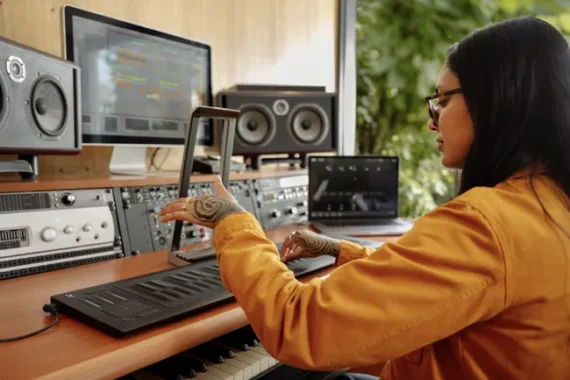
So, what exactly is Airwave? Airwave is designed specifically for ROLI keyboard controllers. Ostensibly an aluminium stand for your keyboard, the small frame incorporates IR 170 3D infrared cameras and brand new ROLI Vision technology to map the hands of the player. It tracks each of the 27 joints in the hand, noting the subtle finger movements as they play in real-time.

It takes this data and can build personalised and responsive feedback which ROLI says “invites musicians to play in new, more intuitive ways across many more dimensions.” Integration with the ROLI Piano M ($249, €229, £219) and ROLI Learn app ($99.99, €99.99, £79.99 annually) really opens up Airwave as an educational tool.

Fuelling Airwave is ROLI’s Musical Intelligence (MI) platform, which uses the principles of sound, sight and touch as its central pillars – with Airwave adding vision and voice. Future ‘intelligent’ products are set to follow.

On that ‘voice’ front, ROLI’s Piano AI technology draws on large language models to complement its hand-tracking capabilities, responding organically to natural voice commands – and providing a more human form of communication.

As ROLI states: “Ask your ROLI Piano to show you a chord, a full piece of music, or give you some time to level up your playing.”
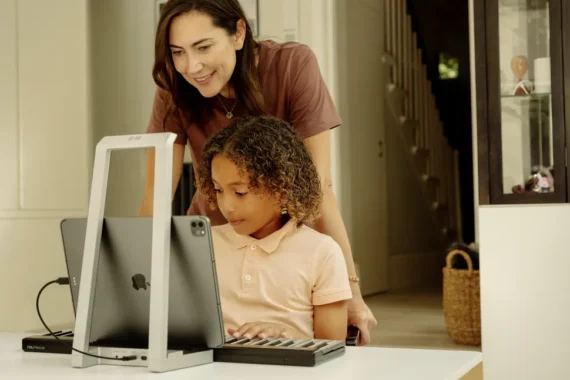
Airwave looks to be both a unique and potentially game-changing music-learning tool, particularly when coupled with the ROLI Piano M’s light-up keys and instructional learning angle. Alternatively, for experienced musicians, ROLI Airwave offers new options for musical expression. Creative musicians can use work with the expanded dimensions of control to concoct and explore new sonic frontiers: “With the simple raise of their hands, creators can transform a piano into a full orchestra, just as a conductor would,” states ROLI. “Or, morph mellow synth pads into searing leads with a tilt of the wrist.”

Acclaim for Airwave has come from some notable names, particularly Fred Again producer Marco Parisi, who states that, “Airwave is a game-changer for creating music and in the way we perform. Every movement and gesture creates a new sound unique to them, which will make music much more expressive, and could even lead to new genres of music.”

Spatial Expression with ROLI Airwave:

The ROLI Airwave is available to pre-order for $299, €299 and £249 with shipping expected for April 2025.

Can the ROLI Airwave take gestural music control to a new level? Check out the demo videos and share your thoughts in the comments!
Ableton Move In Depth Overview


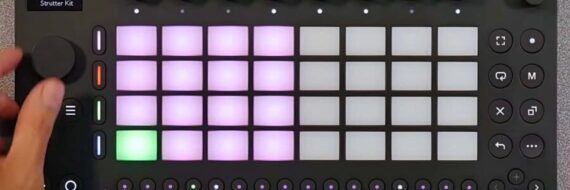
Sonic State – the latest video – captures an overview of the new Ableton Move, the company’s new four-track standalone sampling groovebox.

Ableton’s Johannes Russ & Brian Mauleon provide an intro to Move and its capabilities, the Move workflow, integration with Live and more.

Ableton Unveils Move, A Compact Standalone Instrument & Controller


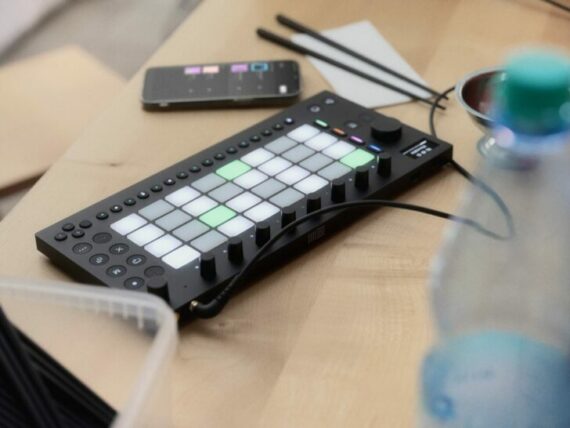
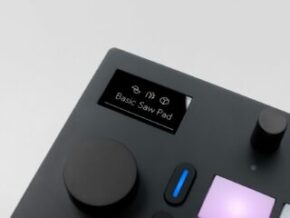
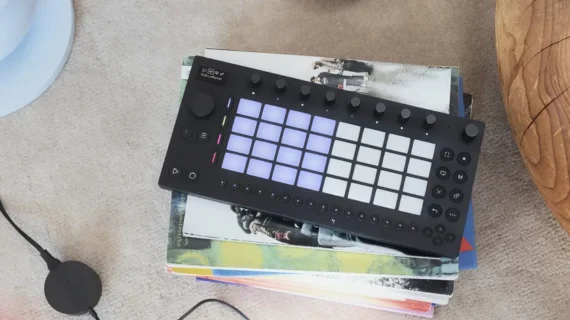
After having teased its arrival earlier this month, today, Ableton has finally unveiled its latest hardware device. Move is a compact controller and instrument that – like the latest version of Ableton’s flagship controller Push – can operate both tethered to Live and as a standalone device, thanks to an onboard CPU and rechargeable battery.

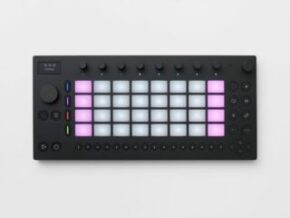
Ableton Move is offering a core library of over 1500 sounds and a simple workflow. It comes with 32 polyphonic aftertouch pads, a 16-step sequencer, a built-in speaker and a microphone for sampling.

Although it shares some obvious characteristics with Push, Move actually has more in common with the company’s iOS sketchpad Note. In its standalone mode, Move runs an onboard OS that closely resembles the workflow of Note. This allows the unit to run up to four tracks, each of which makes use of a version of one of Live’s Instrument Rack or Drum Rack devices.

These Racks make use of a limited selection of Live instruments and effects to produce both melodic and percussive sounds. The Drum Racks can contain 16 instances of the Drum Sampler device, which was recently added to Live 12.1, while the Instrument Racks can each contain a single instance of either Drift, Wavetable or Live’s Melodic Sampler. Each Rack can host two effects, one send and one insert, chosen from a limited selection of Live devices.

Patterns can be programmed using Move’s grid of 32 polyphonic pressure-sensitive pads, or via the button step sequencer along the rear of the unit. Both playing and automation can be recorded, overdubbed or recalled using Live’s Capture functionality.

The sounds offered by Move are largely preset-based, all sounds can be customised using the parameters controlled by a bank of eight touch-sensitive rotaries along the top of the unit.

Move also features onboard sampling capabilities. Users can sample via a built-in mic, a 3.5mm audio input on the rear of the unit, or by resampling the main output. It’s also possible to import samples via either a wired connection or Move’s onboard WiFi.

On that front, Move offers a number of methods for users to take ideas started in standalone mode for further development in Live. This can be done using the browser-based Move manager – again accessible via either wired or wireless connection – or by using Ableton Cloud, which lets users transfer Move projects to Note or Live.

Along with its standalone capabilities, Move can also function as both a controller for Live whereby its pads, sequencer and rotaries can be used to play and edit Live’s devices, trigger clips and input patterns. Move also functions as a USB interface.

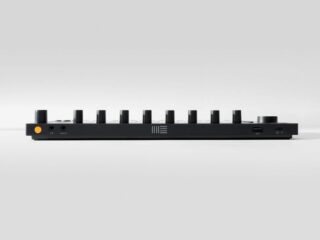
The hardware itself has a fairly minimal range of I/O. The rear panel has 3.5mm jacks for audio input and output, which are joined by two USB ports. The first, a USB-C port, is used for power and connection to a host computer, the second, USB-A, is used for connection to MIDI devices. According to Ableton, Move’s onboard battery life is around 4-hours. It can also sync with other devices via Ableton Link.

Key Features:

  • Standalone – Up to 4 hours of music making per charge.
  • Four tracks – Set up any or all of Move’s tracks in Drum Mode, Melodic Mode, or as a sampler.
  • Session Mode – Mix and match your musical ideas, using Move’s pads to trigger clips.
  • Sampling – Use the built-in microphone or stereo line input to sample directly into Move — plus resample your tracks internally.
  • Repeat – Quickly create a series of repeating notes.
  • Capture – Move remembers what you just played, so you never lose an idea.
  • Parameter automation – Tweak the encoders to record dynamic changes to your sounds in real time.
  • Instruments – Drum Sampler, Wavetable, Drift, Melodic Sampler
  • Effects – Reverb, Delay, Saturator, Chorus-Ensemble, Phaser-Flanger, Redux, Channel EQ, Compressor

Hardware Specifications:

  • 32 velocity-sensitive, backlit silicone pads
  • Touch-sensitive, clickable jog wheel
  • 16 backlit multifunctional buttons
  • 9 high-resolution encoders
  • 3″ white OLED display
  • Stereo Line Out and Stereo Line In (3.5mm)
  • Built-in microphone and speaker
  • Built-in WiFi
  • 64GB Internal storage
  • USB-C Port to connect to computer
  • USB-A Port to connect MIDI devices
  • Dimensions: W313.5 x D146.3 x H34mm
  • Weight: 0.97kg / 2.1lbs

Ableton Move Demo Videos:

Move is available now for £399/$449/€449. Find out more at the Ableton site.