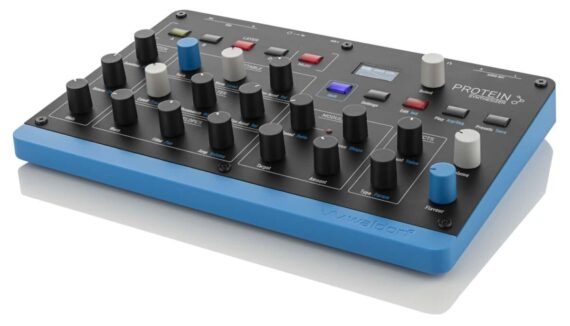
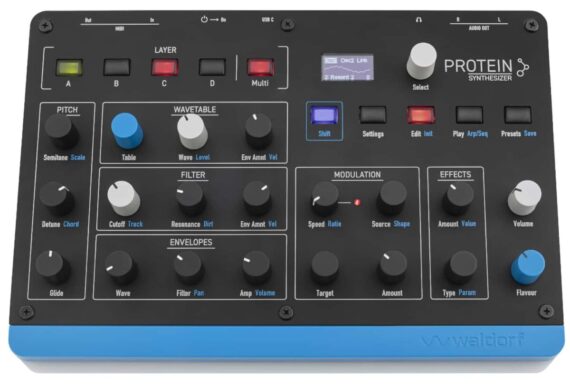
Waldorf Music has introduced the Protein, an inexpensive, compact 8-voice polyphonic wavetable synthesizer, based on the original Microwave 1 ASIC oscillators and combined with modern features of Iridium heritage, including the arpeggiator, a step sequencer, chord mode, effects and more.
“The Protein goes back to the very beginnings of Waldorf’s instrument making,” they say, “interpreting the original ideas in a contemporary and innovating way.”
Features:
Protein’s 8 voices can be organized in up to 4 layers, allowing for complex sonic layered arrangements, round-robin modes, or split by MIDI channels for poly timbral operation.
With the Load Layer feature new sonic arrangements can be created in seconds by simply recombining existing layers from the extensive preset collection.
It comes with 150 factory presets of huge variety and can store up to 250 user presets. Using the 4-layer concept, users can mix and match from the existing library and create new combinations with the Load Layer feature.
Each layer features an eight-slot modulation matrix, offering a multitude of modulation possibilities for shaping sound.
The Protein also supports polyphonic aftertouch modulation.
A “Flavour knob” adds an extra layer of organic behavior, from tiny micro-fluctuations up to “sweet disturbances” to keep digital sound lively.
Waldorf Music recreated the original gritty 8-bit quantized and aliased sound of the Microwave 1 ASIC oscillators, running at 250 kHz sample rate, just like the original.
Waldorf Protein Deep Dive Video:
The Waldorf Protein is available now, with an intro price of € 329.00 (normally 379.00).
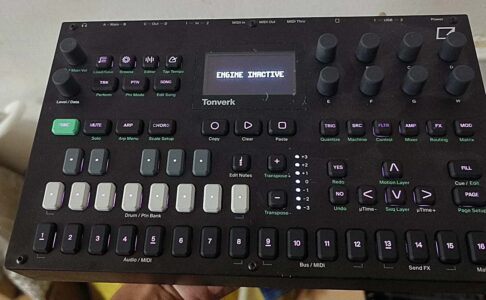
Elektron has released Tonverk 1.1.0, a free firmware update that adds a new granular machine and more.
New in Elektron Tonverk firmware 1.1.0:
Features:
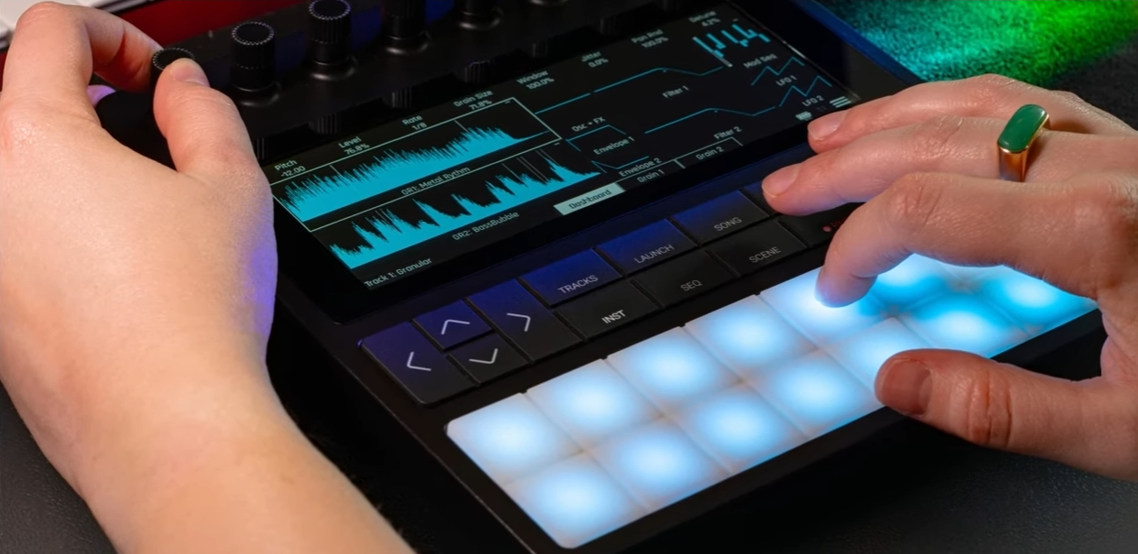
Grainer – Grainer is a SRC machine that lets you chop and sculpt your sample from the smallest fragments of sound into entirely new sonic forms. You control grain amount, size, density, position, randomness, spread, direction, and more – with three Play Modes that shift it from drifting pads to tempo-synced stutters to smooth, oscillating layers. Dive in and explore – you’ll likely manipulate your own wild sounds into existence. Jump over to the FLTR page and dial in Grainer’s unique dual shelving filter to take things even further. Each voice can run up to eight grains, and with every one of Tonverk’s audio tracks able to use eight voices, the Grainer potential is massive. It’s granular made polyphonic, tactile, and expressive.
Shape is a special machine added to enable the shaping of sound on the bus and send tracks. These can be utilized via additional parameters on the filter page, offering a dual shelving filter with low shelf gain, low shelf frequency, high shelf gain and high shelf frequency. You can also head to AMP to access ADSR or AHD envelopes and stereo width control on these tracks.
Bus compressor Sidechain source – Choose what the compressor listens to when shaping the bus mix. Select any track (TRK 1–8) or the external inputs as the sidechain source – letting kicks carve space, external signals drive movement, or any element in your pattern control the dynamics of the whole bus track.
Post FX pan control – Open up the FX Setup and gain the ability to pan the track’s sound after the effects stage, affecting the entire output of the track. This is available for all audio tracks, as well as the buses and sends.
Other fixes and improvements:
The USB MIDI input and output is now functioning as intended (alongside the previously fixed MIDI over DIN), meaning you can create multisampled instruments yourself with ease, via the Auto Sampler.
Undo/Redo functionality is also accessible for paste/clear operations of patterns and track sequences, with deeper Undo/Redo powers to come/in the pipeline.
The sample browser’s look and feel have been sharpened too, part of a number of general improvements to navigation, performance, and stability.