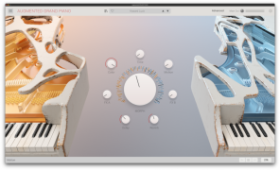
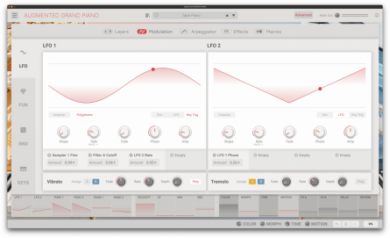
Arturia has introduced Augmented GRAND PIANO, a software instrument that combines high-quality piano samples with modern synth engines.
The combination is, according to the company, “Ideal for film scoring, video game soundtracks, and library music production”.
Features:
Piano timbres unheard – Starting with beautifully captured recordings of an ‘80s Steinway Grand, embellished with unusual techniques like bowing, ping pong balls, and tape-processing, and fused with synthesis for fresh, exciting, outside-the-box piano sounds.
Transformative morphing – Users can animate tracks with timbres that flow between familiar & far-out, acoustic & synthetic, and pure & transformed with the powerful Morph control. Move between sound layers and make broad changes to multiple aspects of a sound with one control.
Instant expression – Customize and interact with Augmented GRAND PIANO’s sound intuitively with its array of straightforward macro controls, affecting various parameters and ensuring that expressive dynamics, articulation, and timbral control is only ever a click away.
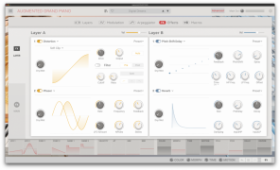
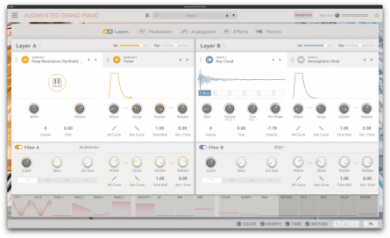
Construct your sound – Every aspect of Augmented GRAND PIANO’s sound can be customized with 2 distinct layers, each including 2 sound sources, for weaving compound textures with whatever combination of samples and synthesis that users need.
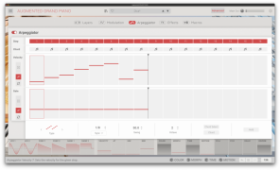
Deep sound design – Augmented GRAND PIANO is “a shortcut to perfect piano sounds”, but its advanced panel lets users go deeper when a project calls for it. Add complex modulation, keep it moving with smart arpeggiation, and fine-tune sound layers in one place.
Augmented GRAND PIANO is available now for $99. Registered users can access their intro pricing by logging in at the Arturia website.
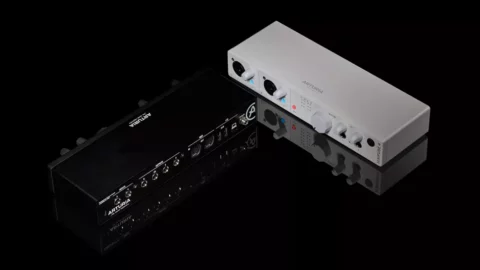
Arturia MiniFuse 4 audio interface finally gets its time to shine. This 4-in/4-out device is now shipping.
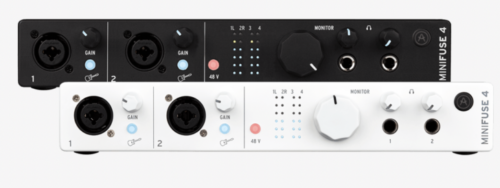
Arturia today introduced the MiniFuse 4, a 4-in/4-out audio & MIDI interface that they say offers best-in-class audio quality in a compact package.
Arturia’s MiniFuse 1 and 2 audio interfaces were released almost a year ago, but only now is the flagship MiniFuse 4 making it to market.
The 4-in/4-out device promises “best-in-class” audio quality, which equates to 110dB dynamic range and equivalent input noise of -129dB. MIDI I/O and a USB hub are also onboard, and there are dual headphone outputs.
As is becoming common these days, MiniFuse 4 has a virtual stereo loopback channel that enables you to record audio alongside the inputs for easy ‘content’ creation, while the bundled software includes Ableton Live Lite, Analog Lab Intro and Native Instruments’ Guitar Rig 6 LE.
Key Features:
“Best-in-class audio quality” – A 110dB dynamic range and industry-best equivalent input noise of -129dB means clear noise-free recording and studio-grade sound quality.
Connectivity – Record with up to 4 inputs, connect other gear via MIDI & the USB hub, and customize your ins and outs including dual headphone connections.
Loopback channel – The stereo virtual Loopback channel lets you record audio from your computer alongside MiniFuse 4’s inputs for a seamless content creation.
Production-ready software bundle – Featuring Ableton Live Lite, Analog Lab Intro & Native Instruments’ Guitar Rig 6 LE.
Features:
Included Arturia instruments – 500 vintage & modern keyboard presets with Analog Lab Intro
Arturia FX:
Rev PLATE-140 reverb
Pre 1973 vintage preamp
Delay TAPE-201 echo
Chorus JUN-6 analog chorus
Ableton Live Lite – compose, record, produce anything
2 x combo Mic/Inst/Line XLR Input with 48V phantom power
+ 2 x Inst/Line TRS Inputs
4 x 1/4″ TRS balanced line outputs with volume control
2 x stereo headphone output with volume control
1 x 5-pin MIDI input 1 x 5-pin MIDI output
2 x USB2 type A hub (250mA max.)
1 x stereo virtual loopback channel
USB-C interface compatible with PC and Mac, fully USB 2.0 compatible
Arturia’s new MiniFreak is a polyphonic hybrid synth that goes where the MicroFreak didn’t… and it comes with a free VST version
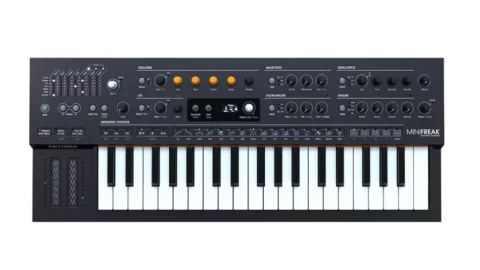
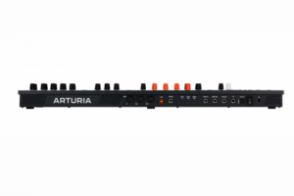
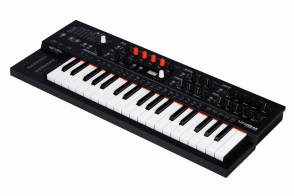
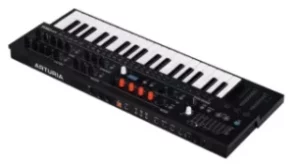
Picking up where the paraphonic MicroFreak left off, MiniFreak is a new polyphonic hybrid synth from Arturia. It offers six voices, two sound engines, a 37-note slim keyboard, built-in stereo effects and numerous creative modulation and sequencing features. Additionally, it comes with a like-for-like plugin instrument, MiniFreak V, for free.
The twin digital sound engines can operate in more than 20 different modes. You can use these engines individually, stacked, or to process each other’s output for “unique compound sonic behaviour”.
The resulting sounds are then run through analogue filters. You can use MiniFreak as a 6-voice polyphonic synth, a 12-voice paraphonic one, or in monophonic or unison configurations.
Further sound design takes place in the modulation matrix, which offers the likes of polyphonic ADSR envelopes, customisable multi-segment LFO shapes, FM & ring modulation, and ‘Spice & Dice’ randomisation.
There are stereo outputs and three digital effect slots that you can fill with a choice of 10 FX types. These include chorus, three-band EQ and distortion.
The 37-note, velocity-sensitive aftertouch keyboard looks like a significant step up from the MicroFreak’s capacitive control surface, and should make it much more playable. There’s also sequencer/arpeggiator functionality and randomisation features.
The VST version of MiniFreak uses identical sound engines, modelled filters, presets and controls, so presets and your own sounds can be shared between this and the hardware.
Official intro video:
The MiniFreak also comes with a companion ‘like-for-like’ VST instrument, MiniFreak V, that you can use in your DAW.
MiniFreak is available to purchase now priced at $599/€599. Find out more on the Arturia website.
Key Features:
Hybrid polysynth power – MiniFreak’s twin digital sound engines feature over 20 modes, and can be used individually, stacked, or to process each other’s output for unique compound sonic behavior. Its digital voices then pass through analog filters, balancing digital crispness with a rich analog response, giving you 6-voice polyphony, 12-voice paraphony, monophonic, and unison configurations.
Customizable & experimental sound design – MiniFreak’s expanded modulation matrix gives users even more control over shaping, transforming, and evolving their sound, with features like polyphonic ADSR envelopes, customizable multi-segment LFO shapes, FM & Ring Modulation, and the familiar Spice & Dice randomization.
Mix-ready stereo sound – With stereo outputs and 3 digital FX slots with 10 FX types to choose from, users will have everything they need to push their sound over the edge while keeping it mix-ready, from stereo-enhancing chorus, to surgical 3-band EQ, to gritty distortion.
Expressive PerformancerOptions – The MiniFreak offers a velocity-sensitive 37-note keybed with aftertouch and Seq/Arp functionality, plus randomization features.
MiniFreak V – MiniFreak comes with a dedicated VST counterpart, letting users totally integrate its unique hybrid sound and presets into their DAW productions and vice versa. Using identical sound engines, modeled filters, presets, and synchronized controls, users can enjoy an identical experience in hardware or software form.
Features:
6-voice polyphonic hybrid synthesizer
37-note velocity-sensitive Slim-key keybed with aftertouch
2 sound Engines with 22 oscillator modes in total
Engine 2 can be used to process Engine 1
1 envelope per voice
1 cycling envelope per voice
2 LFOs per voice
Polyphonic analog filters and VCAs
6-voice polyphonic, 12-voice paraphonic, unison, or mono configuration
3 digital FX slots in insert or send mode, with 10 FX to choose from
User-customizable LFO curves
Mod Matrix with 7 sources and 13 potential destinations
OLED display for real-time visual feedback
Intuitive 64-step sequencer (4 pages of 16 steps)
4 lanes of automated modulation
Performance Arpeggiator controls including Ratchet, Octave Randomize, and more