After a sold-out run this summer, the New England Synth Fest returns to the Museum of Science in Boston at the Charles Hayden Planetarium. The event features synth musicians and visualizers “like never before” in the Planetarium’s immersive full-dome environment, featuring a brand-new lineup of performers and Lobby exhibitors.
Charles Hayden Planetarium performances:
ximena with visuals by Ziaire Trinidad Sherman
Square Root of Negative Two
Mesmers with visuals by Allison Tanenhaus
Lobby performances by:
Collin Russell
NoizCode
Black Potion
New England Synthesizer Festival is a loose-knit inclusive community of synthesizer hardware and music enthusiasts. Since 2004, they have supported exhibitions, meet-ups, performances, and education, and their interests include every technology, niche, and musical style related to synthesizers. Their events welcome performers, fans, builders, collectors, professionals, hobbyists, artists, and engineers, with experience from beginner to expert.
New England Synth Fest is at the Museum of Science in Boston on Thursday, February 23 at 7:30 pm. Tickets for the event are $15 and are available for purchase at the Museum of Science website.
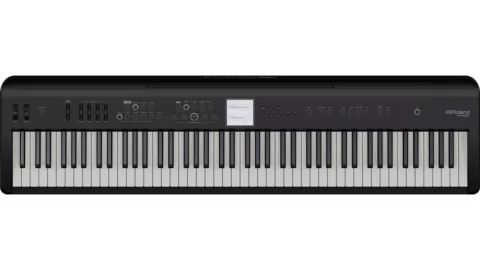
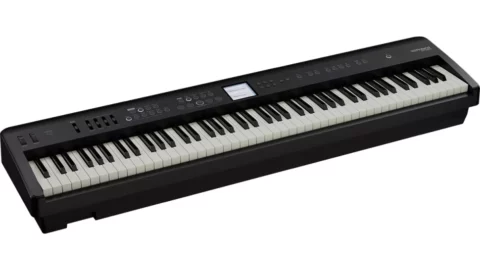
Roland has announced another portable digital piano – the FP-E50 – is bringing the company’s ZEN-Core synth engine along for the ride.
Does this 88-note keyboard give you the best of both worlds?
ZEN-Core is Roland’s flagship synthesis system – the one used in the likes of the Jupiter-X and Fantom workstation keyboards – and its inclusion gives the FP-E50 a notable point of difference in comparison with other digital pianos.
In the FP-E50, ZEN-Core supplies 1018 onboard sounds (synths, brass, orchestral voices, guitars/basses, drums and more). These can be layered with the all-important piano tones that come included.
Said tones are generated using Roland’s SuperNATURAL piano engine, and can be played on the 88-note hammer-action keyboard, which offers escapement and an ivory-like feel.
More ZEN-Core sounds can be added via Roland Cloud. But, it seems you can’t install the Model Expansions that emulate specific classic Roland synths – you will need a Jupiter-X, Juno-X or Fantom if you want those – but EXZ Wave Expansions and SDZ Sound Packs are on the menu, providing you have the appropriate subscription.
FP-E50 is designed for home use and it is also portable – the built-in stereo speakers are a clear indicator of that – and you can hook it up to external speakers if you wish. Other connectivity options include a headphone output, Bluetooth audio/MIDI and computer integration via USB.
In addition, there are auto-accompaniment tools. You can fire-up full-band backing tracks in more than 200 styles, with more style packs available on Roland Cloud.
Accompaniments are triggered using your left hand. Beginners can use one-note triggering, and there’s full-chord detection for more advanced players. An Interactive mode enables you to adjust the volume and “energy” of the backing in real-time, and you can set up chord progressions for improvisation in a dedicated sequencer.
And, there are vocal effects. Plug in a mic, start singing and the FP-E50 can generate real-time vocal harmonies that follow the chords, and there’s a transformer that can switch your vocals’ gender or turn you into a robot. Further “studio-grade” vocal effects include a vocoder, an ambience effect, a compressor and a noise suppressor.
Navigation of the FP-E50 is said to be simple. The top-level display shows you the current sound, tempo and other essential information, and we’re assured that it’s easy to make sound selections, favourite specific tones, transpose and more. Long-press functionality on many buttons is designed to cut down on menu diving, and you can save complete keyboard setups as Scenes. Landing this February, the FP-E50 will cost $1,000.
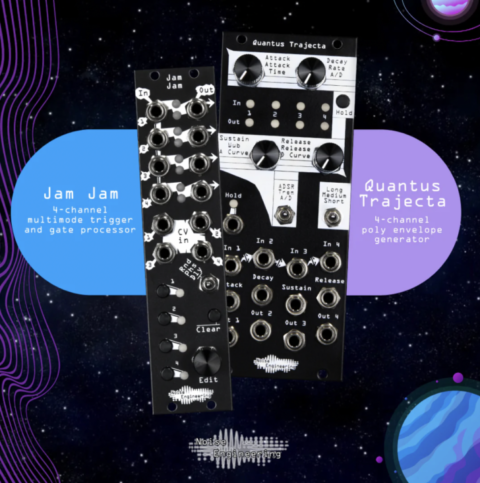
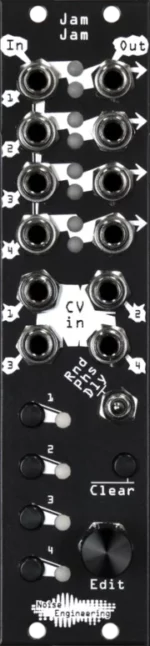
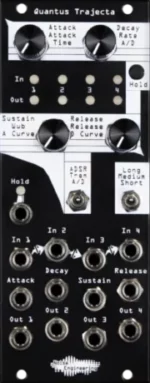
Noise Engineering has announced the release of two new modules: Jam Jam and Quantus Trajecta. Jam Jam is a multi-mode trigger-and-gate processor with four individually adjustable and CV-able channels. Quantus Trajecta is a quad envelope designed with polyphony in mind.
The company has also introduced “hot-swappable” panel overlays for their Versio and Legio platforms so users can swap firmware and easily have a matching panel that doesn’t require disassembling their module.
Jam Jam is a “versatile and fun” trigger-and-gate processor with four individually adjustable and CV-able channels. The three modes pack incredible functionality into the tiny 6HP package:
Random mode turns the module into four individually adjustable probability processors, great for adding variety to a patch.
In Clock Phase mode, the module adjusts incoming clock phase based on clock period. Use this to adjust sequencer timing or to create sequences that drift out of sync and then back in with CV.
Use Gate Delay mode as a simple trigger delay to help keep things in sync in your patch or for creative patching: dial in shifts in the timing of events from sub-millisecond adjustments to huge delays of over 15 seconds.
Notable features: Jam Jam
6 HP
CV-able inputs
Clock phasing
Trigger delay for utility or creative use
Great size for any system
Preorders for Jam Jam are open now, and available black and silver. Shipping from Noise Engineering and retailers starting January 26, 2023; MSRP $240
Quantus Trajecta is a quad envelope designed with polyphony in mind. Quantus Trajecta’s envelope structure takes the functionality from Noise Engineering’s beloved Loquelic and Cursus Iteritas Percido modules, and adds even more control and mode options like ADSR and Tremolo, which adds an LFO with Rate and Wub controls.
Each parameter is CV controllable, and each control universally adjusts all four envelopes for easy polyphonic tracking. Quantus Trajecta is performable, musical, and most importantly, fun.
Notable features: Quantus Trajecta
10 HP
Universal controls make polyphonic envelopes a cinch
Multiple envelope shapes
Wub wub wub
CV-able parameters
Hold control freezes envelope in place
Preorders for Quantus Trajecta are open now. Module is in stock and available black and silver. Shipping from Noise Engineering and retailers beginning January 26, 2023; MSRP $280
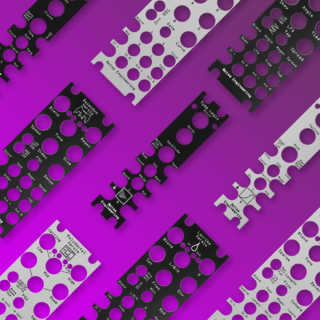
Panel Overlays. In addition, Noise Engineering has introduced hot-swappable panel overlays for the Versio and Legio platforms so users can swap firmware (free at Noise Engineering’s Customer Portal) and provide an easy way to have a matching panel that doesn’t require disassembling their module. Individual panels and discounted multipacks are available.
The Versio and Legio platforms allow users to freely swap between a growing number of firmwares for each module, but changing out a panel can be laborious. The new Noise Engineering panel overlays fit over the existing panel, with no need to remove knobs. The user can “hot swap” with these impact acrylic, laser-etched panels, available in silver with black text or black with white text. Individual panels are available at the Noise Engineering website, and discounted multipacks (one of each panel) are also available.
Panel overlay preorders are open now, in stock and available in black and silver. Shipping from Noise Engineering and retailers starting January 26, 2023; MSRP varies: Legio single panel: $16; Legio multipack (3 panels): $36; Versio single panel: $16; Versio multipack (8 panels): $112.
Everything is available and begins shipping Thursday, January 26, 2023. More information is available on the Noise Engineering website.