Zenology Pro v2 Updates adds More Sounds, A Refined User Interface and more

The Zen-Core-powered soft synth gets an update. Roland Zenology Pro plugin hits version 2.0: more sounds and a refined user interface

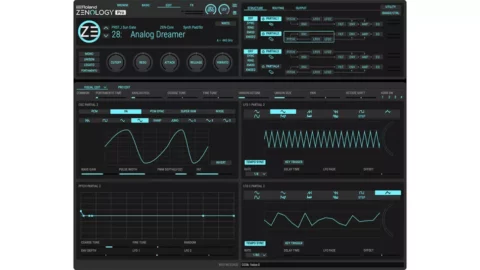
Zenology Pro is the plugin home for Roland’s flagship Zen-Core synthesis engine, which is used to power its finest software and hardware synths. It’s now been updated to version 2.0, which adds a variety of new features.

For a start, there are now 500 additional presets, while the refined user interface promises a new structure view, click-and-drag resizing, visual feedback and more. Zenology Pro’s inflexible GUI has been redesigned to improve the software’s workflow.

Other enhancements include a fully integrated browser view and a new reverb section with eight distinct algorithms.

Besides that, the fundamentals of Zenology Pro remain in place. You start with 4,000 tones and 200 drum kits, expandable to a total of more than 10,000 via sound packs and Wave Expansions on the Roland Cloud. Each tone can be made up of up to four partials, each of which has an oscillator, filter, amplifier, dual LFOs and equaliser.

The synth explores a variety of synthesis types, including PCM, virtual between Partials – Supersaw and Noise. There are 10 filter types, eleven LFO shapes (including tempo-synced Step LFOs with 37 curves per step) and more than 90 effects, some of which are inspired by classic hardware from the Roland archive.

If you own Zen-Core hardware, the good news is that sounds are exchangeable between that and Zenology Pro. Current Zen-Core offerings include the Fantom and Jupiter-X ranges, Juno-X, RD-88 , MC-101, MC-707 and more. Zenology Pro 2.0 is available as part of a Roland Cloud Pro ($10/month) or Ultimate ($20/month) subscription. Find out more and sign up for a free trial on the Roland website.
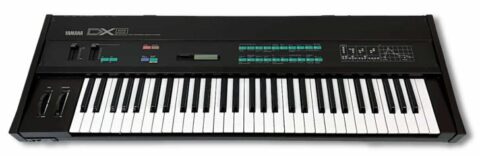

Yamaha DX9 alternate Firmware makes it a 6-Op, DX7-Compatible Synth

DX9/7 is an alternative firmware ROM for the Yamaha DX9 synthesizer that turns it into a 6-operator, DX7 compatible synth.

What the developer say about it:

“Its aim is to uplift the DX9’s functionality to more closely match that of the DX7. It restores features that were intentionally restricted in the firmware, such as increasing the operator count to six, and adding a pitch envelope generator. This ROM makes the synth properly patch-compatible with the DX7.

This is not a patch for the existing DX9 firmware, it is an entirely new firmware ROM. It has been assembled from the original binary, together with code from the DX7’s V1.8 ROM, as well as new code written from scratch.”

New Features:

  • Makes the DX9 able to play DX7 patches.
  • Restores the use of all six operators.
  • The synth is now sensitive to the velocity of incoming MIDI notes.
  • Implements the DX7’s pitch EG.
  • Implements DX7 style operator scaling.
  • Implements DX7 style portamento/glissando.

*Note: Potential users of the new firmware should note that it is not a patch, but an entirely new ROM. It does not turn the DX9 into a DX7, because some DX7 parameters have no equivalent controls on the DX9. The developer also describes the firmware as “highly experimental”, and we’re advised that “installing the firmware for everyday general use isn’t recommended just yet.”

Watch the video below to find out what the synth was all about.

It is fair to say that if you like the idea of getting a DX7 for a quarter of the price, check out the project at Github. If you are not hardcore, the stock DX9 sounds great and is still one of the best 4-op FM synths ever made.
via jrbattin

‘Love On A Real Train’ Roland MC-707 Cover

Austin-based synthesist geomagnetics shared this Roland MC-707 cover of the Tangerine Dream classic, Love on a Real Train, from the soundtrack of Risky Business.

The arrangement makes clever use of minimal gear. What they say about it:

“This is a cover of the great Tangerine Dream song. I wanted to stick close to the original version while keeping it strictly on the MC-707 and not use external gear.

I’ve loved this song for as long as I can remember, but covering it gave me a whole new respect for what they did in those studios before computers and grooveboxes.”