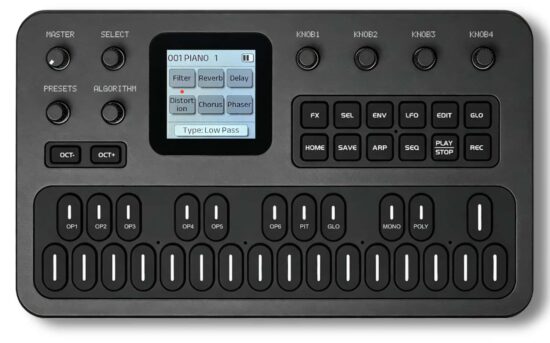
The Creator Lab will highlight inMusic’s support for the new trend of empowering gear owners to customize their gear with alternate firmware.
inMusic – parent company to Akai Pro, Moog, Alesis, Native Instruments, Numark and other brands – has announced that it will be bringing 22 new products to the 2027 NAMM Show, along with a new concept, The inMusic Creator Lab.
The Creator Lab will highlight inMusic’s support for the new trend of empowering gear owners to customize their gear with alternate firmware.
“These products don’t need to be modified. They’re complete instruments designed to stand on their own,” said CEO Jack O’Donnell. “But for creators who want to take them somewhere new, we want to make that possible. Openness doesn’t require incompleteness.”
The Creator Lab is inMusic’s response to the musicians becoming increasingly comfortable modifying the technology they use, especially with AI-assisted ‘vibe coding’ making software development more accessible.
Many of the 22 products being demonstrated are designed to support further enhancement by programmers, product modders and the growing community of creators using traditional and AI-assisted coding methods. inMusic invites programmers and technically curious music makers to explore those possibilities and bring their own tastes, workflows and ideas to compatible inMusic devices.
Beyond Vibe Coding
Whether or not you are interested in so-called ‘vibe coding’ or alternate firmware options, open platform music gear promises benefits to all musicians. Open platform gear could help reduce bugs in obsolete gear, gear with incomplete or missing features, and incompatibility with modern computers and protocols.
Open platform music gear also promises to fuel new product development, as developing software, hardware and firmware become more accessible to musicians.
What do you think of companies like inMusic and Behringer jumping on the open platform bandwagon? Share your thoughts in the comments!
The FM-1 and its software community have arguably made it the synth of 2026. You buy the FM-1 for well under $100 and run it with the powerful stock firmware, or use one of dozens of alternate firmware options that give the synth completely new capabilities.
In this video, though, Steinberg looks at going further and building your own firmware. Starting at around 16:39, Steinberg demonstrates how he approached it.
Have you tried creating your own firmware? If so, share how you did it in the comments!
Polyend Opens Tracker, Tracker+ And Tracker Mini To Custom Firmware
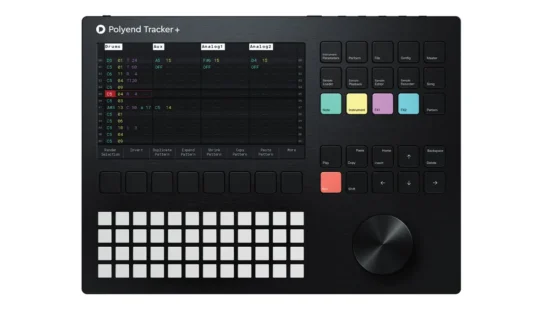
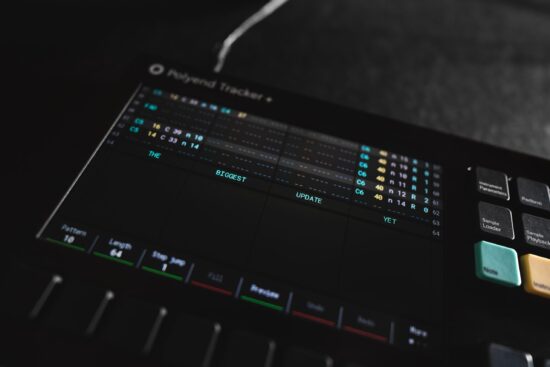
Polyend’s range of Tracker samplers are the latest hardware instruments to go open source, as the developer makes their code available on GitHub to coincide with what it’s calling the range’s “biggest update yet”.
Polyend releases the Tracker firmware source code for the original Tracker, Tracker+ and Tracker Mini on GitHub, and they also releasing Tracker Community Edition 1.0 with tons of new features and improvements.
The first released in 2020, the original Polyend Tracker was a hardware sampler with a sequencing setup based on the vertically scrolling, numerical format of software trackers like Ultimate Soundtracker, Sunvox or Renoise. The concept was developed further with the launch of the pocket-sized Tracker Mini in 2023 and Tracker+ in 2024, which added extra capabilities including stereo sampling and new synth engines.
With the rise of AI-led ‘vibe coding’, open source hardware is suddenly the hottest topic in music technology, with several brands making a rapid pivot towards open source firmware in recent weeks. In fairness though, Tracker feels like a particularly appropriate product line to go down this route, given the long history that tracker software shares with DIY programming and the Demoscene subculture.
“Here at Polyend, creativity is what we value most,” says Polyend CEO Piotr Raczyński. “We’ve seen it firsthand in the unofficial Tracker mods you’ve built, and we’re sharing the firmware source code to support that work.
“Maybe you want to build an entirely new instrument on the Tracker hardware? Or maybe there’s just one thing you wish your Tracker did differently? Either way, you can now try it on the unit you already own. I bet some of you already have ideas for the original Tracker that never crossed our minds.”
Handily, Polyend has also supplied a Tracker recovery system to aid any user that accidentally bricks their hardware.
Polyend has also revised the license to an MIT-based model that permits commercial reuse of individual code components and SDKs, while restricting commercial clones of the complete Tracker application and retaining separate restrictions on proprietary precompiled synthesizer libraries.
Why It Matters:
Opening the firmware gives the Tracker platform a potential future beyond the features and development priorities of its original manufacturer. Independent developers can create new synthesis engines, effects and workflow changes, while users gain greater control over how their instruments evolve.
This means that the Tracker can have a future that is independent of Polyend.
Polyend hasn’t given up on firmware updates of its own though. Alongside the release of the source code, the company has launched an update named Tracker Community Edition 1.0. This brings a variety of enhancements across the range including the ability to stream samples directly from an SD card.
There is also a new Sample Editor that allows users to create and load effect and generator plugins. The initial firmware includes six plugins that range from a multi-mode filter and stereo delay to an analogue-style kick generator. Tracker+ and Tracker Mini also gain new synth modes, Chip, which is the first to use the new open Synth SDK, and Dirt, a new wavefolding/distortion synth.
Other updates added with the firmware include wavetable envelope and wavetable LFO modulation sources, custom colour and font configurations, new chance conditions and dedicated Micro-Move and Volume steps for the sequencers, the latter meaning its possible to input timing and volume level changes without occupying one of the two available FX slots.
What’s new in Community Edition 1.0:
Stream long samples from the SD card. Bring full-length stems, loops and field recordings into a project using a fraction of the sample memory they’d normally need. This works even on the original Tracker.
Record timing and velocity while keeping both step FX slots free. Micro-move and Volume now have dedicated fields on every step. New Chance conditions let you bring in a snare fill every fourth pass.
Load plugins in the Sample Editor. Six effects and generators are included, from an analog-style kick generator to a stereo delay. The plugin SDK lets you build, share and sell your own.
Play two new synths on Tracker+ and Tracker Mini. CHIP and DIRT join the synth lineup. A new SDK lets you build your own synth engines.
All three models also get wavetable envelopes and LFOs, faster project loading and saving, and tighter MIDI clock timing. You can design custom Tracker themes and fonts in your browser.
Take a look at the changelog for full details and visit the Polyend site for more information.