
DiscoDSP OB-Xd v3.0 Update adds Enhanced Synthesis Options, Updated MIDI Implementation


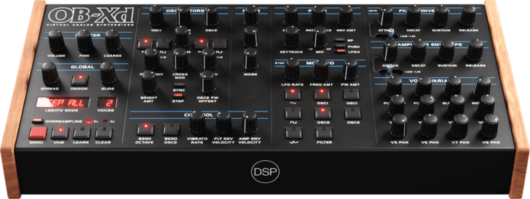
DiscoDSP has introduced OB-Xd Synthesizer Version 3.0, a major update to the software synth based on the Oberheim OB-X hardware synth.


New in OB-Xd v3.0:

  • The synthesizer features enhanced oscillator and filter capabilities, along with new amplitude and MIDI enhancements.
  • The oscillator section includes a pulse width offset for Oscillator 2, modulation of pulse width by the Filter Envelope for one or both oscillators.
  • The advanced filter features self-oscillation at high resonance, adjustable falloff, a blendable envelope shape, inversion of the envelope output, and refined keytracking control. Additionally, a level difference knob maintains consistent audio output.
  • The amplitude and filter section introduces a new attack envelope shape, LFO synchronization with DAW BPM, and options for oversampling.
  • MIDI and preset functionalities are also enhanced.

OB-Xd v3.0 is available now for $49. Users who purchased OB-Xd 2.14 after November 1st will receive a free license update to 3.0. Others can upgrade for just $9.99 in the Members Area.


Bob Moog Foundation Archives Announces Donation Of Herb Deutsch Collection


The Bob Moog Foundation has announced that it has received a significant donation of archival materials from the estate of electronic music pioneer Herb Deutsch.

The collection of materials, which totals nearly 300 items, was donated to the Bob Moog Foundation Archives by Deutsch’s widow, Nancy Deutsch, and helps document the early days of synthesis.

Herb Deutsch (1932-2022) was a composer, author, educator, and performer, and was Professor of Music at Hofstra University for 57 years. He met Bob Moog in 1963. At the time, Deutsch had built a DIY theremin from one of Bob Moog’s kits, and was interested in exploring the possibilities of electronic instruments.
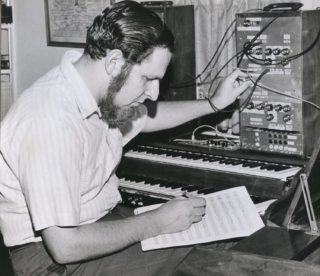
In the following year, Moog and Deutsch collaborated on the design of the original Moog modular. An example of Deutsch’s influence was the creation of the envelope generator.

Deutsch expressed the musical need for a way to articulate notes, rather than have them be gated by key presses. Moog had Deutsch run to the hardware store and get a doorbell switch, which Moog then wired to trigger an envelope generator.

The design decisions they made with the early Moog modular have been hugely influential, with core modules like VCO, VCA, VCF & EG and the emphasis on subtractive synthesis helping to define many synth designs to this day. While these synth design elements may seem inevitable now, they were not at the time, when the idea of a ‘synthesizer’ was still being created.

Highlights of the collection include:

  • A 1961 R.A. Moog Melodia theremin;
  • A vintage R.A. Moog Minimoog, serial number 1093 (one of the first one hundred ever produced);
  • Original correspondence between Moog and Deutsch during the seminal period of their work together from 1963 and 1964;
  • An 84-minute reel-to-reel tape of Moog explaining how the prototype Moog synthesizer works; and
  • A tape of the landmark “Jazz In the Garden” concert held at the Museum of Modern Art in New York City on August 28, 1969.
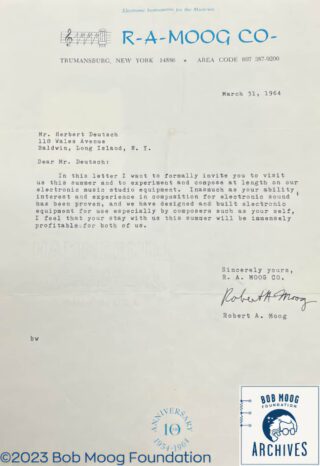
This collection represents an extraordinary addition to the Foundation Archives.

“Herb Deutsch is an integral part of the Moog legacy, and his history deserves to be examined and understood,” notes Bob Moog Foundation’s executive director, Michelle Moog-Koussa. “We are thrilled to accept this generous donation from Nancy Deutsch, and we look forward to many years of protecting and sharing these materials with researchers, historians, journalists, and museums around the world.”

“We are excited to share my beloved husband Herb’s substantial collection of archival materials through the Bob Moog Foundation Archives,” noted Nancy Deutsch. “Through this material Herb’s pioneering work will be brought to life. It is heartening to know that, through the Bob Moog Foundation, the story of Herb and Bob’s groundbreaking work together will be shared with people all over the world.”

Material from the Bob Moog Foundation Archives has been shared at the Moogseum, the Museum of Making Music, the Musical Instrument Museum (MIM), The History Center of Tompkins County, Google Arts and Cultures Music, Makers, and Machines online exhibition, and the North Carolina Music Hall of Fame.

The Bob Moog Foundation is an independent 501(c)(3) non-profit organization dedicated to preserving the legacy of electronic music instrument pioneer Dr Bob Moog.  Key projects of the Foundation include Dr. Bob’s SoundSchool, the Bob Moog Foundation Archives, and the Moogseum.
 

SRM Sounds Launches Max Richter Piano Virtual Instrument


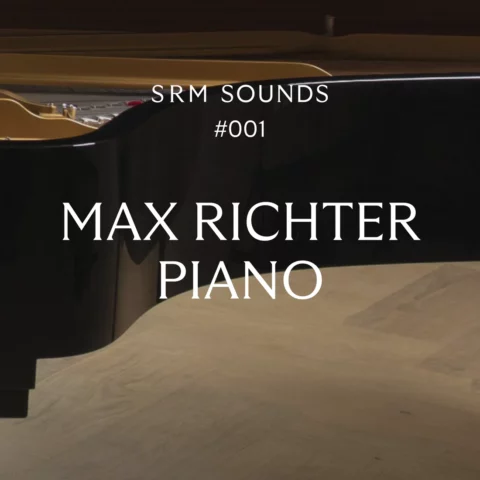
Composer Max Richter has launched a new virtual instrument company, SRM Sounds, with the release of Max Richter Piano, a piano virtual instrument that they say is “voiced to play quietly, with atmosphere”.

Max Richter’s new piano plugin based on the renowned composer’s Steinway D SPIRIO | r grand piano. Developed in partnership with Song Athletics, SRM Sounds plans to release Kontakt instruments based on sounds recorded in Richter’s studio.

Contemporary classical composer Max Richter has announced the launch of a new series of “sound products for music creators” under the name SRM Sounds. The products developed in partnership with Song Athletics, a new brand recently launched by ex-Spitfire Audio CEO Will Evans.

SRM Sounds’ first order of business is to release a series of virtual instruments for Native Instruments’ Kontakt. The first of these is Max Richter Piano, a software instrument that captures the sound of Richter’s very own Steinway Model D SPIRIO | r grand piano, the centrepiece of the main live room in Max Richter’s personal studio, Studio Richter Mahr.

Richter’s Steinway was recorded with loving detail using a variety of microphones both contemporary and vintage. Focusing on the softer dynamics of Richter’s piano, the library is made up of ten dynamic layers spanning ppp to mf, with five layers of round-robins, three microphone positions per instrument and two varieties of reverb. Richter Piano is equipped with action, dampers and pedal volume control.

“Just like a real acoustic piano, this instrument has its own properties; it is not an ‘everything piano’,” Richter said of the instrument. “You wouldn’t perform Prokofiev on a piano that had been set up for Mozart, and the same applies here.

“This piano is a specialist. It loves to play quietly and whisper in your ear. If you are looking to cut through a busy mix, then go elsewhere, but if you want to evoke the intimate stories we all carry inside us, then you will be well served by this instrument and the rest of the forthcoming collection.”

Features:

  • 2 instruments total ~98GB
  • 3 microphone positions per instrument
  • 5 Round Robins
  • 10 dynamic layers (ppp to mf)
  • 2 varieties of reverb
  • Action, dampers & pedal volume control
  • Velocity sensitivity control
  • Kontakt Player library (Version 6.8.0 or higher required)
  • NKS compatible

Audio Demos:

Max Richter is a Grammy-nominated German-British composer and pianist known for his works for stage, opera, ballet and screen. His latest project, released earlier this year, was the SLEEP: Tranquility Base EP, a reimagining of material from Richter’s 2015 composition SLEEP, with remixes from Kelly Lee Owens and Alva Noto.

Max Richter Piano is available now, with an intro price of £119/€135/ $150 (normally $185).