AlphaTheta Says Security Vulnerability Found In Rekordbox PRO DJ LINK
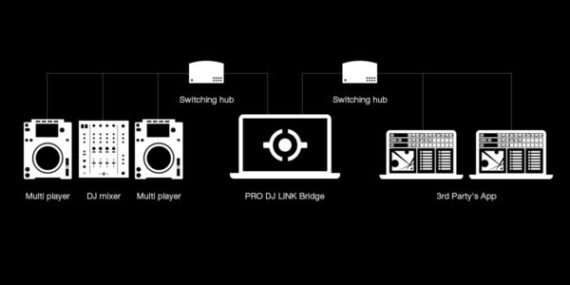

AlphaTheta has announced an unpatched security vulnerability affecting the PRO DJ LINK function in rekordbox and certain CDJ/XDJ DJ players.

The company says the flaw could allow someone who gains unauthorized access to a PRO DJ LINK network to view data stored on a connected Windows PC or Mac, as well as data on USB or SD cards inserted into connected DJ players.

What does this mean in practical terms?

AlphaTheta says that this does not mean that a CDJ or XDJ player can suddenly be hacked simply because it is turned on. The potential problem arises when the player is connected to a PRO DJ LINK network and an unauthorized person is able to get onto that network. If that happens, the vulnerability could potentially give that person access to files and other data that the DJ has made available through the connected equipment.

For DJs, the main concern is therefore what data is connected to the DJ network, rather than the music player itself being physically damaged. AlphaTheta recommends updating rekordbox 6 or 7 and its iOS/Android apps to the latest versions, avoiding USB drives and SD cards containing sensitive information when using PRO DJ LINK, and using a secure, password-protected Wi-Fi network when connecting players wirelessly.

AlphaTheta says it has not confirmed any cases of damage resulting from the vulnerability and is withholding technical details until a fix is available. The company is currently preparing an update and says it will provide further information as its response progresses.

Beatport Bans AI-Generated Music


Beatport has announced that it’s banning AI-generated music, by expanding its partnership with music fraud detection specialist Beatdapp.

Under Beatport’s updated Content Guidelines, fully or majority AI-generated tracks will not be permitted on the platform. They will instead be withheld during ingestion, with rights holders notified directly.

Music created with AI assistance will still be accepted, provided the finished track remains majority human-made. These releases will be tagged during ingestion, giving Beatport’s curation team a clearer picture of what it is reviewing and featuring.

Beatport says that the policy reflects the feelings of Beatport’s DJ community.

According to a recent user survey:

  • 60% said they would not play AI-generated tracks in their sets.
  • 77% cited a firm preference for supporting human creators.
  • Just 8% said they were currently open to playing AI-generated music.
  • A further 13% would consider it if artists and labels were fairly compensated.

Speaking on this expanded partnership, Beatport CEO Matt Gralen said:

“Beatport exists to serve DJs and empower artists & labels,” said CEO Matt Gralen.

“While new production techniques have driven electronic music forward since the beginning, there is a difference between a tool that assists human creation, and a system that replaces it entirely. Beatport is built on the former.”

Is this the right balance to strike between permitting AI-assisted works, but banning ‘AI music”? Leave a comment and let us know what you think!

Pittsburgh Modular Lifeforms SV-2 Semi-Modular Analog Subtractive Synth In-Depth Review


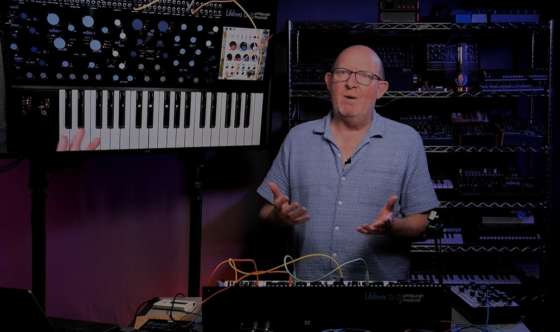
In the latest Sonic State Sonic Lab video, host Nick Batt offers his take on the new Pittsburgh Modular Lifeforms SV-2 Semi-Modular Analog Subtractive Synthesizer.

Nick Batt describes the SV-2 as ‘a really nice synth that works to Pittsburgh’s strengths’, and says it offers a ‘huge variety of flavors’.

Video Summary:

“We take a look at the @pittsburghmodular Lifeforms SV-2, a 37-key semi-modular analogue synthesizer with an East Coast subtractive focus.

It shares the format of the Taiga Keyboard with two main oscillators, two analogue LFOs that can also be oscillators , dual multimode filters, 2ADSR envelopes, 2 VCAs, spring reverb, arpeggiator and extensive patching.

The oscillators include multiple waveforms, Blade shaping and sub outputs on osc 1, while the LFOs can act as extra pitch-tracking oscillators for richer mono or two-note paraphonic patches.

The filters offer several modes and respond strongly to gain, drive and character settings, giving clean tones or more saturated results with a large amount of gain points both in the filters and in the mixer.

Additional function and velocity outputs with various modes add extra useful modulation.”


Topics Covered:

00:00:00 Introduction to the Lifeforms SV-2

00:01:08 Keyboard, panel layout and 24HP Eurorack bay

00:03:21 Oscillator waveforms and Blade shape

00:06:16 Using the LFOs as oscillators

00:09:56 Dual multimode filters and gain structure

00:13:25 Driven subtractive sound example

00:14:52 Two-note paraphonic patch

00:16:05 Velocity, envelopes and random functions

00:19:42 Arpeggiator modes and legato transpose

00:21:39 Price, availability and closing thoughts”

What do you think of the new Pittsburgh Modular Lifeforms SV-2? Check out the video, and share your thoughts in the comments!