Make The Next Iconic Electronic Flip – Win $10,000 & A Track Release On Ninja Tune


Are you a sampling genius? Win $10,000 and have your track released on Ninja Tune with Tracklib’s Sample Breakdown competition – it’s free to enter.

To celebrate the launch of the competition, Tracklib have broken down the most iconic electronic music sample of each year since 1990 in a new video.

Tracklib’s Sample Breakdown series is one of our favourite things on YouTube. Breaking down legendary tracks like Daft Punk’s One More Time and Burial’s Archangel, the series visualizes the sampling techniques used by gifted artists and producers to provide a fascinating insight into their creative process.
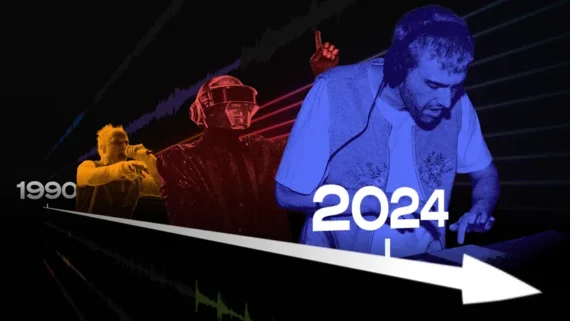
Tracklib has released a new bumper edition of Sample Breakdown this week that breaks down what they believe to be the most iconic sample flip of every year since 1990 in a single video.

Focusing specifically on electronic artists, the video charts the history of sampling from Deee-Lite’s Groove Is in the Heart all the way through tracks from The Prodigy, Fatboy Slim, and Moby to the modern day, breaking down samples from Four Tet, Jamie xx, Bicep and Major Lazer before ending on Fred Again’s leavemealone.

Tracklib hasn’t only put together the video to “celebrate the past”, it says, but also “to find the talent of tomorrow”, inviting music-makers across the globe to create the next iconic sample flip and win a cash prize of $10,000.

The winner will also get their track released on Ninja Tune, a record label that’s home to Bicep and Bonobo, among many others, and they’ll have a Sample Breakdown video produced based on their submission.

Tracklib is a platform that enables producers to discover, sample and license original recordings without the hassle and cost of the traditional sample clearance process. To enter the competition, you’ll need to write and produce a track that samples a song from Tracklib’s library of over 100,000 songs. If you’re not a Tracklib subscriber, you can access a free 3-day trial.

“Tracklib is all about the art of sampling,” reads a statement on Tracklib’s website. “We aim to give sampling the recognition it deserves, and provide a platform for producers to be able—for the first time ever—to sample freely, without obstacles.

“Electronic music has, together with hip-hop, been the cultural foundation from which sampling flourished. That’s why this video and competition exists: to pay homage to that evolution and its contributors, while also paving the way for future talents to shine.”

Find out more and enter the competition on Tracklib website.
Free Dark Mode Instrument Can Capture The Sound Of Renowned Composer Max Richter Piano


Late last year, composer Max Richter announced the launch of a new series of virtual instruments under the name SRM Sounds, developed in partnership with Song Athletics and recorded in Richter’s home studio, Studio Richter Mahr.

SRM Sounds’ first product was Max Richter Piano, a software instrument based on recordings of Richter’s Steinway Model D SPIRIO | r grand piano. This week, SRM has shared its second release, a free Kontakt instrument based on processed versions of the same recordings.

Described by SRM Sounds as a “soft piano taken to the extreme”, Dark Mode is an atmospheric instrument designed to sit in the background of a mix, blending in with the other elements in a composition.

A selection of the original recordings of Richter’s Steinway made for Max Richter Piano were processed through a carefully curated chain of filters and EQs to create a sound characterised by “warmth and character” with very little high-end. Where Max Richter Piano offered the user a choice of multiple microphone types and placements, Dark Mode is based on a smaller set of recordings made with a mix of modern and vintage ribbon mics.

“Dark Mode really comes out of my search for a piano which can sit behind pictures, which has a kind of transparency and an unobtrusiveness,” Richter says. “This is something we’re often looking for when we’re scoring; something that isn’t going to get in the way too much, but nonetheless be able to evoke an atmosphere.”

“The key thing about Dark Piano is this very special colour it has. The high end of the piano is essentially non-existent, it’s erased. It’s very expressive and very characterful.”

Max Richter is a Grammy-nominated German-British composer and pianist known for his works for stage, opera, ballet and screen. Richter released his latest project, In A Landscape, in September.

To run Dark Mode, you’ll need either Native Instruments Kontakt or the free Kontakt Player plugin. Find out more and download Dark Mode via SRM Sounds website.

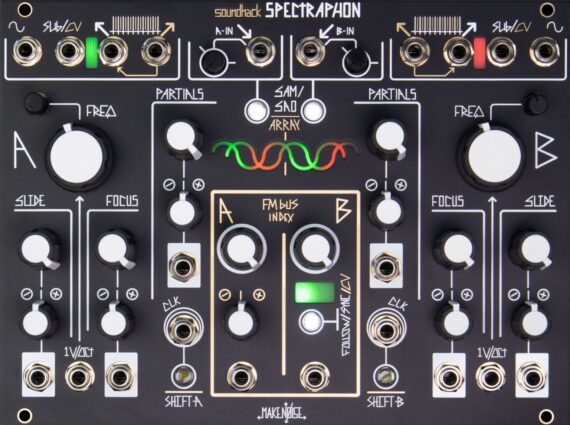
Make Noise Spectraphon Update Adds New Synthesis Options


Make Noise has released Spectraphon firmware version sp67, an update that adds several interesting new features.

New in Spectraphon firmware version sp67:

  • Linear Array Modulation! In SAO, the Slide parameter now selects from all spectra in the Array in a linear fashion. The Focus control is used for spectral compression/expansion. The original Planar Modulation style is still available. To access, while in SAO hold SHIFT for 2 seconds without pressing any other buttons. This operation is per-Side.
  • New Ramp LFO Shape on Sub/CV Outputs. Select shapes by hold Shift + Press CV on the Side you’re selecting for. Ramp is useful for Linear Array Modulation (patch to Slide with attenuverter set north of midnight) and plenty of other uses.
  • CV output LFOs’ minimum clock rate increased to 8 seconds, via tap tempo on Shift button, or clock input.

The updated firmware is available now at the Make Noise site.