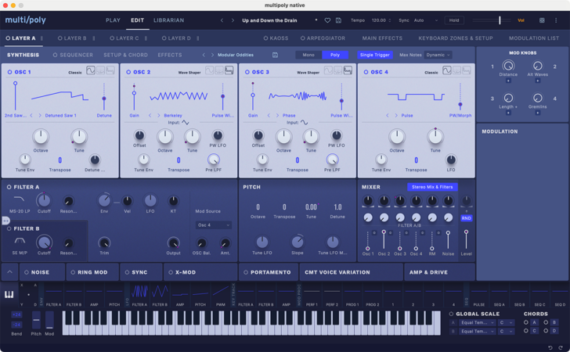
At the 2025 NAMM Show, scheduled for January 21–25 in Anaheim, California, Korg will debut multi/poly native, a fully-compatible software counterpart to their recently introduced hardware multi/poly synthesizer.
multi/poly native is available in VST3, AAX, and standalone formats, on both macOS and Windows, as well as AU on macOS.
You can exchange sounds between hardware and software, and access an increasing number of third-party libraries. It also lets you record and produce in your DAW with multi/poly native, and then play the same sounds live using the multi/poly hardware. You can also do sound design using the hardware’s hands-on interface, and then share them with a computer-based collaborator.
The multi/poly is the first instrument to use KORG’s “next-generation” analog modeling technology. It’s like a polyphonic modular system in a compact, hands-on package.
It goes far beyond traditional analog synthesis, letting you create “mash-ups” with East-coast, West-coast, and wavetable oscillators and a wide selection of modeled filters. Virtual voice cards produce organic timbral variation.
And the multi/poly offers Kaoss Physics, Motion Sequencing 2.0, deep modulation options, and more.
KORG multi/poly native Demo Sounds:
Special Hardware/Software Crossgrade Offer
Owners of the hardware multi/poly are eligible for a crossgrade license to multi/poly native at the special price of US $49.99, via a coupon code tied to the multi/poly hardware’s unique ID.
Using the hardware and software versions together, you can have the best of both worlds: a physical instrument that responds to your touch, and complete DAW integration.
Korg multi/poly native will be available soon, priced at $199, or $49.99 for hardware multi/poly owners.
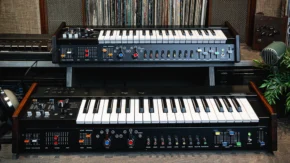
Korg has a habit of releasing its analogue synth reboots in both ‘full’ and ‘mini’ sizes, so we probably shouldn’t have been too surprised to learn that a smaller version of 2021’s miniKorg 700FS – itself an enhanced emulation of 1974’s MiniKorg 700S – is on the way.
The MiniKorg 700S built on the success of the MiniKorg 700, a single oscillator monosynth that was released in 1973. It added a second oscillator, ring modulator and various other things, all of which were included in the 700FS and now in the 700Sm.
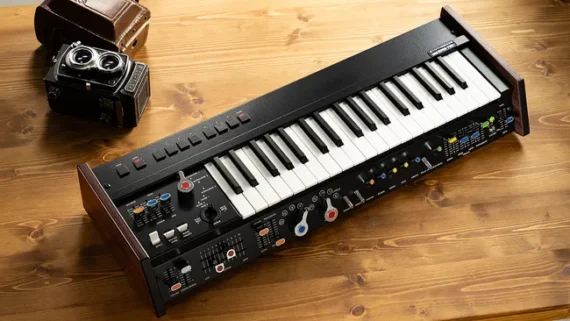
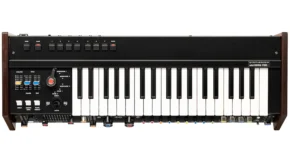
At the 2025 NAMM Show, scheduled for January 21–25 in Anaheim, California, Korg will debut the miniKORG 700Sm, a compact variation on the reissue of the classic miniKORG 700, the company’s first mass-produced analog monosynth.
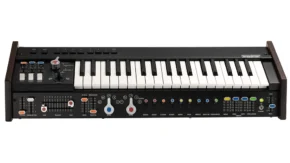
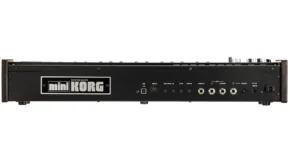
This mini version is 86% the size of its larger sibling and has 37 slim keys with aftertouch, but no velocity sensitivity. There are enhanced connectivity options in comparison to its ‘70s forebear: a USB connector (Type B), MIDI In, Sync In/Out, CV/GATE In and Audio In are all here. 1/4-inch stereo outputs and a headphones output are here, too.
The MiniKorg was originally conceived as a secondary keyboard that players would position on top of an organ when performing live, and the 700Sm could function in a similar way on top of your stage piano. For ease of access, many of the controls are positioned below the keyboard, so you’re looking straight at them when sitting down.
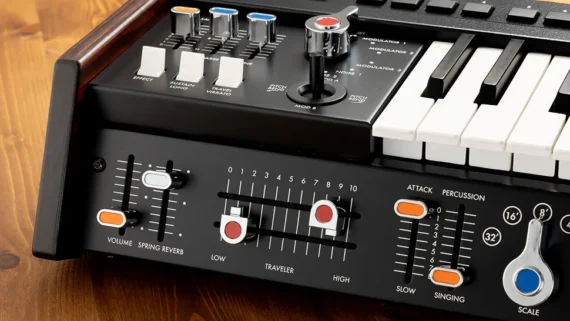
The Traveler controller is particularly noteworthy. Comprising upper and lower levers that control the cutoff frequency of the low-pass and high-pass filters respectively, this enables you to quickly dial in wah-wah and muted sounds. Unlike on the original MicroKorg 700S, you can tweak these levers without restriction, giving you even more sound design potential.
The miniKORG 700Sm Synthesizer intro video:
Other additions include 14 program memories, a spring reverb, a joystick for pitchbend and modulation and an arpeggiator.
Here’s what Korg has to say about the new KORG miniKORG 700Sm:
“The true beauty and richness of the sounds produced by the miniKORG 700 could not be realized through analog modeling technology that uses computational integrated circuitry such as DSPs and other devices to model analog circuitry.
Although it’s possible to replicate a circuit by using the same parts and copying the design schematics or circuit board, there’s no guarantee that this will reproduce the original sound. This is because the components deteriorate over time, dramatically altering the sound. To accurately recreate the original sound, we must rely on the experience and memories of the technicians who worked on the original product.
We were able to bring the original sound to life thanks to our team of technicians, who have gained invaluable expertise over the years through their work on numerous synthesizer revival projects. This team was guided by Fumio Mieda, a KORG engineer since the early 1970s and one of the designers of the original miniKORG 700S.
Working closely with Korg’s sound designers, they meticulously reproduced the original sound as faithfully as possible.”
The miniKORG 700Sm Demo Sounds:
The miniKorg 700Sm have a compact size and fun look, comes with a custom soft case and ‘free’ software bundle. Available to pre-order, price at £1,169/$1,300. Find out more on the Korg website.
Korg has revived its beloved Kronos workstation, unveiling an updated model that promises to be faster and more flexible then previous incarnations, as well as being packed with fresh sounds.
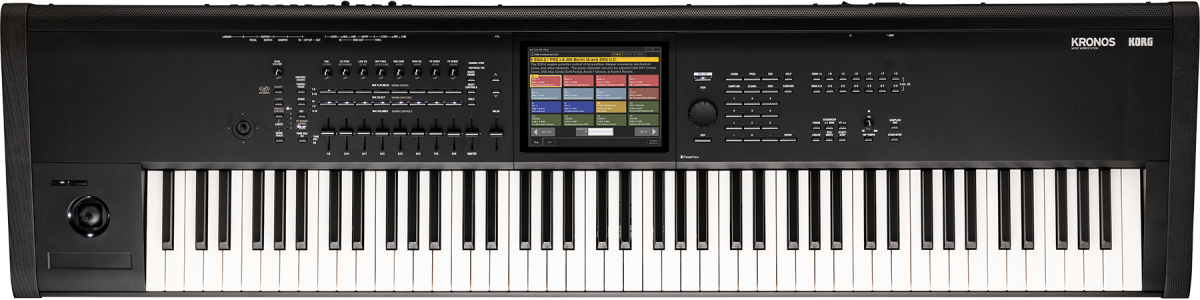
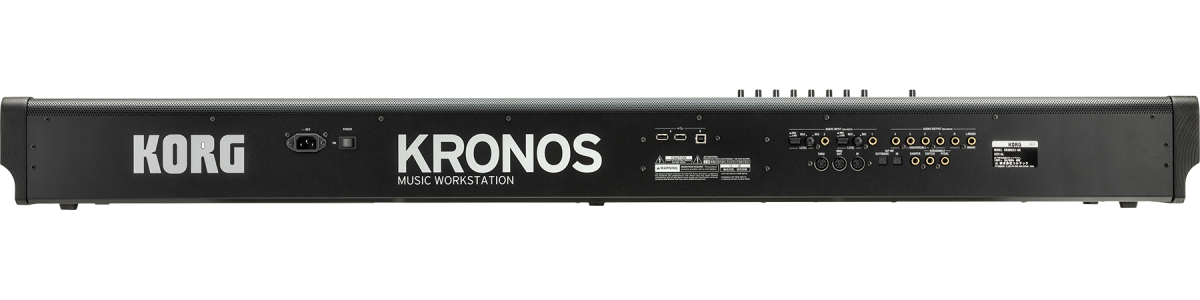
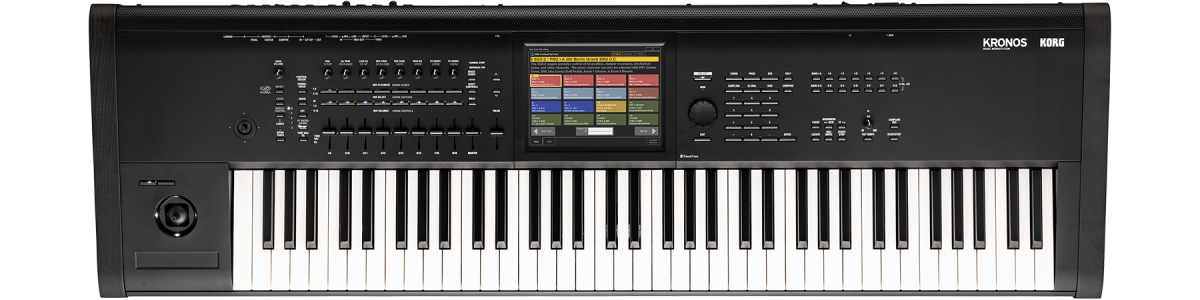
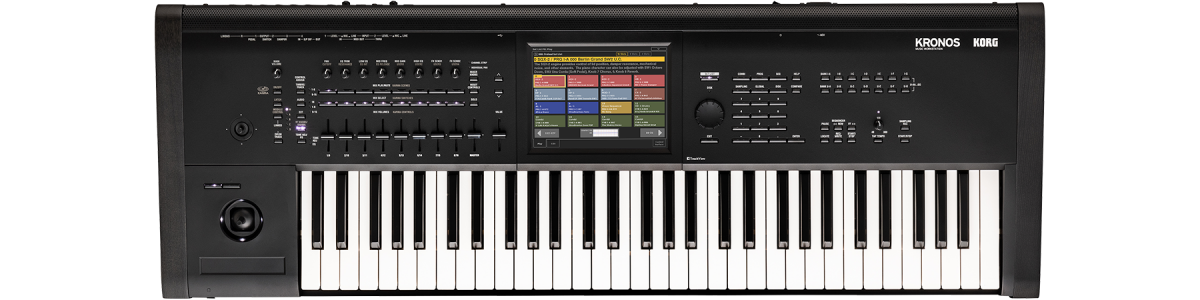
2025 NAMM Show: Korg has officially introduced the KRONOS, a new version of the workstation keyboard that originally debuted in 2011.
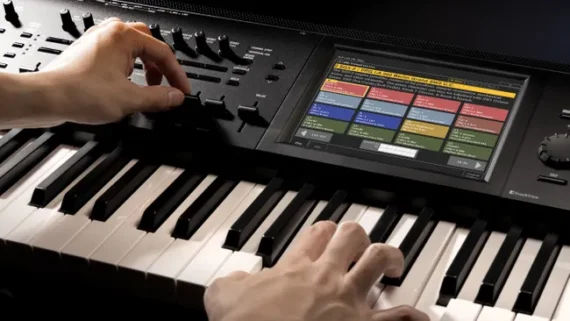
The new KRONOS arrives with a reengineered system architecture that will, according to Korg, result in 60% faster start up time. The central touch screen interface has been redesigned too, promising to be faster, more responsive and more intuitive in use.
Under-the-hood, however, the overall design is very similar to that of previous incarnations. The sounds themselves are provided via nine independent sound engines, each of which is essentially its own self-contained synthesizer.
These include piano, organ and EP emulations, along with virtual analogue synths based on Korg classics, PCM sampling synthesis, FM, physical modelling and more. The Kronos also features Korg’s Drum Tracks engine, which can be used to generate accompanying rhythm parts
This latest KRONOS contains the full existing library of sounds, giving users access to over 300 full libraries. The new KRONOS expands on these classic sounds too though, adding 256 additional programs including a new Italian Grand Piano, a new vintage tine electric piano and expanded range of FM-based piano sounds.
The KRONOS is also expandable, with a 62GB SSD allowing for user sampling – using the Open Sampling System – and sound library expansion. The keyboard also features 16 audio and 16 MIDI tracks for sequencing and recording, as well as extensive Set List capabilities.
Reading between the lines of this talk of backwards compatibility and classic sounds, however, lies the fact that this new Korg KRONOS’s OS itself is listed as Kronos System Version 3.2, indicating it’s likely only a minor update to the 3.1.3 OS last seen in the discontinued models.
KRONOS comes preloaded with sounds from the KRONOS Sound Libraries.
KRS-08 Best of TRITON: A brilliant and inspiring collection of 128 programs from one of the biggest selling synthesizers of all time and included here as a preloaded gift.
KRS-04 Pro Splits and Layers: Essential keyboard splits and layers optimized for real-time performance.
KRS-05 Ensemble Combinations: Band-friendly ensembles featuring brass, strings, and synths.
Additionally, KRS-06 and KRS-06B CX-3 Signature Sounds offers 256 CX-3 organ programs.
Chronology
The original Kronos arrived in 2011. An updated Kronos X model followed in 2012, which was then superseded by the Kronos 2 in 2014. Korg released various OS updates and new sounds across the course of the decade, before finally discontinuing the Kronos in 2022.
While the popularity of workstation keyboards has peaked and dipped over the years, the concept has had something of a resurgence recently, with the likes of Roland’s Fantom range, Yamaha’s Montage and Akai’s MPC Keys all putting a modernised spin on the format.
The Kronos proved to be one of the most popular workstations of the 2010s, seen on-stage or in the studios with a broad range of artists from Chick Corea to Mark Ronson, Vangelis, and even The Roots.
New KRONOS intro video:
Hardware wise, the new Kronos boasts a powder-coated metal body with black wooden side panels. It comes in 61, 73 and 88 key iterations, the first with a Natural Touch semi-weighted keyboard, the larger two with RH3 hammer-action keys (which, again, appear to be the same as older versions).
Korg KRONOS Demo Songs:
Prices are set to start at £2649, but we’re still awaiting full price and release date information. Visit Korg site for more.