MARS Polyphonic Tube Synthesizer Now Shipping


Eternal Engine Electronic Music Instruments shared this brief demo of the MARS Polyphonic Tube Synthesizer, before shipping it out.

Here’s what they have to say about it:

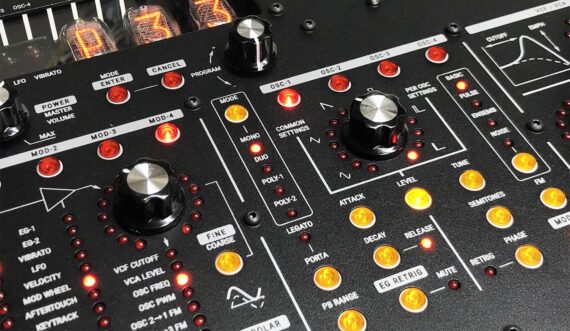
“MARS – the first polyphonic synthesizer based on vacuum tubes. The power and flexibility of oscillators based on the famous R-2R DAC TDA1387, combined with the original fully tube audio path based on the APPARATUS synthesizer circuit, allow you to create a wide range of sounds from punchy aggressive FM leads and acid basslines to soft classic pads and strings.

The synthesizer supports full software control and easily integrates into any DAW using the original plugin. All synthesizers are assembled by hand and produced in limited quantities.”

Specifications:

  • Compact RACK format, 5 units high
  • Fully tube audio path based on the APPARATUS synthesizer
  • Four oscillators operating in modes: BASIC (Sine, Triangle, Sawtooth, Fixed Pulse Width 1/2, 1/4, 1/8); PULSE; ENSEMBLE and Noise with Hi-Pass and Low-Pass filters
  • Voltage-controlled tube filter of the second order with self-oscillation with overload
  • Voltage-controlled amplifier, following the traditional architecture of tube opto compressors
  • Triode asymmetric overdrive
  • Indicator based on Nixie lamps
  • Full software control using the plugin
  • Four channels of 4xCV and Gate for integration with Eurorack format synthesizers
  • External Input for processing the audio signal of external audio devices
  • Two HADSR envelope generators with pre-delay and multiple retriggers
  • Sub-audio frequency generator LFO with restart and synchronization Clock, smooth waveform transition sawtooth-triangle-sawtooth, pulse-square-pulse, as well as Sample & Hold and Noise with reconfigurable Hi-Pass and Low-Pass filters
  • Auto and continuous modes of portamento / legato
  • Mono, duo, and 4-voice polyphony modes
  • Flexible 4-channel modulation matrix
  • Plugin for integration with DAW
  • PC connection with galvanic isolation

Audio Demos:

The Eternal Engine EMI MARS Polyphonic Tube Synthesizer is available now for $2,199.
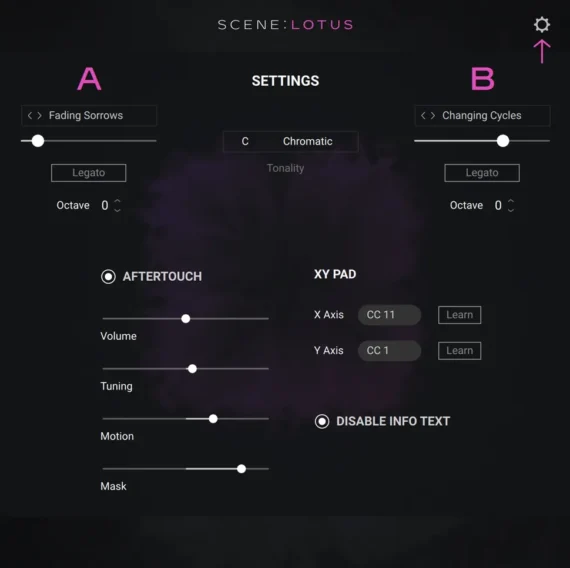
Native Instruments Launches Japan-inspired Cinematic Sound, Scene: Lotus


Native Instruments heads east for Scene: Lotus, its latest cinematic instrument

Having launched its new Scenes series with Scene: Saffron, a quick route for composers to find lush atmospheres with rich textures constructed from strings, synths, brass, and beyond, NI is now travelling to the far east for Scene: Lotus, a new instrument inspired by the sounds of Japan.

Once again, configured as a one-stop route to a ‘cinematic sound’, Lotus features new breathy shakuhachi and hichiriki alongside other timeless instruments from Japan such as the delicate plucks of the koto, all teamed with orchestral swells and radiant synths.

Native Instruments has been working hard to simplify its offerings and the Scenes series is its current roadmap for delivering keenly priced, powerful ‘instruments’ made up of hybrid synth and samples that focus on specific sonic duties – most specifically delivering instant, production-ready sounds built from multiple sources, delivered under one simple interface.

In the background there’s Native Instruments’ long-established sampling and sample manipulation skills of their Kontakt standard plus the synth-and-sequencer construction kit power of their Reaktor engine, but you don’t need to know that… Instead Scenes act as standalone instruments, appearing as instrument plugins, easily assignable to a track in your DAW then instantly producing sounds that sound like you’ve spent weeks building them.

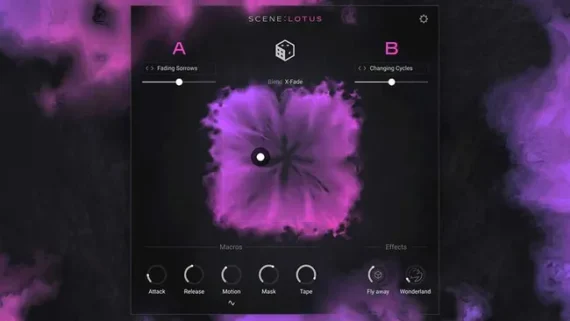
All their power is kept neatly behind the scenes, with simple and intuitive controls and an X/Y pad allowing players to fine tune and perfect their sound to perfectly fit its purpose and then automate and animate the performance as it plays.

And with 16 hybrid sound layers and effects there’s plenty to play with inside Scene: Lotus. Lotus’s tuning modes keep its output perfectly in key with your choice of scales and modes while composers morph between textures and effects for evolving soundscapes that transition from serene to intense.

Native Instruments promises it’s the perfect way to achieve ambiences that are ready-to-go for film scoring, game soundtracks and music production.

Scene: Lotus is available now for $29 / €29. Find out more at Native instruments site.

The Story Of Matrix-12 Synthesizer With Tom Oberheim


The Bob Moog Foundation shared this mini-documentary about the Oberheim Matrix-12 synthesizer, considered by many to be one of the greatest synths ever created.

The Bob Moog Foundation is featuring a fully restored Oberheim Matrix-12 synthesizer – signed by Tom Oberheim, Marcus Ryle, and Michel Doidic – in their latest raffle.

Ryle and Doidic were the principal designers of the Matrix-12. This particular Matrix-12, was previously owned by Doug Curtis, inventor of the legendary Curtis chips, which were used in this synth and many others. The synth was donated to the Bob Moog Foundation by Curtis’s widow, Mary Curtis.

In the video, Tom Oberheim, Mary Curtis, and Marcus Ryle share the history behind this Oberheim Matrix-12, which has been fully restored by Ryle.

“Doug appreciated the Matrix-12 so much that he had two, so our family had to think hard about donating this legendary instrument,” noted Mary Curtis. “We decided that Doug would have said yes to the idea, out of a love for the Matrix-12 itself, a belief that it will raise money for the important work of the Bob Moog Foundation, and the wish for another musician who loves it to make glorious music.”

To find out more about The Bob Moog Foundation, and the Oberheim Matrix-12 raffle, see The Bob Moog Foundation website.

Proceeds from the raffle benefit the three hallmark projects of the Bob Moog Foundation: Dr. Bob’s SoundSchool, which has inspired over 35,000 elementary school students about the science of sound; the vast and growing Bob Moog Foundation Archives, which includes over 15,000 historical items; and the Moogseum, located in downtown Asheville, NC. The Moogseum continues to navigate the financial aftermath of Hurricane Helene, which has resulted in a $65,000 loss of income since late September.