Native Instruments Launches Electric Keys – Reeds Duo, 2 Classic Electric Pianos
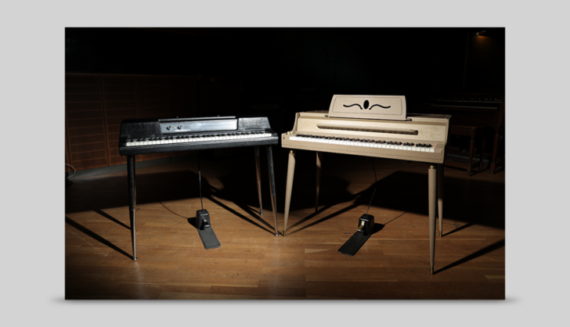

Today, Native Instruments unveils Electric Keys – Reeds Duo, a pair of virtual instruments that capture the essence of two legendary reed-based electric pianos. These new instruments are the latest in an Electric Keys series, following the Electric Keys – Tines Duo, which introduced Diamond and Phoenix.

The Reeds Duo of Jade and Ivory bring a new style of electric piano into the spotlight. Unlike their tine-based cousins, these instruments use vibrating metal reeds to generate sound, creating tones that range from smooth to soulful and gritty depending on how you play.

To celebrate the classic electric pianos: Jade and Ivory, Electric Keys – Reeds Duo reproduces the sound of two iconic electric pianos – loved for their snappy attack, expressive growl, and unmistakable warmth.
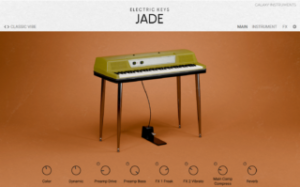
Electric Keys – Jade: A solid-state reed piano delivering a bright, punchy sound with sharp dynamics. Ideal for funky rhythms, cutting leads, and rich chords, Jade adds a confident edge to any track.

Electric Keys – Ivory: A vintage tube-driven reed piano with a warm, soulful voice and organic grit. Smooth and mellow one moment, rough and fiery the next – Ivory is pure expression.
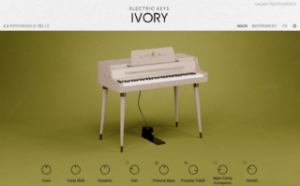
Electric Keys – Reeds Duo Main Features:

  • Authentic Presets: each instrument comes with 100 meticulously designed snapshots that capture the most iconic original keyboard sounds.
  • Advanced Sound Shaping: Customize your sound with detailed tone controls like Tonal Shift, modeled tremolo, and a suite of effects from Guitar Rig 7 Pro.
  • Crank the Color: The Color knob allows for seamless blending of performance dynamics, from soft and intimate to bold and brash.
  • Realistic Details: Blend direct output with characteristic tremolos and room signals, adding mechanical hammer and pedal noises for enhanced realism.
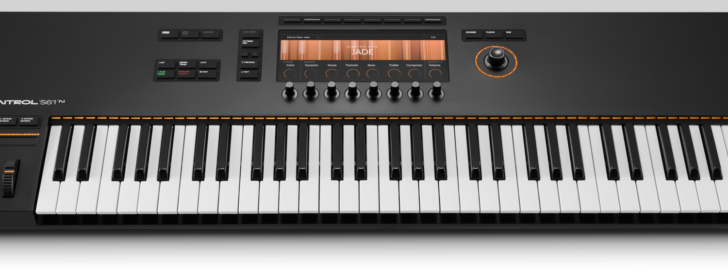
  • Seamless Kontrol Keyboard Integration: Electric Keys offers optimal integration with Native Instruments’ Kontrol S Series keyboards (shown below) for intuitive control and browsing.

Created with Galaxy Instruments. This exceptional piano emulation was developed in partnership with Galaxy Instruments, renowned for their expertise in creating high-quality virtual instruments. Founder Uli Baronowsky and his team, who previously collaborated on instruments like Claire, Noire, and The Giant, have brought their approach to capturing the unique characteristics of these reed-based pianos.

Native Instruments Electric Keys is available now: Jade $99; Ivory $99; Reeds Duo $149.  Get all the details at the Native Instruments website.

Teenage Engineering EP-133 K.O. II Gets Major Update


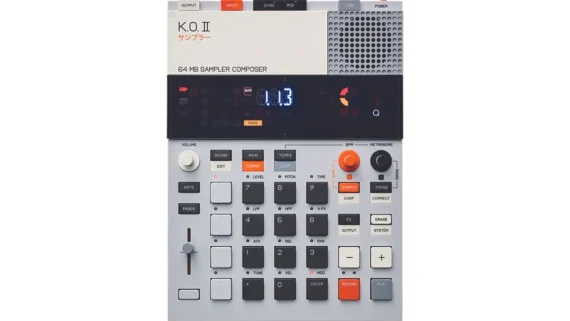
Teenage Engineering has announced the first major OS update for its EP-133 K.O. II sampler, released in 2023. The free update bringing resampling, song mode, sidechaining and increased polyphony to the instrument.

Dubbed the “Champions” update, OS 2.0 significantly expands the capabilities of the K.O. II with some commonly requested features that’ll undoubtedly put a smile on the face of this calculator-esque sampler’s fans. First up, we have expanded polyphony: EP-133 can now handle 16 mono and 12 stereo voices, a healthy increase from the 12 mono and six stereo voices it offered on launch.

EP-133’s new resampling function lets you record stacks of multiple samples with effects into a new sample, opening up a host of creative possibilities for reimagining existing patterns and making it possible to free up space for additional tracks and effects by bouncing down multiple tracks into one. Now, you’re also able to sample hands-free.

OS 2.0 also brings with it Song Mode, a feature that allows you to chain multiple scenes together to craft structured arrangements. 99 unique song positions can be stored, each made up of scenes containing multiple patterns of up to 99 bars. Teenage Engineering points out that this means you’re now able to create a song that’s up to 9,801 bars in length, making EP-133 a more useful tool for extended live performances.

Good news for fans of pumping techno, as EP-133 now offers MIDI sidechaining, meaning that you’re now able to use kick drums to trigger ducking on bass sounds to create a cohesive low-end with no hassle. The length and shape of the volume ducking can be tweaked as well.

Here’s the official video intro:

That’s not all: OS 2.0 brings MIDI Thru support, so the sampler can now pass MIDI information on to other machines in your set-up, along with a host of other MIDI improvements that’ll make it easier to hook up EP-133 with other instruments and gear.

New in K.O. II version 2.0:

  • Resampling: Stack effects, make a beat from a beat or combine samples, all using the new resampler.
  • Song mode: Song mode lets you chain scenes together to make complete compositions.
  • Hands-Free Sampling: Sometimes you need both hands to play an instrument, and you want to sample it. Just hit shift and hold a pad, and the K.O. II will do the rest.
  • MIDI side-chaining: Sidechain will duck the volume of the bass when the kick comes in
  • Increased polyphony: The K.O. II goes from 12 mono/6 stereo sounds to up to 16 mono and 12 stereo sounds.
  • Larger note intervals: The K.O. II now supports 1/1, 1/2 and 1/4 timing intervals.
  • MIDI Through: The K.O. II now supports MIDI Through, so it can pass notes along to other machines.

To download the update and for details, visit Teenage Engineering site.


Trump Tariffs Threaten To Double Electronic Music Gear Prices


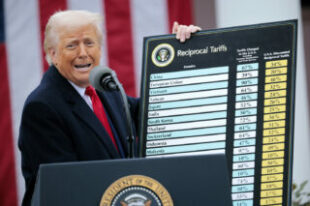
President Trump introduced new import tariffs in early April

The last week has been a bumpy ride for anyone following the Trump administration’s plans for increasing taxes imposed on imported goods.

President Trump announced a wide range of import tariffs in early April, driven by his goal to get greater cooperation on fighting Fentanyl abuse in the US, and to address administration concerns over trade imbalances with countries around the world.

Tariffs are taxes that US companies and individuals pay when they purchase goods from targeted countries.

As of today, it appears that the administration is reversing course on its plans for high ‘reciprocal tariffs’, and instead setting tariffs on imports from most countries to 10%. Meanwhile, they’ve raised tariffs from on Chinese imports to 145%.

Unfortunately, the high tariff rate threatens to double the cost of synthesizers and electronic music gear imported from China, and to dramatically increase the prices of US-made gear, too.

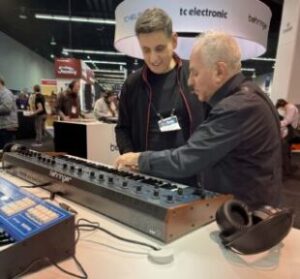
Uli Behringer displayed several new polysynth designs at the 2025 NAMM Show. US tariffs of 145% threaten to double the cost of synths imported from China.

Synth prices jumped notably earlier in the year, when Chinese import tariffs were around 30%. Since then, tariffs on Chinese imports been raised to 84%, 104%, and now a total of 145%.

While this promises to more than double the cost of electronic music gear imported from China, it also is forcing US manufacturers to raise their prices.

US synth makers get most of their parts and PCBs from China, and they’re seeing their parts cost jump 145%.

A related issue is that US manufacturers can’t predict what their costs will be in a month. One manufacture noted that they’d made a PCB order a month ago, and now that it’s about to ship, their cost will be more than double what they’d planned, because of the higher tariff rates.

This unpredictably is leading some US gear companies to pause manufacturing, because the new tariffs will make their pricing too high for their customers. Some manufactures plan on taking a ‘wait and see’ approach, hoping that the administration’s tariff plans will settle down, so that the companies can do long-term manufacturing and marketing planning.

The administration has also announced plans to increase taxes and duties on ‘de minimus’ purchases of $800 or less:

Sec. 3.  De Minimis Tariff Increase.  To ensure that the imposition of tariffs pursuant to section 2 of this order is not circumvented and that the purpose of Executive Order 14257 and this action is not undermined, I also deem it necessary and appropriate to:

(a)  increase the ad valorem rate of duty set forth in section 2(c)(i) of Executive Order 14256 from 30 percent to 90 percent;

(b)  increase the per postal item containing goods duty in section 2(c)(ii) of Executive Order 14256 that is in effect on or after 12:01 a.m. eastern daylight time on May 2, 2025, and before 12:01 a.m. eastern daylight time on June 1, 2025, from 25 dollars to 75 dollars; and

(c)  increase the per postal item containing goods duty in section 2(c)(ii) of Executive Order 14256 that is in effect on or after 12:01 a.m. eastern daylight time on June 1, 2025, from 50 dollars to 150 dollars.

Are the administration’s evolving tariff rates changing your buying plans? Share your thoughts in the comments.