GLX Balsam 8-Voice Modal Synthesizer First Look


North Carolina-based synth maker GLX Audio shared this preview of the Balsam 8-Voice Modal Synthesizer.

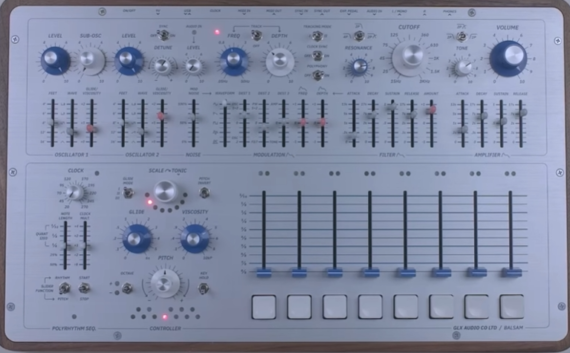
Balsam is designed to let you pitch bend and manipulate voices using an array of sliders. According to the company, “BALSAM encourages players to explore novel forms of harmonic, timbral, and rhythmic expression.”
Features:

  • 8-voice virtual-analog polyphony (digital)
  • Stereo analog state variable tone filter
  • Stereo analog VCA
  • Experimental slider interface
  • 8-channel polyrhythm sequencer
  • LFO + mod matrix + mod envelopes
  • Slider-tracked / key-tracked modulation section
  • Slider-tracked stereo panning
  • Glide + viscosity w/ individual oscillator articulation
  • MIDI polyphonic expression output
  • USB-C midi in / out
  • 5-pin MIDI in / out
  • 5mm analog clock sync in / out
  • Expression pedal input
  • External audio input
  • L/R line outs + headphone out
  • Just and equal intonation modes
  • Browser-based tuning / settings / firmware updater

Balsam is expected to be available in late Spring 2026, priced at $2249. You can sign up for updates at the site.
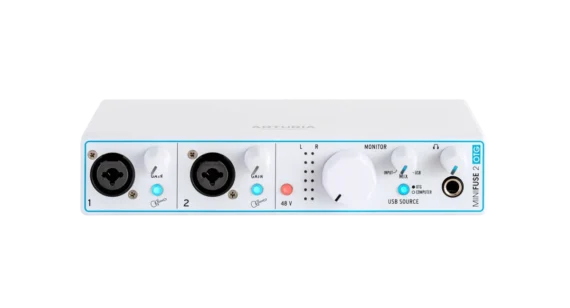
 

Arturia MiniFuse 2 OTG (On The Go)


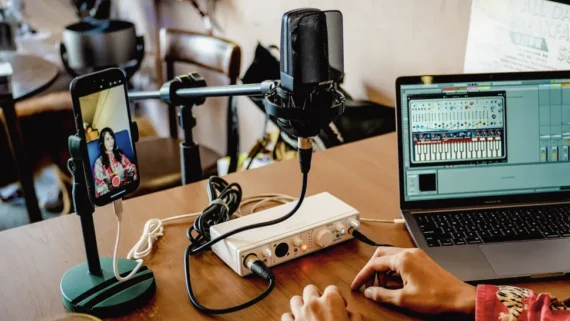
Arturia has announced a new edition of its MiniFuse 2 audio interface, designed specifically to provide a portable and easy-to-use recording solution for musicians and content creators working with mobile devices.

What sets MiniFuse 2 OTG apart from the previously released MiniFuse 2 is that it features USB OTG (On The Go) connectivity, allowing it to be connected directly to devices such as smartphones and tablets.

They say that it’s designed for people who need to produce live audio content “on the go”, but are struggling to handle complex audio routing.

The interface’s dual USB connectivity allows you to hook up with both a computer and mobile device simultaneously, with flexible routing between the two managed by Arturia’s companion software. This, along with its loopback functionality, makes MiniFuse 2 OTG an ideal choice for streamers and content creators that want a simplified setup for working with multiple audio sources.

MiniFuse 2 OTG’s front panel features dual combo mic/instrument inputs equipped with phantom power, each with a dedicated gain control and level indicator. Alongside this you have a headphone output and monitoring controls that let you toggle between USB connections and blend direct input with USB playback using the Mix dial.

On the back you’ll find stereo TRS outputs, dual USB-C ports and an extra USB-A connection designed to attach a MIDI controller or USB device without using up one of your computer’s ports.

MiniFuse 2 OTG ships with a generous bundle of software that includes Ableton Live Lite, Arturia Analog Lab Intro and a three-month subscription to Auto-Tune Unlimited, alongside a variety of additional software and plugins.

Features:

  • 500 vintage & modern keyboard presets with Analog Lab Intro
  • Arturia FX Suite:
    • Rev PLATE-140 reverb
    • Pre 1973 vintage preamp
    • Delay TAPE-201 echo
    • Chorus JUN-6 analog chorus
  • Tutorials – learn recording, streaming, and production basics with MiniFuse
  • Exclusive content – tips, tricks, and advice from industry experts
  • Dedicated online portal – access everything you need in one place
  • Subscriptions – complimentary introductions to world-class audio & mixing services
  • 2 x combo Mic/Inst/Line XLR inputs with 48V phantom power and instrument/line level switch
  • 2 x 1/4 TRS balanced line outputs with dedicated monitor level control
  • 1 x stereo headphone output with independent volume control
  • Dual USB connectivity – connect computer + phone/tablet simultaneously (OTG & main USB)
  • Direct Monitor & USB Source selector – blend between DAW, OTG, or both for flexible monitoring
  • Loopback function – capture computer audio for streaming or recording
  • Direct mono summing – set via MiniFuse Control Center
  • 1 x USB2 type A hub (200mA max.) for MIDI controller or USB device
  • Compatible with thunderbolt via 3rd party adapter
  • Backlit gain knobs with real-time overload indication
  • Bus-powered USB-C interface – class-compliant, compatible with PC, Mac, tablets & mobile devices
  • *OTG-port is data-only and does not power or drain connected devices

Here’s MiniFuse 2 OTG Video Tutorial:

The Arturia MiniFuse 2 OTG is available now for $219.


AudioBench Modular Audio Laboratory Now Available For macOS


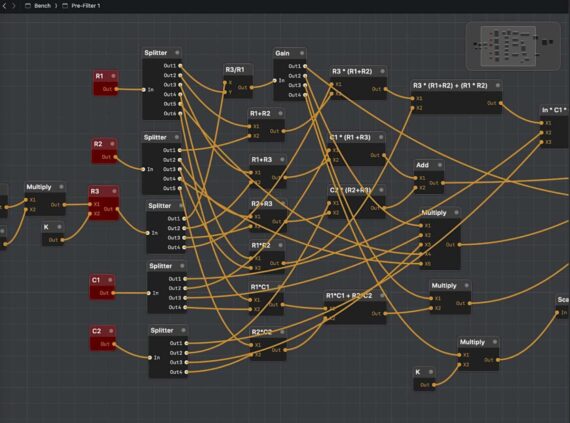
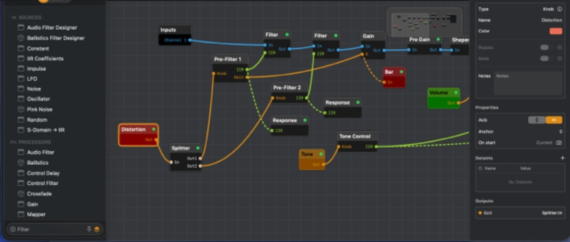
INTJ Software has introduced AudioBench, a new modular audio laboratory for macOS that’s designed to let anyone build custom audio processing chains in real time.

Users can assemble signal paths, tweak parameters, visualize waveforms and spectra, and hear results instantly — all without writing a line of code.

“AudioBench started as a personal experiment, but quickly became the audio tool I always wished existed,” said INTJ founder Evan Olcott. “It’s not a DAW, it’s not a plugin host — it’s a creative sandbox where you can explore how sound works and build your own audio ideas from the ground up.”

AudioBench uses a visual approach to audio design. Each modul” represents a concept — filters, delays, panners, distortion, modulators, analyzers, oscillators, compressors, meters, and more. Users connect modules into chains, observe the signals flowing through them, and can immediately see and hear how each piece shapes the sound.

Whether designing guitar effects, experimenting with synthesis, demonstrating DSP principles in a classroom, or prototyping algorithms, AudioBench provides a hands-on environment where ideas come to life visibly and audibly.

Features:

  • Designed for experimentation, exploration, learning, and rapid DSP prototyping
  • Modular signal-flow canvas for assembling audio and control signal chains
  • Real-time visualization: waveform scopes, spectrographs, and more
  • Deep library of audio and control modules, from fundamentals to advanced DSP building blocks
  • Educational Templates that demonstrate concepts like compression, modulation, quantization, stereo imaging, dithering, IIR design, and beyond

“We wanted AudioBench to be both powerful and approachable,” Olcott added. “If you’re a musician, it helps you understand what your pedals and plugins are actually doing. If you’re a DSP student, it gives you a visual lab. If you’re a developer, it’s a playground for ideas.”

AudioBench is available now via the Mac App Store, with an intro price of $79.99. You can learn more at the AudioBench site.