Cycling ’74 RNBO enables you use Visual Patching to Build Custom Guitar Pedals, Eurorack modules, VSTs and more
Cycling ’74 has introduced RNBO, a new ‘what you hear is what you get’ patching environment that lets you use a visual editor to create audio patches that can be exported to create web experiences, hardware music devices, audio plugins, and more.
In addition, RNBO (pronounced ‘rainbow’) generates source code that you can use however you want.
RNBO supports a multitude of export targets right out of the box, including:
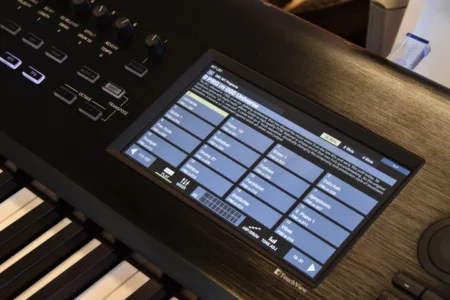
- Raspberry Pi — Build custom guitar pedals, Eurorack modules, sequencers, and much more
- Web Export — Run your patches on the web, using WebAudio (WASM) technology with a Javascript API
- VST/AU — Run your patch in any DAW as a VST or AudioUnit plugin
- Max Object — Compile to a self-contained, shareable Max object with defined parameters
- C++ — Export efficient, self-contained source code to be integrated into existing projects
Beyond the built-in targets, RNBO also ships with project templates for building JUCE-based (C++) Plugins/Applications and Websites (HTML/JS), as well as starter projects for exporting VCV Rack modules and SuperCollider UGen.
Official RNBO intro:
When you are patching in RNBO, you hear the compiled code — making exports true to your vision and expectations. Plus, you can reuse the same code and deploy it to multiple targets with consistent results.
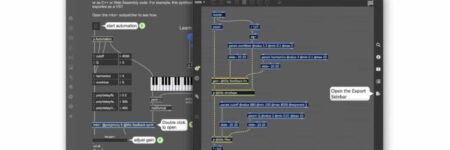
RNBO’s visual patching environment is inspired by Max, with a powerful subset of objects pulled from the Max library. Building your own customized sequencers, synthesizers, samplers, MIDI processors, and audio effects in RNBO will be very familiar to anyone who has used Max.
Features highlights include:
- Events and signals can be mixed in the patcher, just like in Max
- Full Gen integration, with the addition of event support and interactive UI objects
- Robust support for MIDI and a simple interaction API across export targets
- Thorough documentation and help files for every object
- Define the controls and interface for your RNBO export using param, inport, and outport objects
- Mix patching and code using codebox and expr objects, available for both event and audio processing
- Easily make your patches (and subpatchers) polyphonic with the @polyphony attribute
In addition, RNBO also ships with two packages that provide high-quality, documented, and reusable examples of what RNBO can do:
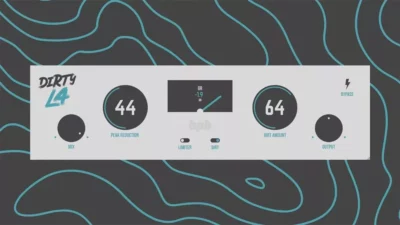
- RNBO Guitar Pedals — A set of full featured, and -authentic-sounding guitar effects that can be exported as-is or combined to build your own effects chain.
- RNBO Synth Building Blocks — Provides all the essential elements to build a great-sounding synthesizer. Patch together these building blocks to build your own instruments.
RNBO is available now, via either a $10/month subscription, $100/year annual subscription or a $299 permanent license.