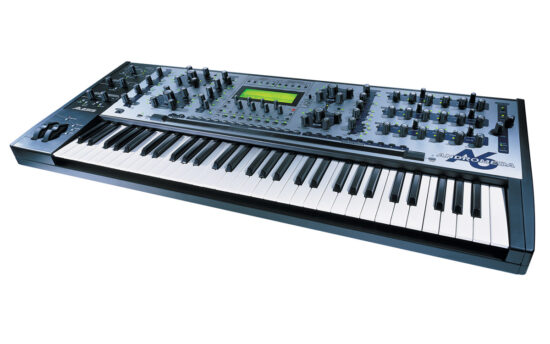
Synthesist Alex Ball – in his latest video – offers his take on the classic – if sometimes troubled – Alesis Andromeda A6 analog synthesizer.
The Alesis Andromeda A6 is a flagship analog synthesizer, produced by Alesis from 2000 to 2010, and with industrial design by Axel Hartmann. It is considered one of the most ambitious analog polysynths of its era, combining an analog sound engine with extensive digital control and programming capabilities.
The Andromeda was designed as the ultimate digitally controlled analog polysynth, with massive modulation depth, analog sound generation, extensive hands-on control and enough polyphony to function as a complete studio instrument.
While an epic synth, some consider the Andromeda a risky purchase, because of its reliance on custom ASICS chips, a tendency towards encoder ‘jumpiness’ and other issues that can crop up over time.
Features:
Polyphony: 16 analog voices, 16-part multitimbral.
Oscillators: Two analog oscillators per voice, plus sub-oscillation.
Filters: Two resonant analog filters per voice: a 2-pole multimode filter and a 4-pole low-pass filter.
Modulation: Three LFOs, three complex envelopes per voice, extensive modulation matrix.
Keyboard: 61 velocity- and aftertouch-sensitive keys.
Controllers: Pitch and modulation wheels, assignable ribbon controller.
Effects: Digital reverb, chorus, delay, pitch shifting and analog distortion.
Connectivity: MIDI, external audio inputs, and up to 16 individual voice outputs.
In his video, Ball shares a history of the Andromeda, his take on the analog beast, and a wide range of audio examples.
Watch the video and share your thoughts on the Alesis Andromeda A6 in the comments!
This isn’t a spec refresh – it’s a completely new technology platform.
The British manufacturer rebuilds its mid-range line from the ground up, aiming to deliver high-end features on a home studio budget.
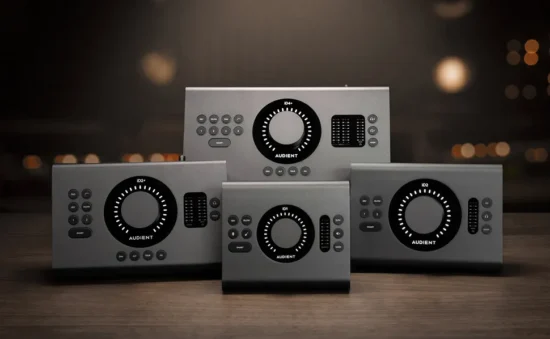
Audient has launched the next generation of its iD range of audio interfaces, built on what the company is calling the Analogue Intelligence platform, bringing together Audient’s analogue mic preamps with onboard DSP, monitor correction and new tone-shaping tools.
The range is made up of four USB-C bus-powered interfaces, the iD1, iD2, iD2+ and iD4+, each replacing an existing model. The new names refer to the number of mic preamps onboard, while the plus models add balanced hardware inserts, ADAT output and more advanced monitor control.
The preamps in question are Audient’s Console Mic Preamps, based on the discrete Class-A preamp design from the company’s ASP8024-HE console, and delivering 75dB of gain, up from 58/60dB on the previous generation. The range’s converters are 32-bit with 128dB of dynamic range, and the maximum sample rate has risen from 96kHz to 192kHz.
Audient has brought over its Orbit Control tech from the recently launched Horizon range, giving you control over the preamp’s impedance and bringing different characters out of your microphone. This is part of what Audient is calling the Analogue Tone Suite, which comprises three additional tone-shaping tools designed to colour sounds at the source: HMX introduces harmonic saturation, LIFT adds high-frequency sheen and GLOW combines the two.
The headline upgrade in iD’s third gen is RoomTune, Audient’s new proprietary monitor correction software – this adjusts the signal sent to your monitors to compensate for your room’s acoustics, helping you achieve a more balanced mix. RoomTune runs on the interface’s DSP, applying system-wide correction to everything played through your speakers. You’ll need Audient’s RM1 reference mic to get set up, which is included with the iD2+ and iD4+ and sold separately for £39.99. Headphone correction is on the way in a future update.
The onboard DSP that handles RoomTune also runs hardware-accelerated effects, letting you apply EQ, compression and reverb to input signals with no latency without using your CPU. Smartgain, which has been borrowed from Audient’s EVO range, sets input levels automatically, and you’re now able to recall preamp settings digitally too.
“With the next-gen iD range, we’ve built a range around four things most interfaces in its class can’t offer: real analogue preamps, built-in RoomTune™ Monitor Correction, onboard DSP FX and a discrete Analogue Tone Suite,” Audient’s Chief Product Officer Andrew Allen said in a press release. “This isn’t a spec refresh – iD is a completely new technology platform built on our Analogue Intelligence Platform.”
What’s New in MK3:
RoomTune™ Monitor Correction: Entirely new to the iD range, built into every MK3 model.
Analogue Tone Suite: ORBIT, HMX, LIFT and GLOW are all-new tonal shaping options, not present on previous generations.
Hardware-Accelerated DSP FX: Onboard EQ, Compression and Reverb processed by the interface, not your computer.
Elite 32-bit Conversion: New converter generation, 128dB Dynamic Range.
Smartgain: Automatic input level setting, new across the range.
Dedicated Hardware Monitor Controls: On iD2+ and iD4+.
Full Performance Over USB-C Bus Power: No AC adapter required, even on the iD4+.
Audient iD2, iD2+ and iD4+ are available now, and iD1 will be available in early 2027.
Akai MPC 3.10.1 Update opening up new possibilities.
MPC 3.10.1 takes standalone music production further, giving users more freedom to create, experiment, and bring your ideas to life. Discover new sounds with custom plugins built using Akai free official Software Development Kit.
AI-assisted ‘vibe coding’ is rapidly changing the music technology landscape and established brands are being forced to make quick decisions about how they are going to react.
While the phenomenon of users creating their own DIY firmware, mods or plugins isn’t necessarily anything new, both the volume and speed of these community projects has accelerated rapidly in recent weeks. Now, user communities are often developing ideas and new features for their hardware at a pace the official developers can’t match.
The question for music tech brands is, how do you respond to this? While some hardware developers are so far choosing to ignore or actively block DIY firmware, others, including the likes of Behringer and Polyend, have made moves to embrace community development.
Akai is another brand that falls into this latter category. While teasing its upcoming Sample Key hardware last month, the company signposted its intention to move towards making elements of its product line open source. In the weeks since, we’ve seen the first glimmers of what this might look like in practice, and now with its latest MPC update, Akai is making good on its promise of opening up the MPC ecosystem.
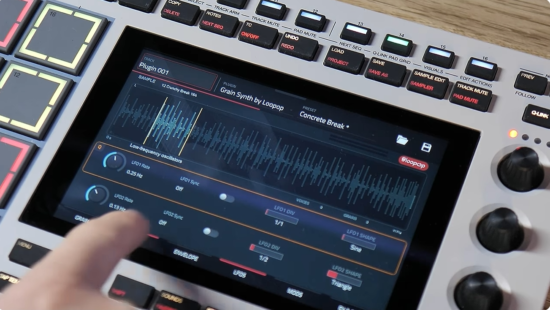
With the launch of software update 3.10.1, Akai is now letting users create their own custom plugins for the MPC and Force hardware, assisted by the newly released SDK (software development kit). The update also unlocks the MPC platform’s ‘enhanced development’ features, which lifts limitations on plugin and track counts within the hardware, as well as adding mouse support.
In a video announcing the update, Akai Pro’s Andy Mac explains the need to balance the creative possibilities offered by AI-assisted coding with the risk of cutting corners. While, as he acknowledges, AI tools allows the company itself to speed up elements of development, that doesn’t mean the company will be churning out updates to keep up with the community.
“Faster development doesn’t mean taking shortcuts,” Mac says, “the same focus on testing, stability, and reliability remains essential before we put any releases into the hands of the community.”
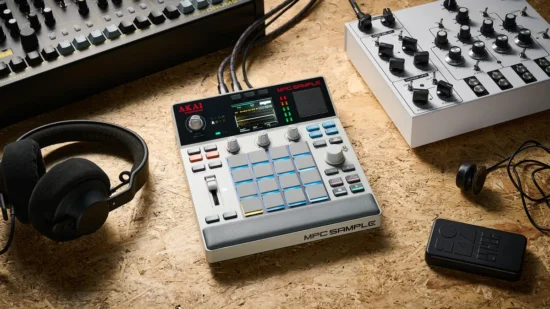
Alongside the update to the bigger MPCs, the MPC Sample gets an update to version 1.4. This adds a variety of new workflow features, but most significantly it also adds community development support and an official SDK to allow users to create their own effects for the unit.
Again, this is something of a middle ground approach to open source, which follows in the wake of numerous high-profile DIY firmware mods that have appeared for the MPC Sample in recent weeks, such as the popular SampQOL mod that, among other things, expands the device’s track and effect counts.
Akai isn’t ignoring these completely though, stating in the announcement video that the company is “already working alongside some of these new community developers, offering ongoing support” – which certainly seems to imply that some of those popular mods may become at least semi-official.
These updates aren’t purely about the SDKs, however. Another handy feature added to the MPC and Force range is the ability to mirror the touch interface and audio to a desktop computer, which is likely to be handy for streamers and content creators.
Akai is launching two new official plugins too. The first is an emulation of the classic SP-1200 vintage sampler, while the second is an SSL SL 4000-style channel strip plugin.
Features:
Official development framework for creating third-party MPC instrument and effect plugins.
C++ plugin framework with support for audio processing, MIDI, transport synchronization, parameters and program states.
Cross-compilation tools for supported MPC hardware architectures.
Example synthesizer, drum machine and stereo delay projects.
Tools for designing custom touchscreen interfaces and Q-Link controls.
AI-assisted development workflows using coding agents including Claude Code and OpenAI Codex.
Plugin validation, testing and packaging utilities.
Host simulation tools for testing plugins before installation on hardware.
Host Ziv Eliraz – in his latest loopop video – takes a deep dive into the update, and discusses how he created his own custom plugins:
The MPC Plugin SDK is available free of charge from inMusic’s GitHub repository under the MIT license. Compatible MPC hardware requires OS 3.10.1 or later and External Plugin Support to load third-party plugins. Visit the Akai Professional MPC release notes for firmware information.