Archive for August, 2026

William Orbit Has Died At The Age Of 69
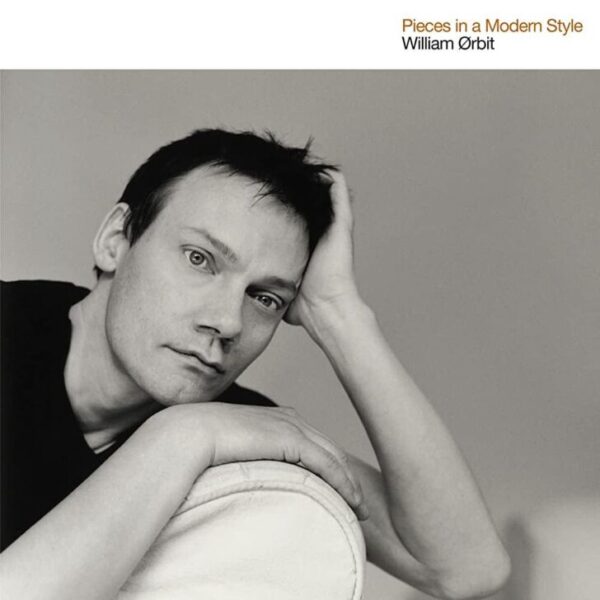

Synthesist and producer William Orbit has died at the age of 69.

William Mark Wainwright (December 15, 1956 – July 23, 2026), known professionally as William Orbit, was a Grammy Award-winning British musician, composer and producer.

He is best known for his collaboration with Madonna on the 1998 album Ray of Light, which is considered by many to be her best album and one of the outstanding releases of the ’90s.

Orbit also left his mark on recordings by Blur, U2, Britney Spears, Pink, British girl band All Saints and many others.

His solo electronic music albums include the Strange Cargo series, and Pieces in a Modern Style, which yielded a massive hit in the remixed take (with Ferry Corsten) of Barber’s Adagio for Strings.

His most recent release was The Painter (2022), an album that features collaborations with a variety of vocalists.

Orbit’s productions, and his approach to electronic music, have inspired countless musicians and leave a legacy that continues to shape modern pop and electronic music.
 

Free Steinberg Classics ‘Steinberg Celebrates 30 Years Of VST With Free VST Plugins Update’


The very first VST plug-ins, re-released in one collection.

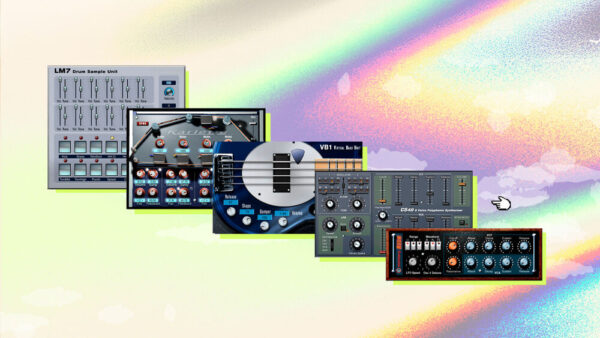
Steinberg is celebrating 30 years of its VST standard by telling us that ‘the ’90s are back’ and releasing the Classics Collection. This is a new free bundle which have been updated to the latest VST3 standard, features five fondly-remembered plugins from the ‘90s and early ‘00s, one of which was the first VST instrument ever released — Neon, CS-40, Karlette, VB1, and LM7 — in the free Steinberg Classics Collection.

This was and is a simple two-oscillator synth known as Neon polyphonic software synthesizer, arrived in 1999 as part of the Cubase VST 3.7 DAW update, and it did a fine job of proving that the ‘software instrument’ concept – which many still doubted – was credible.

Indeed, it set the tone for what was to come, both sonically and with its vintage-style ‘wooden’ end panels, which became ubiquitous as emulations of hardware synths flooded the market.

The VB-1 was one of the original virtual bass instruments, and made it clear that the VST market wasn’t only going to be about synthetic sounds.

Fast forward to the early 2000s and Steinberg released the CS-40 polysynth, and that’s resurrected here, too. The sample-based LM7 drum machine also gets another airing, and the bundle is capped off by Karlette, a classic ‘90s tape delay plugin.

As you’d expect, these plugins aren’t as powerful or refined as many of their contemporary counterparts, but trying them again, they hold up surprisingly well, and it could be a fun creative exercise to go back and try and make a track with the same kind of software sounds that producers had access to 25 years ago.

Get these free VSTS and go back to the VST future!

It’s also worth saying that, while some of the plugins have been re-released before, these versions are compatible with the latest Mac and Windows operating and are VST 3 compatible.

You can download the Steinberg Classics Collection now from the Steinberg website.

SynthEdit Comes To Mac After 30 Years


Developer Jeff McClintock has announced that SynthEdit 1.6, now available as a beta release, is for the first time available for Mac, in addition to Windows.

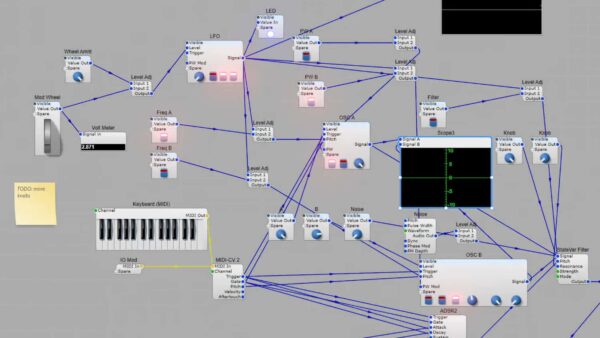
SynthEdit is a visual modular development environment for creating virtual instruments and audio effects, allowing users to design and export plugins without writing low-level DSP code.

It was originally introduced on Windows back in 1987. With verison 1.6, SynthEdit is adding Mac support. A Linux version is also in development.

SynthEdit lets you build virtual instrument plugins by placing modules onto a graphical canvas and connecting them with virtual patch cables. A built-in panel designer is used to create the plugin interface.

The application supports exporting VST3 and Audio Unit plugins and can be extended with third-party C++ modules.

Features:

  • Visual modular patching environment for building synthesizers, effects, MIDI utilities, and experimental audio processors
  • Drag-and-drop workflow using interconnected modules instead of traditional programming
  • Built-in GUI designer for creating custom plugin interfaces
  • Export support for VST3 plugins on Windows and macOS and Audio Unit plugins on macOS
  • Supports creation of subtractive, additive, FM, wavetable, hybrid, and sample-based instruments
  • More than 300 built-in modules are included
  • Expandable through a library of over 1,000 third-party C++ modules
  • MIDI 2.0 and MIDI Polyphonic Expression (MPE) support
  • SFZ sample playback support
  • Universal VST3 export supporting both Intel and Apple Silicon Macs
  • “Export as JUCE” option for generating additional plugin formats in supported workflows
  • Searchable module browser
  • Zoomable editor interface
  • XML-based project format
  • No royalties are charged on plugins created with SynthEdit

SynthEdit is available now for Mac and Windows. A free demo is available with no expiration period. A Linux version is also in development.