It Looks Like Behringer Wants To Copy The Success Of The M-Wave FM-1….And Akai MPC
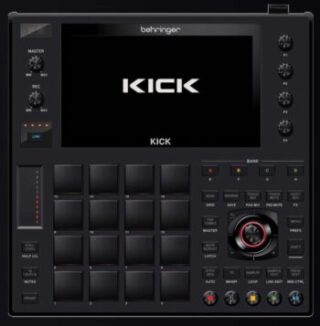
It looks like Behringer wants to copy the success of the M-Vave FM-1 and its open hardware platform – and the Akai MPC, while their at it.
The Behringer Kick will be the first music device from a major manufacturer designed with open development model in mind.
Music Tribe has published an open-source software repository for the Behringer KICK, a standalone music production center built around sampling, sequencing, and performance controls.
This follows a manifesto of sorts from founder Uli Behringer, who says “The biggest threat to business isn’t AI. It’s abundance.”
He adds that he’s “transferred ownership of Music Tribe to the Uli Behringer Foundation, and we’re pursuing formal nonprofit recognition.”
“I believe the greatest AI revolution won’t be replacing humans. It will be unlocking the creator in every human being.”
To that end, Music Tribe is planning to open ‘selected’ designs, so communities can use AI to create their own firmware, add features, and reinvent products. This sort of community-driven development has already been happening with the FM-1 and other devices.
While there are notable open hardware predecessors – from companies like the Mutable Instruments modules & the Synthstrom Deluge – the Behringer Kick will be the first music device from a major manufacturer designed with this open firmware development model in mind.
The Github repo readme describes the Behringer Kick as a device with a 7-inch touchscreen, 16 RGB pads arranged in eight banks, a sampler with sample editing, a step sequencer, and a looper. Other features include more than 300 built-in effects, four assignable knobs, a jog wheel, and an AI camera for gesture control.
Connectivity includes MIDI In and Out, USB-A and USB-C, stereo audio inputs and outputs, an SD card slot, and four CV/Gate jacks for integration with synthesizers and modular equipment.
The project includes source code for the KICK application, its AudIO audio engine, and the hardware communication protocol, along with a Linux build system. The application, audio engine, and communication protocol are published under the GNU Affero General Public License.
Uli Behringer’s manifesto – along with his non-profit organization and venture into open software – promises to bring another major disruption to the music industry’s status quo.
The Behringer Kick source code is publicly available on GitHub. No confirmed retail price or shipping date for the hardware has been announced.
What do you think about Behringer’s announcement? Share your thoughts in the comments!


