Korg Phase8 Acoustic Synthesizer Debuts At 2026 NAMM Show
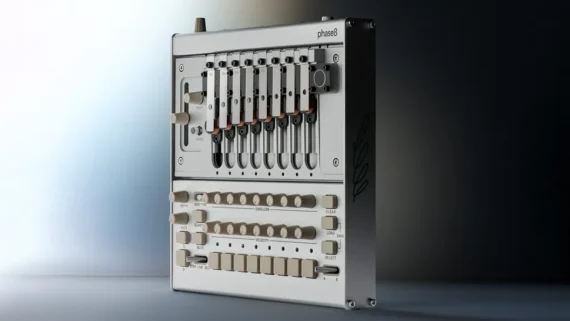
At the 2026 NAMM Show, held Jan 22–24 in Anaheim, California, Korg has officially introduced the phase8, an electro-acoustic instrument, based on the concept of acoustic synthesis.
Harnessing a new form of “Acoustic Synthesis” technology conceived at Korg’s experimental Berlin outpost, phase8 is the brainchild of renowned engineer Tatsuya “Tats” Takahashi, best known for masterminding the Minilogue and the Volca series.
Tats unveiled the final evolution of phase8 today on stage at 2026 NAMM Show, telling the audience that the product was inspired by the desire to design an instrument that feels “organic” and “alive” in a “flooded market” of feature-laden synthesizers. Tats declared that phase8 is not only “beyond analogue vs digital”, but “beyond electronics” altogether.
Acoustic synthesis has been a fairly niche concept to date, implemented on instruments like the Vo-96 Acoustic Synth and the String Armonica. It’s based around the idea of using electronics to control the vibration of physical objects – like strings on a guitar – which makes it possible to create sounds that would not otherwise be possible on an acoustic instrument.
With the phase8, Korg is testing the waters for making acoustic synthesis mainstream.
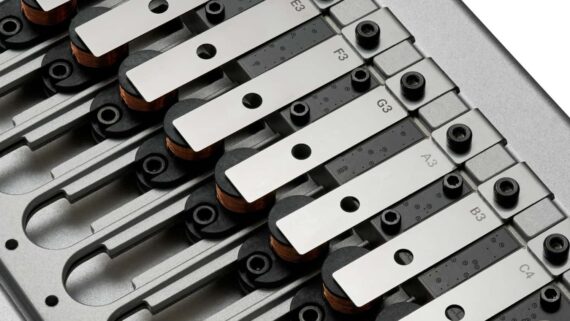
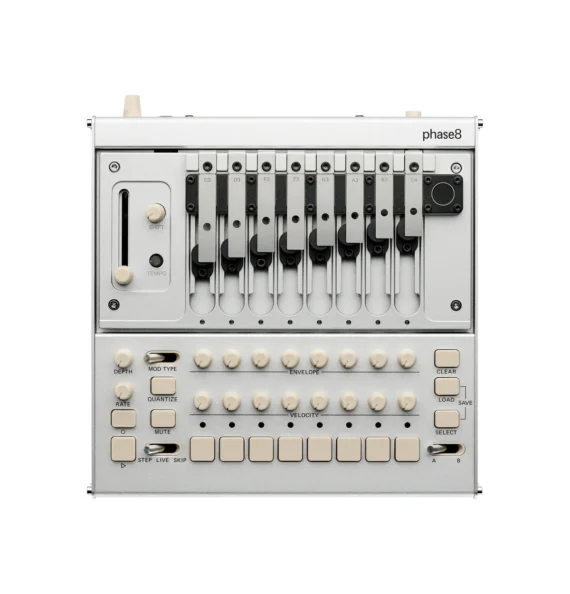
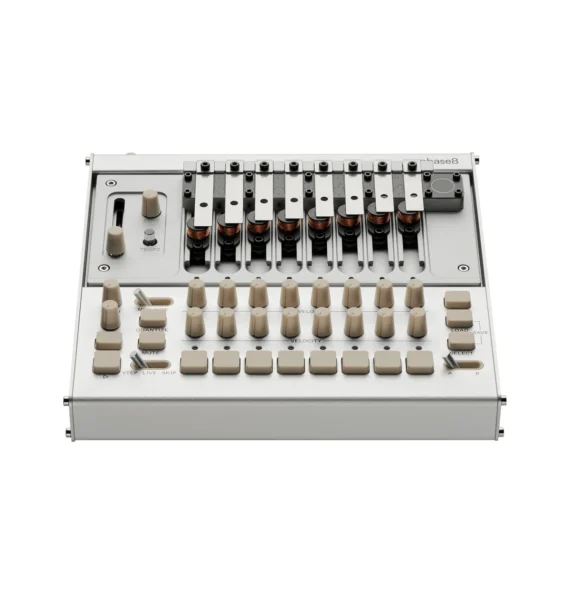
The phase8 offers eight independent electromechanical voices driving steel resonators – so the sound is controlled electronically, but generated acoustically.
At the heart of phase8 are eight chromatically tuned steel resonators – the synth comes with 13 of these that can be swapped out and tuned by the user – that produce sound via electromagnetic stimulation.
The resonators can also be physically touched, plucked, strummed or tapped, and Korg suggests that you place objects on the instrument to experiment with new textures and tones. phase8’s Air slider allows you to boost or dampen the acoustic response of anything that’s brought into contact with the resonators.
The phase8 is equipped with dedicated envelopes and velocity control for each resonator, and features a polymetric step sequencer that supports both step programming and unquantized live recording. Sequences can be stored and recalled via eight memory slots, and a Shift knob can be used to add delayed triggers to each resonator relative to the chosen tempo.
All of phase8’s controls can be automated across a sequence using the record function, and three modulation effects are on offer: you get good old tremolo along with two audio-rate, pitch-dependent styles of modulation, one of which can be harmonically quantized.
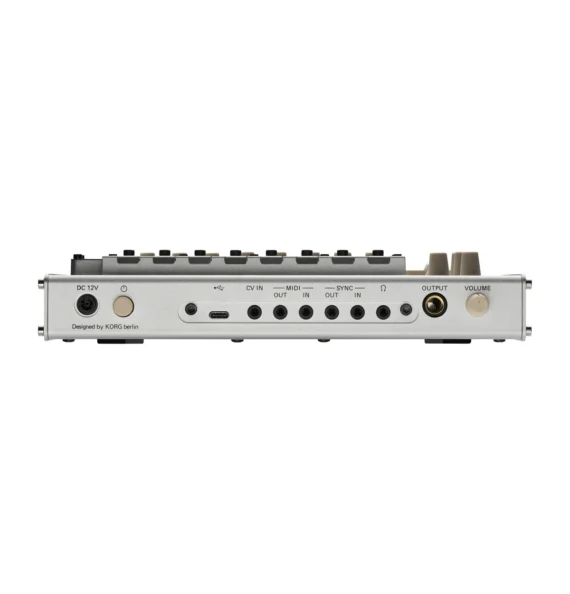
Connectivity includes MIDI TRS-A In/Out, USB-C for USB-MIDI and firmware, Sync In/Out and a CV input for hooking up the synth with a wider set-up, along with a ¼-inch line audio output, and a 3.5mm headphone output.
Note*: Korg has not provided an official video demo at this time.
The Korg phase8 is priced at $1149 and available now.