Make Noise Announces Free Updates For MultiWAVE, PoliMATHS + MultiMod


Make Noise has released new firmware for its digital New Universal Synthesizer System modules: MultiWAVE, PoliMATHS and MultiMod.

Features of the new firmware include:

  • 1New Cross Mod option on MultiWAVE for internal audio rate modulation
  • Custom scale quantizer option on MultiWAVE
  • Use PoliMATHS to generate offsets and easily use a connected QXG pair as a mixer, among other tricks
  • Extended Oscillations range on PoliMATHS
  • MultiMod Channel Index updated to work more smoothly when processing audio


Here’s what’s new in the updated firmware:

MultiWAVE firmware version 4.3.5:

Includes a new modulation shape: Cross Mod, which is indicated by a lime green color. In this mode, instead of internal low frequency mod shapes, the oscillator receives wave position modulation from the other oscillator and scans at audio rate.

Additionally, MultiWAVE now includes the ability to load up to eight Scala files for custom quantization scales!

PoliMATHS firmware version 1.7.3:

Now includes the addition of DC offsets on its Strength control.

As a basic use, turn Strength into its negative region without Activating PoliMATHS to use a connected pair of QXGs as a simple mixer. The normalled offsets will allow QXG channels with to “drone” when turned up, whether that be with a MultiWAVE connected over chain cables or with any input signal patched to their inputs.

Turn Oscillations up for unlocked tremolo effects, or Activate PoliMATHS channels to strategically “duck” specific QXG outputs.

MultiMod firmware version 0.7.5:

The MultiMod Channel Index output has been altered slightly so that it can be used when MultiMod is processing audio.

Previously the Channel Index output had usually not known how to handle audio sources. Now it operates based on an internal envelope follower which lets us derive gates from delayed signals if they contain transients etc. which will make it easier to derive timing information from a MultiMod that is being used as an audio delay.

Additionally, this firmware fixes Rate and Time issues on its Random shape settings, fixes a display issue with the Square LFO in bipolar output mode, and changes the module’s start routine to fix power up issues in cases running heavy module loads.

The modules can be updated now through the Make Noise site.


Isla Electronics Previews Virtual Alesis Andromeda A6, ASICS


Isla Electronics shared this sneak preview of ASICS, an internal engine for their upcoming Caladan hardware synthesizer, that’s inspired by the Alesis Andromeda A6.

They say that ASICS is also likely to be released as a VST/AU plugin.


ASICS is fully sysex compatible with the original machine and can act as a remote controller for the real hardware.

Details are to come at the Isla site.

Electronic Music Pioneer Patrick Gleeson Has Died At 91


Patrick Gleeson, a synthesist, composer, producer and engineer who helped pioneer the use of synthesizers in jazz, experimental music and film, died July 19, 2026, at the age of 91.

Born November 9, 1934, Gleeson moved to San Francisco in the 1960s, where he began exploring electronic music at the San Francisco Tape Music Center. He experimented with early Buchla electronic instruments before becoming inspired by Wendy Carlos’ Switched-On Bach, and acquired a Moog III modular synthesizer.

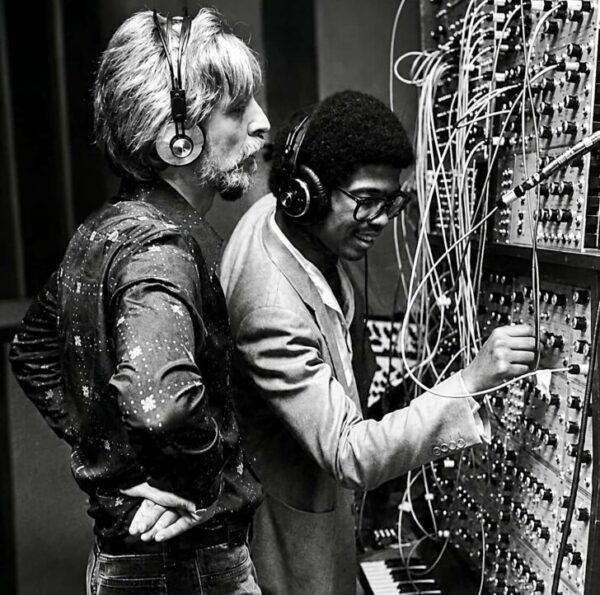
Gleeson co-founded Different Fur Recording Studio in San Francisco with John Vieira in 1968. The studio became an important center for electronic and experimental music, hosting artists including Herbie Hancock, Devo, Brian Eno and David Byrne.

Gleeson helped pioneer the use of synthesizers in live jazz performance, and Hancock later credited him with introducing him to synthesizers. He collaborated with Hancock on the albums Crossings (1972) and Sextant (1973) and toured as part of Hancock’s band.

Gleeson also maintained a wide-ranging career as a producer, engineer, performer and composer. He produced or performed on more than 100 albums, working with artists including David Byrne, Brian Eno, Devo, Freddie Hubbard and others. He served as producer and engineer on Devo’s 1978 debut, Q: Are We Not Men? A: We Are Devo!, and contributed to Byrne and Eno’s My Life in the Bush of Ghosts.

As a solo artist, Gleeson released Beyond the Sun – An Electronic Portrait of Holst’s The Planets in 1976, an electronic interpretation that earned a Grammy nomination for Best Engineered Classical Recording.

Wendy Carlos wrote the line notes for the album, saying:

“Our eight-year wait for someone else to explore electronic music realisation with what we judge to be appropriate technical standards and musical taste has ended. One hears the ears of a gifted musician at work, in a field where one must exercise unprecedented discipline and self-control.”

Later work included electronic interpretations of Star Wars and Vivaldi’s The Four Seasons, jazz recordings and more. Gleeson also contributed synthesizer work and compositions to film and television, most notably on Apocalypse Now.

Gleeson remained active into his ’80s, performing live at events like Moogfest in 2019 and Synthplex in 2022.

Here’s the video for Gleeson’s The Leap, recorded live with Michael Shrieve and Sam Morrison:

via Drew Schlesinger, Michael Shrieve, BMF