Elta Music Introduces Polivoks-8 Polyphonic Synthesizer
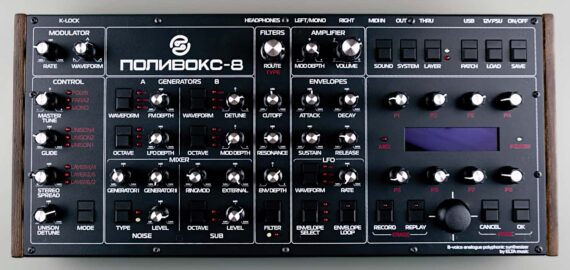

Superbooth 2026: Elta Music has officially introduced the Polivoks-8, an eight-voice polyphonic, dual-VCF, bi-timbral analog synthesizer, available in both desktop and 4U rack-mount formats.

Inspired by the legendary soviet Formanta Polivoks, it combines analog circuitry with modern flexibility and control, delivering a “bold, distinctive sonic character for the studio or stage”.
Features:

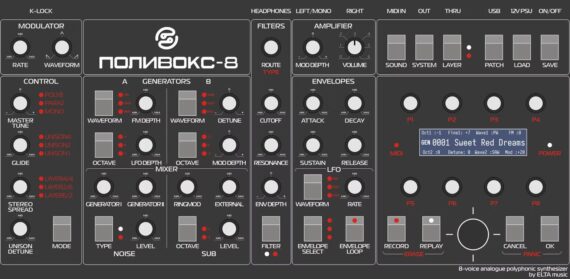
  • Oscillators – Each of the eight voices features two fully analog oscillators with FM, Sync, and Ring Modulation capabilities, plus a dedicated sub oscillator per voice. Choose from the classic trio of analog waveforms with PWM and fixed pulse options – perfect for fat basses, lush pads, and sharp leads. A versatile analog noise generator provides both white and pink noise to enrich your sound palette.
  • Filters – Every voice is equipped with two analog voltage-controlled filters that can be freely routed in serial, parallel, or any blend in between.
    • VCF 1: A classic Polivoks-type filter, originally designed by Vladimir Kuzmin for the iconic Formanta Polivoks synthesizer. Built around genuine soviet K140UD12 OTAs, it delivers a distinct character – aggressive, expressive, and alive. It features 12 dB low-pass and 6 dB bandpass responses, controllable input saturation, and true analog FM for deep timbral shaping.
    • VCF 2: An improved ladder-style filter offering a 24 dB low-pass response with resonance drop compensation, ensuring smooth, consistent behavior across all resonance settings. Together, these filters unlock a vast range of tonal possibilities – from searing acid sequences to silky ambient textures.
  • Amplifier Section – Each voice includes three VCAs: one master VCA plus a stereo pair for pan modulation, enabling dynamic spatial movement and immersive sound design.
  • Envelope Generators – Three independent envelope generators per voice are pre-routed to the VCF, VCA, and VCO. Each can be freely re-patched, with multiple curve types available for precise control over contour and its response.
  • LFOs – The Polivoks-8 features one global analog LFO (modulated triangle waveform)and eight per-voice LFOs with a wide selection of waveforms – including the ability to create and save user-captured waveforms per patch, offering limitless modulation potential.
  • Arpeggiator & Sequencer – Each patch or timbre includes a classic arpeggiator and step sequencer, both fully programmable for intricate rhythmic and melodic motion in bi-timbral mode.
  • Joystick Modulation – An analog joystick allows expressive real-time control. Movements can be recorded and replayed as modulation sources or even used as custom LFO waveforms, adding another layer of performance creativity.
  • Sound Storage – Store up to 1024 patches (256 factory + 768 user slots) across eight sound banks with 128 patches per bank.
  • Connectivity
    • Audio: Mono input for external signal processing, stereo main output, and stereo headphone output.
    • MIDI: Classic 5-pin DIN I/O/T plus high-speed USB MIDI I/O for seamless integration with modern setups.
  • Control Panel – The interface features high-quality, 360° endless encoders for all parameters and a dedicated master volume potentiometer. Durable Digitast-type switches ensure a solid, tactile feel. Crisp 3.2-inch monochrome OLED for clear visual feedback rounds the control.

Details on pricing and availability are still to come at the Elta Music site.
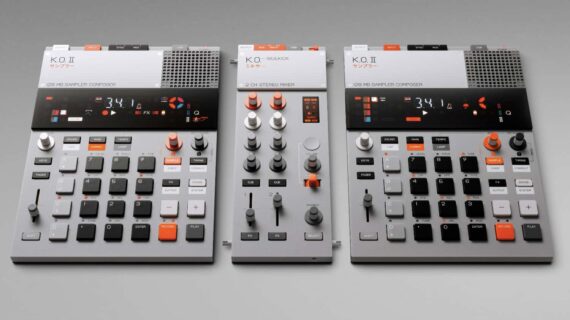


Teenage Engineering Introduces EP-136 K.O. SIDEKICK Compact Mixer & Audio Interface


Teenage Engineering has launched the EP-136 K.O. Sidekick, a modular two-channel mixer, FX, and USB Audio Interface that integrates with their K.O. II sampler.

The EP-136 K.O. Sidekick is positioned as a companion for the company’s EP series instruments and other gear. It combines a two-stereo-channel mixing console with individual compression, configurable EQ styles, and a performance effects section in a slim form factor that can run on two AAA batteries or USB-C power.

The EP-136 is more than a functional utility though, boasting a variety of creative effects and performance tools more commonly seen on DJ mixers.

As Teenage Engineering says: “The plan was to build a mixer for the KO II but it became more of an effect-box with a built-in sequencer. Quite cool actually.”

Each of the mixer’s two channels has a three-band EQ with three modes – DJ, parametric and studio. There’s also a gain control for each channel along with a three-mode compressor.

Each channel has a dedicated volume fader as well as a cue button, allowing users to preview either channel via the front panel headphone port.

At the bottom of each channel strip is an FX button, used to send either channel to the unit’s effects module. The mixer has six effect types – filter, loop, delay, tape, tremolo and siren.

The effects themselves can be controlled by a bi-directional mod stick and force-sensitive pad along the mixer’s righthand edge. These allow the user to do things like create filter sweeps, apply bursts of resonance or play with loop and tape length/direction. The EP-136 can record inputs from these controls, allowing it to capture automated effect sequences.

The unit functions as a USB audio interface, offering multiple ins and outs for multichannel computer audio and MIDI integration, while a high-resolution color LCD and dedicated knobs provide direct control over mix parameters, effects, and tempo-related functions.

Motion-controlled effects, beat-match features per channel, and auxiliary routing options support live remixing and studio workflows in compact setups.

If you want to add channels, you can snap two or more Sidekicks together. Multi-SideKick bundles are also available.

Features:

  • Two stereo channel strips for independent input mixing
  • Stereo auxiliary/session input for a third source
  • Dedicated headphone cue output for monitoring and previewing
  • Configurable EQ styles including DJ and studio options
  • Individual compressor controls on both input channels
  • Beat-match functionality per channel for tempo alignment
  • Six adjustable performance effects
  • Motion Control effects automation with pressure-sensitive pad
  • Tap FX sequencer for rhythmic effects triggering
  • USB-C audio interface with 8 inputs and 4 outputs plus MIDI controller capability
  • Runs on USB-C power or two AAA batteries for portable use
  • High-resolution custom color LCD screen
  • Pressure-sensitive force pad for expressive control
  • High-resolution mod stick for parameter manipulation
  • 48 kHz / 24-bit audio processing
  • Input impedance and maximum signal specs optimized for mobile and pro workflows

Here’s an overview via ‘s Sam Stosuur:

The EP-136 K.O. Sidekick is available now for $179 USD.


Modal Electronics Launches Element One Keyboard Synthesizer At Superbooth


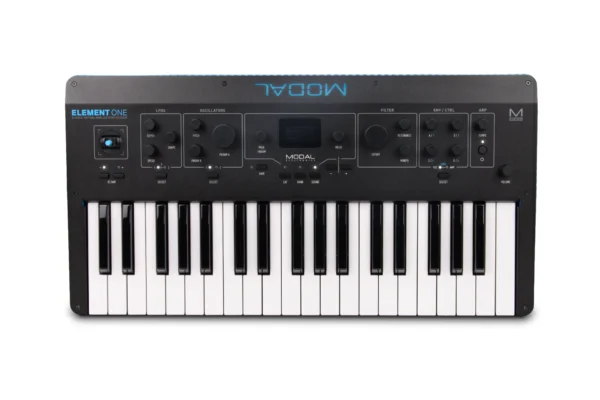
Element One is the 8-voice virtual-analog synthesizer designed to feel like an instrument, not a science project.

Today, Model Electronics launching the first day of Berlin’s Superbooth 2026 show comes the Element One, a diminutive 37-key synth designed for musicians who, in Modal’s words, ‘want to play with sound’ albeit without requiring any deep technical knowledge.

Developed in collaboration with the world-renowned Axel Hartmann Design team, the 4.5kg minimalist steel and polycarbonate-enclosed Element One’s ultra-reactive USP is spotlighted by expressive aftertouch and a versatile 4-axis joystick.

Then, there’s 17 direct-access control knobs for instantaneous sound shaping. It looks like the perfect antidote to tedious menu-scrolling…

The Element One is being posited as more of a responsive instrument, then – an instrument that attendees of this year’s Superbooth can test out with their own hands over at Modal Electronics booth (H101).

“Element One is for musicians and producers who want more sound and more expression without turning into full-time programmers,” says the Modal team. “It doesn’t ask you to learn the rules; it dares you to play.”

But that simplicity belies the fact that, under the hood, the Element One sports some impressive specs: 64 high-resolution oscillators (up to 8 per voice) can provide textured warmth right through to more modern-leaning sounds. Then there’s 30 resonant filter types including morphable and static options.

Then, there’s what Modal describes as ‘studio-grade FX’ – consisting of three independent stereo engines which can conjure reverb, delay, chorus and much more – arrangeable in any order you see fit.

But, if you’d rather leave all the exploring and just dive straight into some staple sonics, Modal has kindly provided 300 factory presets (categorised by character)  will undoubtedly serve you right.
Modal states that the Element One has been designed to fit into any musical ecosystem, spanning a guitarist’s pedalboard to a DJ’s live rig, or the standard DAW-based producer’s home setup.

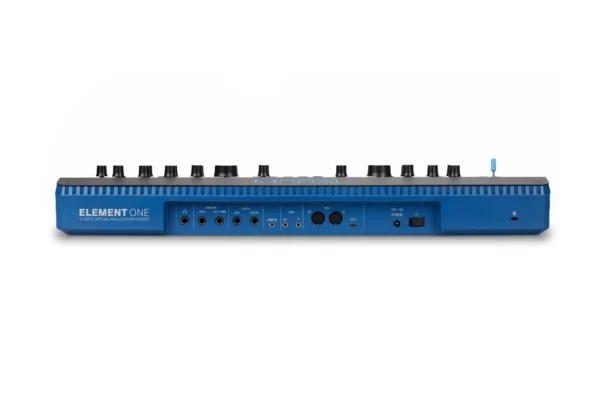
In terms of ins and outs, the Element One sports USB-C MIDI, MIDI In/Out, Sync I/O, and a stereo audio input that allows external sources to be processed through its internal FX engines. For deeper editing, Modal provide a free app – aka, the ‘MODALapp’ which provides a visual interface (available for macOS, Windows, iOS, and Android).

Element One is available through authorised retailers for MSRP 649 €/ or MAP $599. For more information, visit the MODAL Electronics website.