This old-school sampling plugin gets you the retro sound of the Commodore Amiga for only £10.
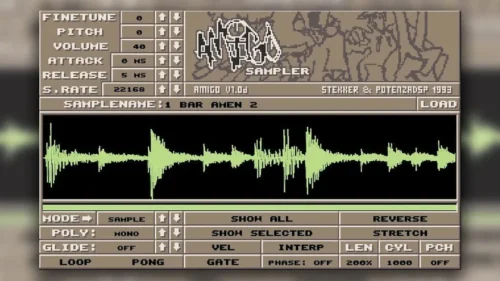
Amigo Sampler, a new plugin from PotenzaDSP promises to recreate the gloriously old-school sound of the Commodore Amiga in your DAW, complete with crunchy lo-fi sonics and classic Akai-style time-stretching.
Amigo Sampler automatically downsamples audio to the 8-bit bit depth and 22kHz sample rate found on the Amiga to nail its “authentic crunch”, but the sample rate can be adjusted to taste. Once your sample is loaded in, you’re able to play it back via two modes.
Slice Mode allows you to slice up your samples and map them across the keyboard (perfect for Amen breaks) while Sample Mode maps a sample across the keyboard to be played back monophonically or with up to 16-voice polyphony. There’s a neat chord memory function that can be used to map chords across the keyboard to be played by individual notes.
Samples can be reversed, phased and stretched with classic Akai-style time-stretching that can also be automated in real-time. The plugin accepts .wav, .mp3, .aiff, .flac and .ogg files and plays nice with sample formats compatible with the original Amiga, including .iff, .8svx and .raw files. What’s more, Amigo’s brilliantly retro, pixelated user interface can be customized to any colour scheme you like.
Amigo Sampler has earned high praise from artists, with Amiga fan and jungle producer Pete Cannon describing it as “the best Amiga emulation” he’s ever used.
The best part is, Amigo is yours for the eminently reasonable price of £10.
Amigo Sampler is available in AU/VST3 formats for macOS, Windows and Ubuntu. Find out more on PotenzaDSP website.
Latest version introduces an AI-powered stem separation option and productivity enhancements while maintaining affordability and ease of use.
Acoustica has released Mixcraft 10.5, an update to its popular Windows audio workstation software for music creators. The latest version features an AI-powered stem separation option and productivity enhancements, all while maintaining affordability and ease of use.
Mixcraft has been a go-to choice for professionals and beginners since its initial release in 2004 and is available in two versions: the entry-level Recording Studio and the Pro Studio version, which has additional tools, instruments, and effects.
Acoustica has enhanced its virtual studio in the 10.5 update — free to Mixcraft 10 owners — with even more to inspire and increase productivity. All of the improvements in Mixcraft 10.5 are centered on ease of use, stability, and innovation.
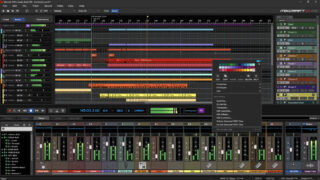
The update features new Project Templates, offering task-specific presets for tasks such as piano+vocal arrangements, podcasting setups, mastering, video editing. Mixcraft has also expanded MIDI controller support with additional scripts that support more popular gear. A new Quick Access panel enables users to quickly add, remove, and reorder instruments and effects on virtual tracks.
Behind the interface improvements is a backbone of enhanced stability and plugin support. Mixcraft’s robust Plugin Manager displays native and third-party installed virtual instruments and effects plugins, giving users several customization options to organize and navigate their VSTs more easily. And the new Auto-Save feature with user-defined intervals further reduces the risk of projects lost or corrupted due to misbehaving plugins.
The integrated Mixcraft Store tab introduced in version 10 is now packed with over 100 items from top brands, many of which are free. Manufacturers include Addictive Drums, Antares, Baby Audio, Blue Cat, Cherry Audio, D16, FabFilter, Kilohearts, Kuassa, and PSP Audioware. Soundtrack Loops, Loopmasters, and others offer a generous selection of loops and sample packs. Acoustica is also introducing a new Loyalty Credit program that rewards Mixcraft users with points they can apply as virtual cash towards purchases in the expansive Mixcraft Store.
These improvements are standard in both Mixcraft 10.5 Recording Studio and the feature-rich Mixcraft 10.5 Pro Studio.
Producers will find one of the most exciting new features exclusively in Mixcraft Pro Studio: Mixcraft’s new AI-powered Stem Separation tool. Stem Separation allows users to take a mixed audio file and quickly isolate its parts, such as vocals, piano, drums, and other instruments, into individual tracks, each ready for editing, inspecting, or replacing. Mixcraft 10.5 Pro Studio also offers powerful features like Track Regions, audio and MIDI routing, Melodyne pitch shifting, and acclaimed plugins like Cherry Audio’s DCO-106, Stardust 201, and Galactic Reverb. These features make Mixcraft 10.5 Pro Studio one of the most fully-featured DAWs available, offering extraordinary value for money.
For enthusiasts exploring the world of music production or professionals fine-tuning their latest project, the new Mixcraft 10.5 is an irresistible opportunity to upgrade their studio without the burden of complexity or cost. Current Mixcraft 10 users can enjoy a complimentary update, while newcomers can try a free, fully functional 14-day trial.
Mixcraft 10.5 Recording Studio and Pro Studio are available at special introductory prices of only $59 and $119, respectively. Upgrade pricing is available to registered users of previous versions. After April 16, 2024, prices will revert to the regular product prices of $99 for Recording Studio and $199 for Pro Studio.
Visit acoustica.com for more information, including specifications, system requirements, a free trial download, and upgrade details for registered users.
Fun, Powerful, and Portable Instruments with Engaging Features That Inspire Music Fans to Create Their Own Compositions.
It has been almost seven years since the release of the original GO:KEYS –and also its sister product, the GO:PIANO.
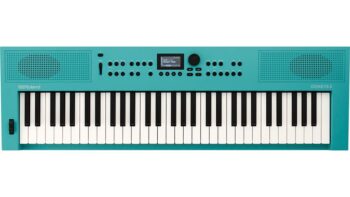
Roland today announces the GO:KEYS 3 and GO:KEYS 5 Music Creation Keyboards, two portable instruments filled with intuitive tools for learning and enjoying music. These fun modern keyboards unlock a simple new approach to making music, encouraging users to explore sounds and ideas in the moment, with no previous experience required. And as skills develop, deeper features allow them to travel as far as their ambition takes them.
The new GO:KEYS 3 and 5 ‘music creation’ keyboards are designed to be played by anyone. They can be played like any other keyboards, if you wish – each model contains more than 1,000 sounds – but there are also a variety of features that provide varying levels of musical assistance.
These include ready-made chord progressions in a variety of styles so that you can play over the top of them, plus the option to create your own. These backing parts can also be ‘remixed’, and you can apply effects.
There are also dynamic accompaniment options that can be controlled with one or two fingers in the left hand as you play chords, melodies and solos with your right; a contemporary twist on the auto-accompaniment features that were found in home keyboards of yesteryear, it seems.
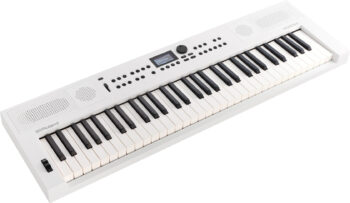
The streamlined GO:KEYS 3 offers a Zen-Core feature set with a touch-sensitive 61-note keyboard and an onboard stereo speaker system. GO:KEYS 5 includes all the primary features of its sibling, plus a speaker system with extended bass response, a mic input with vocal effects, and enhanced audio connectivity.
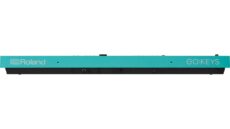
The GO:KEYS 3 and GO:KEYS 5 have velocity-sensitive, 61-note keyboards and built-in speaker systems. They share the same core functionality, but the ‘passive radiator’ speaker system on the 5 promises extended bass response, and this model also comes with a mic input, vocal effects and enhanced audio connectivity.
Both models have Bluetooth support, though – for audio and MIDI – and both are compatible with the Roland Cloud subscription service, which serves as a portal to more sounds and accompaniment styles. There’s support for Roland Cloud Connect as well, a wireless adapter that enables you to browse, audition and download your content via a smartphone or tablet.
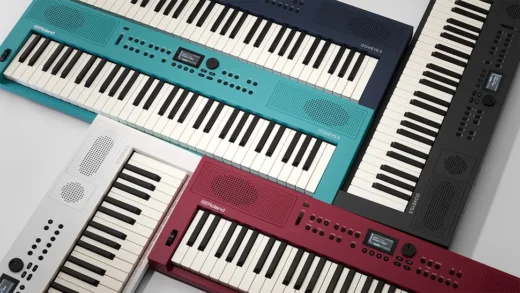
The Roland GO:KEYS 3 is available now in turquoise, dark red and midnight blue colour options, and costs $349.99. The GO:KEYS 5 is offered in graphite and white and costs $499.99. Find out more on the Roland website.