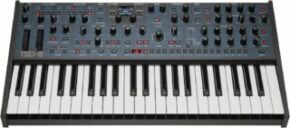
Oberheim TEO-5 Synthesizer Offers Classic Oberheim Sound In A Compact Format
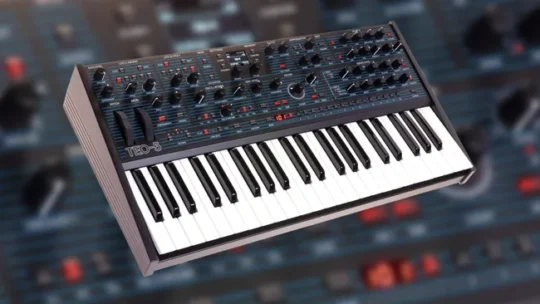

At Superbooth 2024, Oberheim today has announced the release of a new polyphonic analogue synthesizer, the TEO-5 synthesizer, a new instrument that they say blends “classic analog warmth and modern versatility”.

The Oberheim TEO-5 is the latest design from synth pioneer Thomas Elroy Oberheim (TEO), which explains the name. “I’m so proud to be able to make a synth like this… compact and affordable, the Oberheim sound for 2024,” he says.

Sequential’s Take 5 was the first product released after the brand was acquired by Focusrite in 2021. Based on a similar architecture to Sequential’s iconic Prophet-5, the synth took the core elements of the Sequential sound and packaged them into an instrument that was not only more compact and affordable than its influence, but also felt like a fresh and modernised take.

Oberheim TEO-5 Intro Video:

Now we have the Oberheim TEO-5 – effectively the same concept but with Oberheim in place of Sequential. Once again released under the Focusrite umbrella (while the modern Oberheim brand is still headed up by Tom Oberheim, it operates in collaboration with Sequential and Focusrite) the TEO-5 is based around many of the same features found on the company’s recent OB-X8.

The TEO-5 is designed to make the classic Oberheim tone palette widely accessible, encapsulating decades of analog engineering experience.

The new synth features a five-voice architecture with genuine analog VCOs and VCFs. But TEO-5 isn’t just a tribute to the past. Additions like through-zero FM, which adds a contemporary twist to its oscillator X-Mod feature, allow for the exploration of entirely new sonic textures. And the legendary Oberheim SEM filter returns, offering the versatility of morphing between low-pass, notch, and high-pass configurations, along with a switchable band-pass mode for extensive tonal shaping.

Beyond its core synthesis architecture, TEO-5 features a comprehensive modulation matrix. Digital effects processors provide classic chorus, delay, reverb, and more, alongside recreations of the classic Oberheim Ring Mod and Phasor effects.

Performance features include a 64-step polyphonic sequencer and multimode arpeggiator, along with a premium Fatar keybed.

“There was a huge surge of interest when Oberheim returned in 2022 with the historically inspired OB-X8,” said David Gibbons, CEO of Oberheim. “But Tom and the design team were keen to show that the magic of Oberheim can be within reach for everyone, and can bringa distinctive modern flavor. TEO-5 is an exciting addition to the Oberheim legacy.”


These include two analogue oscillators per-voice equipped with Oberheim’s distinctive X-Mod functionality, as well a SEM filter that can function in low-pass, high-pass, notch and band-pass modes.

Alongside these core features, the five-voice TEO-5 also packs two DADSR envelopes and two LFOs for modulation, a 64-step polyphonic sequencer and multi-mode arpeggiator.

There is also a ‘vintage’ control that can be used to add a little of the drift and unpredictability inherent in vintage analogue gear. Its signal path is rounded off with overdrive, plus digital reverb and multi-effect slots.

The Oberheim TEO-5 synthesizer is available now for $1,499.99.


UDO Unveils Super 8 Synthesizer, A 16-Voice Polyphonic, Bitimbral Monster at Superbooth 2024


UK-based synth maker UDO has unveiled a new instrument at this year’s Superbooth gear expo.

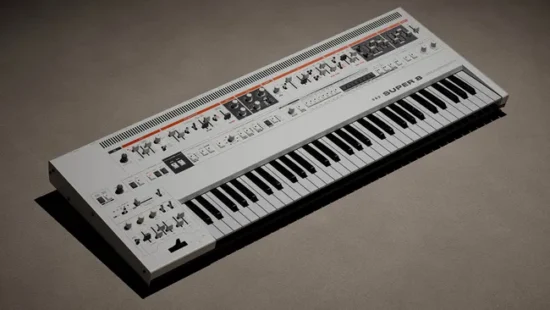
At Superbooth 2024, being held May 16-18 in Berlin, UDO has introduced the Super 8 synthesizer, a 16-voice polyphonic, bi-timbral analog-hybrid performance synthesizer.

UDO’s Super 8 is a slimmed-down Super Gemini with everything we loved about that synth – and a cheaper price tag

The Super 8 features immediate hands-on controls, an expressive 61-note weighted keyboard with polyphonic aftertouch, and the “powerful, flexible and addictive sound of the UDO Audio family”.

Sitting in the middle of their product line-up between their debut synth, the 12-voice Super 6 and the beastly 20-voice, multitimbral Super Gemini, the Super 8 packs many of the features of its bigger brother into a slightly smaller and lighter form factor with a reduced price tag.

First look at the new Super 8 with UDO founder and designer George Hearn, via Sonicstate:

Super 8 offers 16-voice polyphony when not used in its binaural mode, which reduces the number of voices available to 8. Aside from the reduced polyphony, the most notable difference between the Super 8 and Super Gemini is the omission of the Gemini’s ribbon controller and the extra set of controls that could be used to control the bitimbral synth’s second sound layer. (Super 16 is still bitimbral, but you’ll have to switch between layers on one set of controls.) The synth also comes in at 13.4kg, about a kilo lighter than the Super Gemini.

The Super 8’s architecture is similar to UDO’s other synths: it’s a hybrid instrument with high-resolution, FPGA-based digital oscillators and two analogue filters (a 4-pole 24dB/oct low-pass and a 1-pole 6dB/oct high pass) and it offers the same Binaural Mode, which makes use of the synth’s true stereo signal path to pair up its 16 voices into 8 ‘super voices’, each of which gives both the left and right channels an independent synth voice.

Waveforms available include sine, saw, square, triangle, and noise, along with 32 additional waveforms that can be updated by the user. Additionally, there are various bells and whistles that include oscillator sync, ring mod, PWM and wave morphing, along with a Super Mode that’ll give you six extra unison voices for each oscillator.

Though it lacks the ribbon controller found on the Super Gemini, Super 16 still has polyphonic aftertouch on its 61-note semi-weighted keyboard, something the Super 6 does not. Elsewhere, you’ll find the same modulation matrix, multi-mode arpeggiator and 64-step sequencer as the Gemini, along with an effect section that includes stereo chorus and a delay with a freeze function that can be used as a rudimentary looper.

All in all, the Super 8 looks like an excellent choice for those drawn to UDO’s unique approach to synth design but torn between the two options in their line-up. If you’re after more than 12-voice polyphony but aren’t particularly fussed about the independent bitimbral controls or the ribbon controller, this could be the synth for you.

Hearn says that “The Super 8 sits confidently between the Super 6 and the Super Gemini. This synth is the distillation of the UDO philosophy of The Power of Play — with the dual cores and playability features of it’s bigger cousin, all in a more compact and simplified presentation — it’s the best of both worlds.”

Super 8 is priced at $3749/£2995/€3669 and will be shipping in July 2024.

Find out more on UDO Audio website.


New Apple Music Haptics Feature Will Make It Possible To ‘Feel’ The Music On Your iPhone


Apple has just announced a slew of new accessibility features for several of its products, and one of them could change the way that deaf and hard of hearing people experience music on the iPhone.

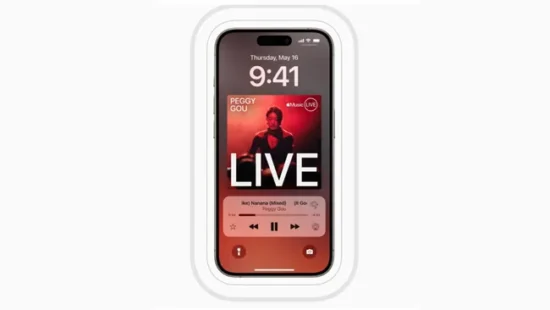
Known as Music Haptics, this uses the iPhone’s Taptic Engine in the iPhone to play “taps, textures, and refined vibrations to the audio of the music,” giving people an opportunity to enjoy their favourite songs in a different way.

Naturally, this will work in Apple Music, but Apple is also releasing an API for developers so that can be implemented in their own apps. Presumably, this means that those who create music-making software to add it to their products, too.

Elsewhere, perhaps the most eye-catching – quite literally – of the new accessibility features is Eye Tracking for iPad and iPhone, which will enable those with physical disabilities to operate their device using their eyes. Powered by AI and on-device machine learning, this uses the camera to track eye movements across the screen and Dwell Control to activate each element. Eye control of physical buttons, swipes and other gestures is also in the offing.

Other accessibility additions include Vocal Shortcuts, Vehicle Motion cues to help reduce motion sickness and voice control for CarPlay. There are also specific features for Apple Vision Pro.

“We believe deeply in the transformative power of innovation to enrich lives,” said Tim Cook, Apple’s CEO. “That’s why for nearly 40 years, Apple has championed inclusive design by embedding accessibility at the core of our hardware and software. We’re continuously pushing the boundaries of technology, and these new features reflect our long-standing commitment to delivering the best possible experience to all of our users.”

Find out more about the new accessibility features in the Apple Newsroom. They’ll be rolling out later this year.