In the video, Rich Bernett offers a sneak preview of the Cassettone Two, an updated version of his DIY cassette tape Mellotron.
“Just like its predecessor,” he explains, “This instrument will let you play cassette tapes like a synth, but with new features including two integrated cassette players, individual pitch controls, and the ability to cross-fade between your cassettes. The XL model will add even more features, including reverse play functionality, a ‘drone’ mode, speakers, and stereo output.”
The Cassettone Two is still in the development stages. Bernett plans to share updates via The Sound of Machines Patreon page.
Roland revamped Juno-D synths are ‘streamlined keyboards for gigging musicians and budding music creators’
Roland’s 2024 synth range is sprawling and can be a little confusing. Between the Aira and Boutique ranges, Fantoms, Junos, Jupiters and JDs, the iconic instrument brand has a multitude of hardware keyboards and modules to choose from, with a fair amount of crossover between models when it comes to the sounds and features on offer.
That picture has just gotten a touch more complicated with the introduction of another new version of an existing keyboard line – the Juno-D. The original Juno-D arrived in the mid-’00s, offering an affordable keyboard-workstation equipped for various styles of aspiring and gigging musicians. The range has evolved over the years, with the last instalments being the Juno-DS range launched in 2015.
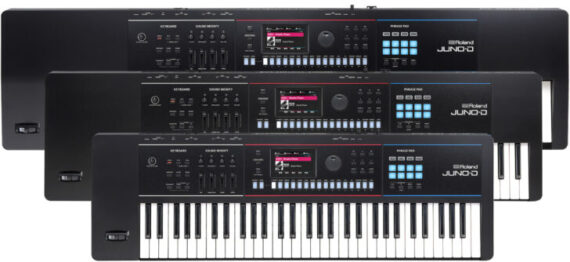
Available in three variations: the JUNO-D6, JUNO-D7, and JUNO-D8. These updated Juno-D models are versatile-looking synth keyboards that borrow numerous features from the top-end Fantom keyboards, albeit at a more accessible price point. Roland describes the range as “streamlined keyboards with powerful features for gigging musicians and budding music creators.This on-the-go keyboard combines pro-grade Roland sounds and easy operation with a mobile design and flexible connectivity for any scenario”.
The Juno-D keyboards are all powered by Roland’s Zen-Core engine, the sample-and-synthesis system behind many of the company’s recent instruments. This gives each instrument access to over 3800 sounds, including staple synth tones, pianos, organs, orchestral sounds, percussion and a variety of classic sounds from Roland’s heritage gear. Sample import also allows users to create and play custom patches.
The Zen-Core ecosystem also allows users to expand the sounds of their hardware instrument via Roland Cloud. By creating an account, Juno-D users can access a selection of free expansion packs as well as purchase themed packs that can be uploaded to the hardware.
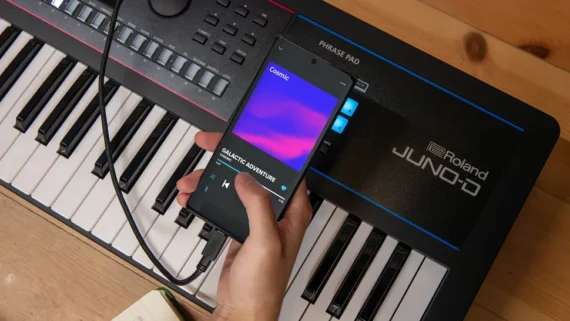
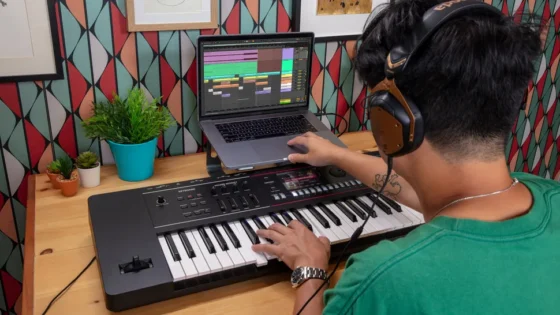
The Juno-Ds are lightweight and easy-to-use instruments pitched at aspiring players, small bands and gigging musicians. To that end, the instruments offer a broad range of hands-on controls and can be powered via either a mains input or a USB-C battery pack. The instruments’ USB-C input can also be used to play songs or backing tracks from a smartphone, flash drive or computer. The keyboards also include an integrated audio/MIDI interface.
The instruments come equipped with a versatile selection of playing options and tools. The sound engine is multitimbral and the keyboards can be assigned split and dual modes, or what Roland calls a Super Layer, which allows the user to stack and detune multiple instances of a sound. There’s also a multi-track sequencer, arpeggiator and chord mode, plus a system of favourites for quickly accessing sounds.
As well as playing the keyboard sounds themselves, the Juno-Ds feature a mic input that allows users to process their voice with a range of effects, including EQ, compression, auto-pitch and a vocoder.
The three models in the range only differ based on their keyboards, which the range inherits from the top-end Fantom keyboards. The 61-note Juno-D6 and 76-note Juno-D7 are equipped with synth-action keyboards. The Juno-D8 has an 88-note weighted-action keyboard with hammer action.
While much of the sound content here will feel familiar to anybody that’s kept up with Roland’s multiple variations on the Zen-Core keyboard theme, it must be said that these particular configurations look undeniably handy for players working in small bands or playing regular solo gigs.
Roland Juno-D6, Juno-D7, and Juno-D8 are available now priced at $899.99, $1,149.99, and $1,299.99. Find out more at the Roland website.
Released last year, UJam’s UFX Reverb is an algorithmic reverb plugin.
It may well be 2024, but music technology has not advanced so far and UFX Reverb remains a fantastic reverb plugin. What has changed is the price, UJam is now giving UFX Reverb away for free until the end of October, saving you a tidy $69.
The plugin’s 10 reverb modes would be more than enough for a freebie, offering conventional Spring, Plate, Room and Hall options alongside reversed and gated reverbs, but in addition to this you have a wide array of tools for sound design that makes UFX far more than just a bread-and-butter ‘verb.
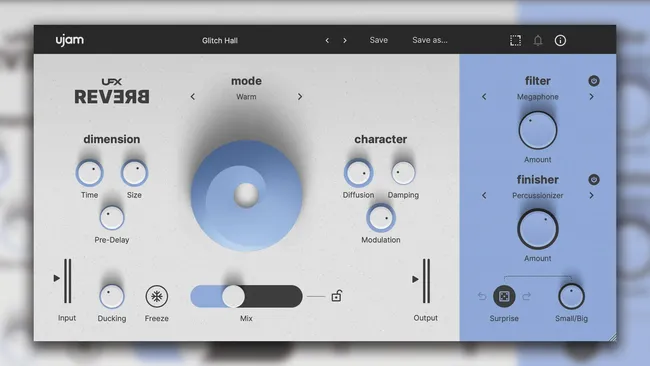
On the right-hand side of the plugin’s UI you will find familiar controls for shaping its reverb including Time, Size and Pre-Delay, along with a trio of dials for tweaking its tonal character. Below this you have a handy Mix slider, along with controls for Ducking and Freeze, which’ll let you create rhythmic pumping effects and conjure infinitely sustained ambiences.
Towards the left-most portion of the interface you have a Filter section with a rather generous selection of 26 filter types, with presets that incorporate distortion, modulation and lo-fi effects. The Finisher dial opens up an even more impressive smorgasbord of additional effects with glitchy and rhythmic processors that slice, dice and mangle your reverbs into exciting new patterns.
Though there are Pros and Cons but it’s a free plugin, so don’t complain. What you can – and should – do, though, is hit the Surprise icon here to randomize UFX Reverb’s parameters and instantly dial in some inspiring and experimental sounds.
UJam UFX Reverb is available now in VST/VST3/AU/AAX formats for macOS and Windows. Download it here.