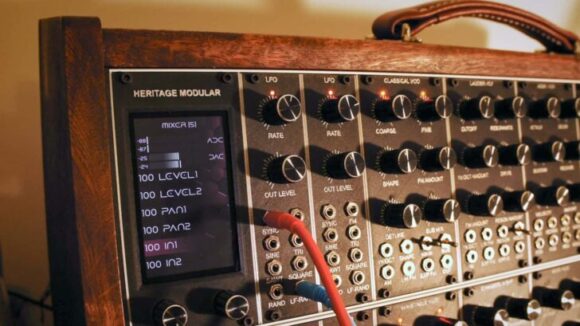
“Testing Heritage Modular with 4 simultaneous timbres.
Single take track, raw audio output, only Gullfoss external mastering.”
The Heritage Modular Synthesizer is a unique system, created by Frédéric Rible, that’s designed to mimic the look and feel of a vintage modular synthesizer, but with 8-voice polyphony and MIDI MPE support.
The core of the synthesizer is based on Pure Data: a powerful sound engine for the generation and processing of audio signals. A dedicated set of hardware modules has been designed to act as controllers for Pure Data. These modules are populated with knobs, switches, lights and jack sockets, modeled on the classical modular synthesizer.
The communication between Pure Data and these hardware modules is done via an I2C bus implemented over a standard 16-pin Eurorack connector.
For more info on the Heritage Modular Synthesizer, see the project website.
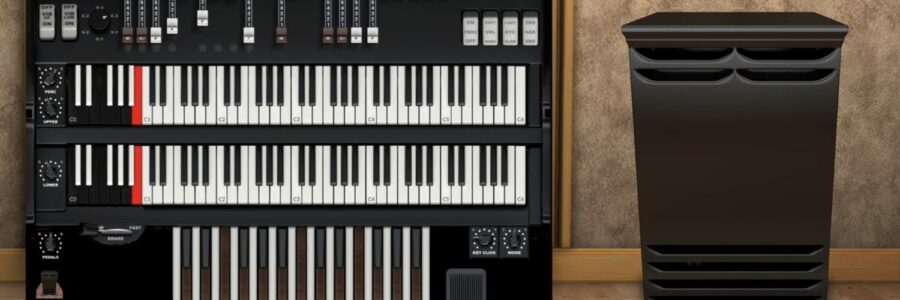
Gospel Musicians has introduced Gospel Organ, a Hammond organ emulation designed to “capture the distinctive gospel organ sound heard in churches worldwide”.
What they have to say about it:
“The hybrid sample-based instrument uses synthesis to replicate harmonic fold-back and dynamic start positions, ensuring that no tones are phasing. It includes all essential organ features, such as percussion, noise, and vibrato, all emulated from hardware sources. Each tone, including drawbars, bass, and percussion, has dedicated synthesis controls (such as AMP, Filter, and LFO).
The effects section offers five insert effects per tone, two global effects racks, and a master effects section, each with up to five insert effects, providing extensive control. Additionally, it features an intuitive MIDI Learn function, allowing for seamless integration with your DAW.”
An in-depth technical preview:
Features:
A100 Advanced Sampled Model
FREE Gospel Rotary FX Included
Physical Modeled Rotary
25 Organ and 22 Rotary Presets
Multiple Mic Positions
Dedicated FX for Each Tone
Dedicated Synthesis for Each Tone
Easy Drawbar MIDI Learn/Save
Dedicated Click and Noise controls
Dedicated Horn and Drum EQ
Harmonic Foldback and De-Phasing
Gospel Organ is available now with an intro price of $49.99 until September 1st (normally $149.99).
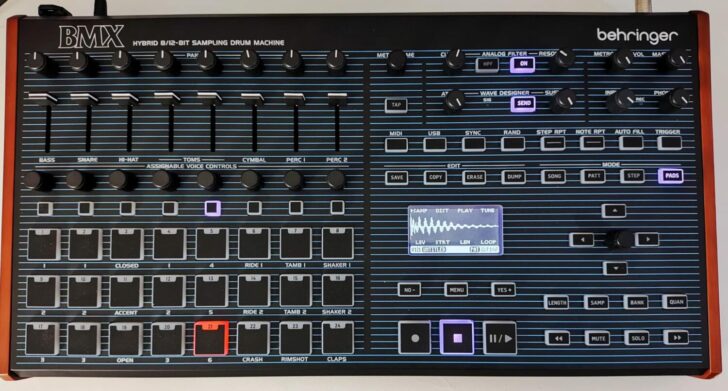
Behringer shared this sneak preview of their upcoming BMX Hybrid 8/12-Bit Sampling Drum Machine.
The Behringer BMX isn’t a straight knockoff or clone of the original. While the BMX copies the look and layout of the original Oberheim DMX, and uses knockoff-style naming, it adds sampling support, which promises to make the drum machine more flexible than the original.
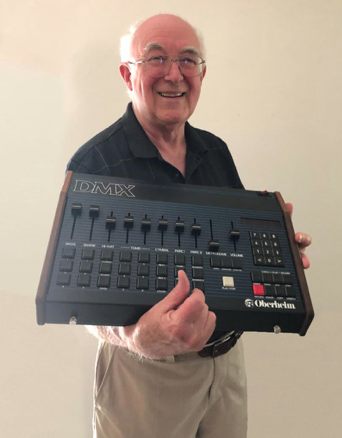
Tom Oberheim is not involved in the development of the BMX. In a statement shared earlier this year, Oberheim said “There is, of course, no collaboration between us and no discussions of their plans for synths or anything else.”
Behringer isn’t saying anything definite about the status of the BMX at this point, just that they’ve “achieved another major engineering milestone.” The photo they shared appears to show a prototype with working operating system.
The Behringer BMX was originally announced in 2017, along with the company’s take on the classic Roland TR-808 and TR-909 drum machines. At that point, it was called the ‘OBX’.
Tom Oberheim and the original Oberheim DMX drum machine. He is not involved in the development of the BMX or Behringer’s other Oberheim copies.
Here are the specifications that they shared at that time:
Recreation of one of earliest and most influential digital drum machines
8 voice architecture with independent level & pitch controls for each voice
High-resolution real-time sequencer with non-destructive quantization for capturing finger drumming performances
Additional step sequencer mode with 64 steps per pattern with storage of up to 64 patterns and 16 songs
Integrated Wave Designer with individual attack and sustain controls for studio quality drum sound
Integrated dual-mode filter with dedicated frequency and resonance controls for huge sound shaping options
8 independent analog outputs to record your patterns as multi-track audio
Easily readable 7-segment 4-character LED display for tempo with dedicated tap tempo button
24 velocity sensitive pads with bold, full-color LEDs
Up to 99 loop measures of each pattern change with 16 pattern changes per song
Songs can be chained together for expanded compositions
Unique Auto Scroll feature for extremely easy operation
Comprehensive Midi In/Out/Thru and USB implementation for synchronization and connection to external devices
Per-track Solo and Mute for enhanced realtime control
Sync options include USB, MIDI, clock and internal
Powerful headphone and L/R main outputs on 1/4” TRS connectors
3-Year Warranty Program
These specifications do mention audio input or sampling capabilities, so it’s clear that the design has evolved since the original announcement. Behringer BMX pricing, availability and official specs are still to be announced.