klattsch Turns 1980s Speech Synthesis Into A Singing Instrument


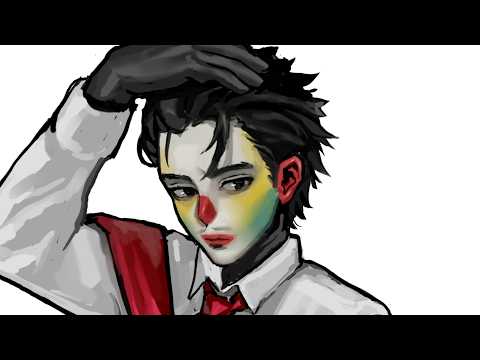
Crash United has introduced klattsch, a retro vocal synthesizer for desktop and Android, built on the design behind DECtalk and the machine voices of that era.

It’s not a simple clone of a familiar speech synthesizer, though: it’s based on the original, foundational 1980 formant synthesizer design that is the progenitor of the family, which previously only existed in an MIT lab.

Developer Crash United researched and implemented Dr. Dennis Klatt’s original proof-of-concept design for what later became the foundation of Stephen Hawking’s voice.

Not content to stop there, they dug deeper and implemented three other foundational speech synthesis engines, dating back decades, all based on the original research published by the pioneers of the field.

klattsch uses no samples. It’s based entirely on what was technically possible in 1980. It’s a chain of oscillators, noise and resonators, buzzy and unmistakably artificial, with the synthesis parameters exposed and editable. You type text or draw notes on a piano roll, give them phonemes in English or Japanese kana, draw the pitch curve by hand, and layer several voices.

Here are some examples of what people are making with klattsch:


You can also share your work with links.
Features:

  • Piano roll editing with freehand or point-by-point pitch curves and selectable note transitions
  • Per-note phoneme control, with English text and Japanese kana input
  • Several voice parts at once, each on its own synthesis engine, including sine-wave speech and a formant wave function engine
  • Backing track import, WAV export, and video export with visualizers

The developer has also announced an upcoming beta of a DAW plugin, based on the same speech synthesis engines, with a crossgrade purchase option.

The “classic” version of klattsch – without the piano roll editor, polyphony, and extra voice engines – is available for free in your web browser.

The Android version of the app is free on Google Play with a one-time pro unlock. The DRM-free bundle for Windows, macOS, Linux, and Android is $9.99 via itch.io. Visit the klatts site for details.
Recorte, New Sample Editor Now Available


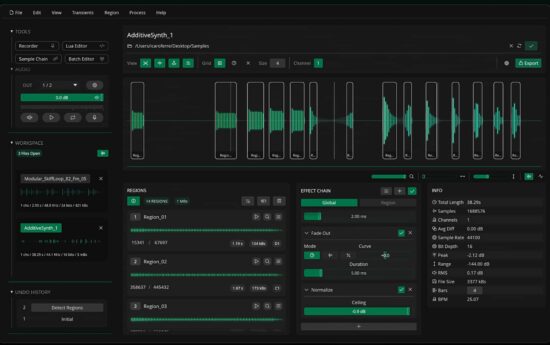
Developer Icaro Ferre has released a new standalone audio editor for macOS, Linux and Windows, Recorte, that is specifically designed for sample creation.

Recorte offers a variety of different features to help users record, edit, and process samples, including an advanced audio recorder, automatic region detection (based on volume, transients, or slices), batch editing, sample chain creation, and even Lua scripting. It’s also highly customizable via macro-style shortcuts and custom themes.

Ferre says that the app was developed over a 2 year span (no AI / vibe code) and written 100% in Rust, which helps with memory safety and makes the app run smoothly even in older computers.

Features:

  • Record and edit samples from drum machines and synthesizers
  • Split multi-sample recordings into individual files
  • Extract loops from existing recordings or slice them by grid / transients
  • Trim one-shot samples to reduce file size for hardware with limited memory
  • Automatically sample external MIDI instruments
  • Prepare samples for DAWs, hardware samplers, game development, and content creation

Recorte is available now with a cross-platform perpetual license (no subscriptions) for $49.99 USD.

Orphea Is A 13-Key One-Octave Mini Keyboard & MIDI Controller For Creativity Anywhere


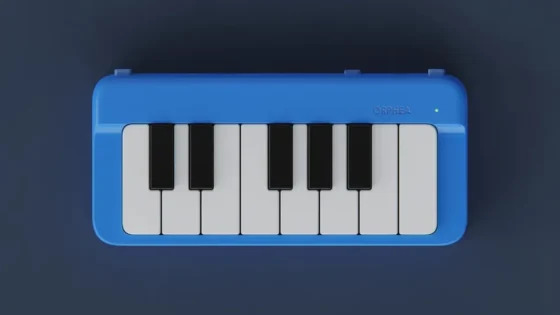
Orphea is a pocket-sized electronic piano designed for playing, practicing, and creating music anywhere.

It feels like there’s always been an unwritten rule that no synth or MIDI controller should have fewer than 25 keys on it, but PIanni could be about to break that with the Orphea. The 13-key Orphea can fit in the palm of your hand.

Featuring just one octave’s worth of keys (plus an extra C at the top, giving you 13 in total), this has the advantage of being barely larger than a smartphone, so is certainly portable. It also features a built-in multi-wave synth engine, a rechargeable battery, speakers, a 3.5mm audio output and MIDI I/O.

But, the keys aren’t velocity sensitive, which will limit the amount of expression you can generate, and although it’s possible to shift the keyboard up or down three octaves, there’s no getting away from the fact that there’s not a great deal of serious playing you can do with just 13 keys in front of you. Even simple basslines could be tricky, and you can forget about forming anything other than basic chord shapes.

So I decided to see what Orphea could really do.

Infact, it looks like the Orphea is primarily being aimed at kids who simply want to “explore melody and composition,” but even absolute beginners might hit a creative wall with it pretty quickly.

The people will be able to make a judgement, though, when the fate of Orphea is determined via a soon-to-be-launched Kickstarter campaign. No news yet on how much the device will cost or when it could potentially ship.