Data Archiving Specialist Warns That They’re Seeing A 20% Failure Rate Reading From Music Hard Drives
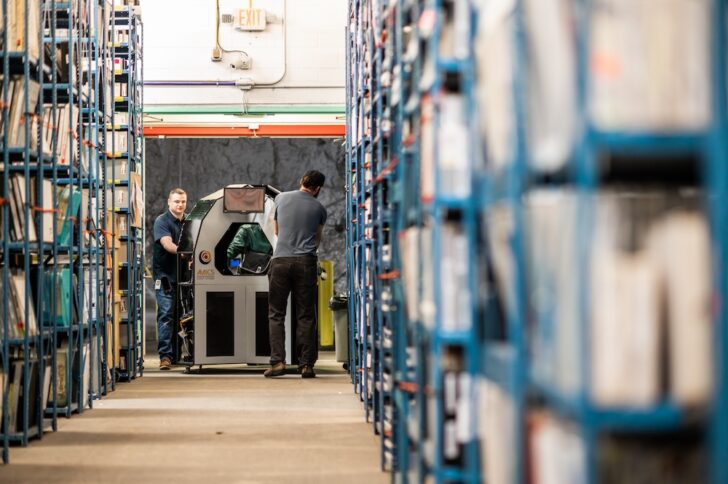

Data archiving specialist Iron Mountain Media and Archive Services says that they are seeing about a 20% failure rate on reading digital music data stored on hard drives from the ’90s.

“There are historic sessions from the early to mid-’90s that are dying, notes Iron Mountain’s Robert Koszela.

Mix reports:

Of the thousands and thousands of archived hard disk drives from the 1990s that clients ask the company to work on, around one-fifth are unreadable. Iron Mountain has a broad customer base, but if you focus strictly on the music business, says Robert Koszela, Global Director Studio Growth and Strategic Initiatives, “That means there are historic sessions from the early to mid-’90s that are dying.”

For the past 25 or more years, the music industry has been focused on its magnetic tape archives, and on the remediation, digitization and migration of assets to more accessible, reliable storage. Hard drives also became a focus of the industry during that period, ever since the emergence of the first DAWs in the late 1980s. Iron Mountain wants to alert the music industry at large to the fact that, even though you may have followed recommended best practices at the time, those archived drives may now be no more easily playable than a 40-year-old reel of Ampex 456 tape.

“The big challenge that we face is just getting the word out there,” says Koszela, who racked up years of experience on the record label side with UMG before joining Iron Mountain Media and Archive Services. Iron Mountain handles millions of data storage assets for a diverse list of clients, from Fortune 500 companies to major players in the entertainment industry, so the company has a significant sample size to analyze, he points out. “In our line of work, if we discover an inherent problem with a format, it makes sense to let everybody know. It may sound like a sales pitch, but it’s not; it’s a call for action.”

Do you have a plan for reliably archiving your music? Share what you’re doing in the comments!
Knobcon 2024: Boredbrain Debuts Optx v2 ADAT Interface For Eurorack Synthesizers


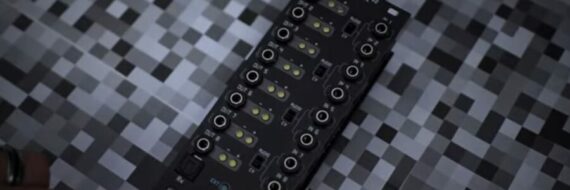
At Knobcon 2024, Boredbrain introduced the Optx v2 – ADAT Optical Converter, a pro-quality ADAT lightpipe converter for Eurorack modular synthesizers.

The DC-coupled module can encode and decode 8 analog inputs/outputs with extremely low noise, and CV signals with near-zero offset. Additionally, on-board sample clock allows for one-way ADAT output and the ability to be used standalone to interconnect Eurorack systems.

So this can be used both a high-end audio interface and as a way to route multichannel audio between Eurorack cases without running a bunch of patch cables between systems.

Features:

  • Bi-directional ADAT lightpipe encoding/decoding of 8 analog inputs/outputs
  • Switchable input mode (in pairs) powered by high-performance Cirrus Logic converters
  • AUDIO input mode ensures the highest fidelity possible with ultra-low noise
  • Self-calibrating CV input mode provides exceptional accuracy and near-zero offset (DC-coupled)
  • Precision DC-coupled outputs support both audio and CV signals
  • Internal sample clock permits one-way operation without ADAT input and standalone interconnection of two Optx modules
  • Dual LEDs on each output indicate signal strength and polarity

The Boredbrain Optx v2 ADAT Interface is available now to pre-order, with shipping targeted for Oct 17, 2024.

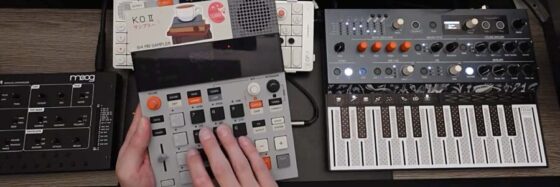
How To Get Started With Synthesizers: A Guide For Beginners


The latest windowbed video offers an introduction to getting started with synths.

The video is intended for beginners. It focuses on getting started with synths, and understanding elements that are fairly common to most synths that beginners might typically encounter.

Topics covered include:

0:00 Who this video is for

1:11 My example synths

2:00 Keys & pads

3:58 Why only 2 octaves?

4:46 The octave buttons

5:30 Volume & gain staging

7:30 Types of knobs & encoders

11:00 Sound engine parameters

12:42 ADSR envelopes

16:50 Polyphony settings

18:05 Why would you use a polyphonic synth in mono mode?

18:35 Glide/portamento

19:23 Legato

20:06 Unison

21:11 Filters

24:43 Modulation & LFOs

28:34 Outro