No Talking & Play: 50 Sounds For Behringer Proton Synthesizer


Sound designer Anton Anru shared this preview of his new patch collection for the Behringer Proton. The collection features 50 patches, including 14 leads, 12 basses, 14 plucks, and 10 paraphonic timbres.

The Proton is Behringer’s second original Eurorack synth design, following the Neutron, which was introduced about six years ago.

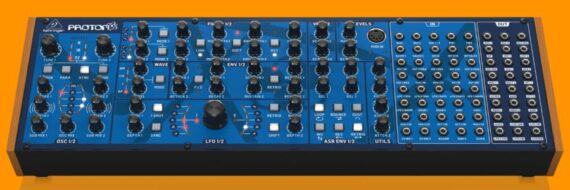
The Proton is arguably their most powerful all-in-one synth design yet, packing a ton of capabilities and an extensive selection of modular patch points into an 80HP Eurorack module.
What Anru has to say about the Behringer Proton patch library:

“Exploring Behringer’s new synthesizer was an exciting process for me. It boasts an impressive feature set, including two powerful oscillators capable of generating a wide range of tones, two advanced LFOs, two multi-mode filters, and a wavefolder that adds rich sonic textures. Additionally, it comes with two extra envelopes that can loop, essentially turning them into additional LFOs, and, of course, the patch panel, which opens up endless experimentation possibilities.

With this sound bank, I wanted to dive deep into these features and create medium to highly complex patches. The title «Sound Diver» reflects this desire to explore the sonic depths while keeping the sounds usable and adaptable for a wide range of music and performances. My goal was to strike a balance between experimental and musical sounds.”

*Note: Since the Behringer Proton does not have patch memory, this sound library is supplied as a PDF document, with each page containing detailed notes that explain how a patch works, which parameters are worth tweaking during playback, and how to evolve the timbre during a performance.

“By following these notes and making adjustments consciously, you’ll not only get the most out of the patches but also gain a deeper understanding of the synth itself, uncovering its full potential and creative depth,” adds Anru.

Behringer Proton – Sound Diver is available now for $24.95
Analogue Solutions TC5000 – A Modern ARP 2500-Style Pin Matrix Synthesizer Coming Soon


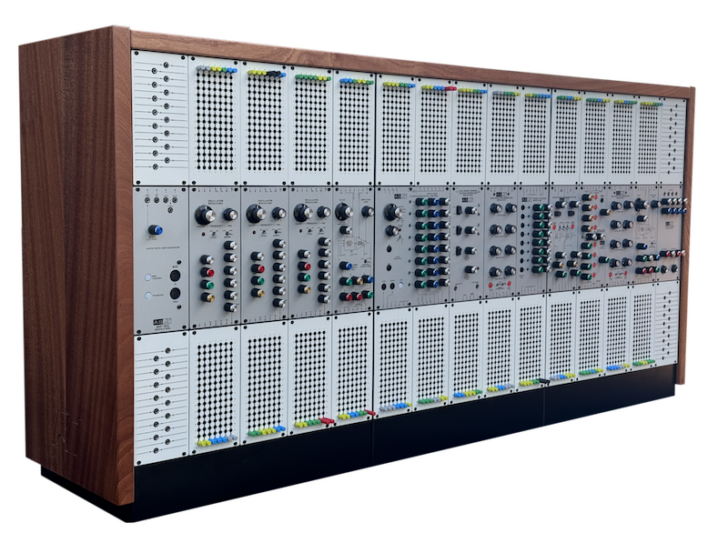
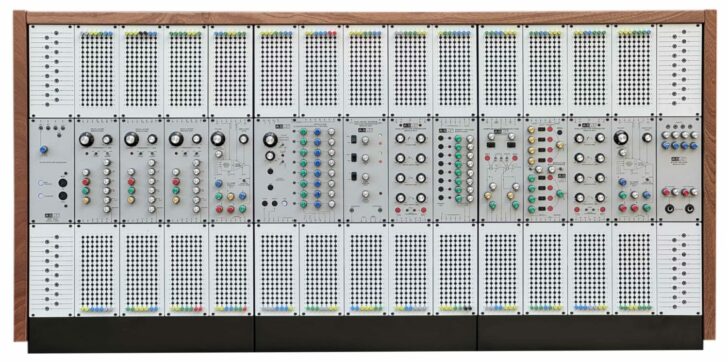
Analogue Solutions has introduced its latest monster synth, the ARP 2500-inspired TC5000.

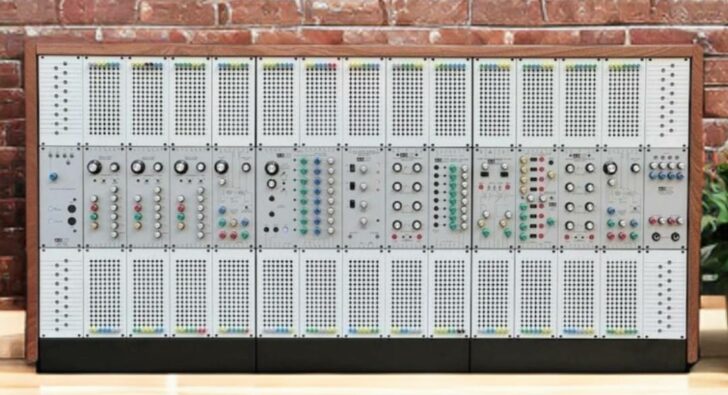
The Analogue Solutions TC5000 is an analog modular synthesizer, with a full-width pin matrix for patching, above and below a center row of synth modules.

While the TC5000 copies the look of the ARP 2500, it’s not a clone or knockoff. Like their earlier Colossus synth, the TC5000 is designed to offer the same high-end build and ‘feel’ as its vintage counterpart, but with an original synth voice.

The TC5000 modules are based on Analogue Solutions’ own circuits. Some modules are adapted from some of the company’s existing synths, like Leipzig, Telemark and Fusebox, and some are new designs, specific to the TC5000.

What Analogue Solutions has to say about the TC5000:

‘Using TC5000 for sounds design will give you a similar experience to the ARP.

User interface is a very important aspect of sound design. It really isn’t all about the filter. How you interact with a synth is equally important. Different UI and working approaches means you will come up with patches you might otherwise not have come across using say, patch leads.”

Details and audio demos are to come. The photos are of a pre-production unit, and AS says that the selection of modules that will be configured in the final production systems may change.

The Analogue Solutions TC5000 is available now to pre-order, priced at 22,000 GBP (exc. tax and shipping), with shipping expected towards the end of 2024.

via AS

Make Music at the Command Line on a Commodore C64


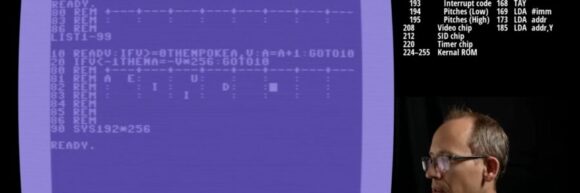
Developer Linus Åkesson, creator of the Commodordion 8-Bit Commodore 64 accordion synthesizer, shared this video, demonstrating live coding for music on the Commodore 64. After demonstrating C64 command-line music coding, he wraps things up with a chiptune jam.

Video Summary:

“In this video, I make 8-bit SID music on a Commodore 64 without any software apart from the built-in BASIC interpreter. This involves poking numbers into memory and hardware registers and writing machine code in decimal.”


Topics covered in the video:

0:00 Introduction

1:57 Groundwork

8:50 Time and pitch

13:23 Interactive editor

17:11 Note on/off subroutines

23:14 Making a pattern

27:06 Varying the instruments

31:05 Drum hack

32:00 Final jam

Are you making music with the Commodore 64 or other vintage computers? If so, share the details in the comments!