Universal Audio Releases Topline Vocal Tune With Low Latency Mode ‘Promises Your Vocals Perfectly In Tune From The First Take’
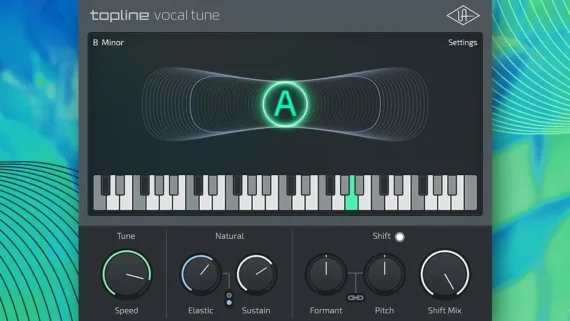
Universal Audio has announced the release of Topline Vocal Tune, a new native vocal pitch correction plugin that lifts the vocal tuner from the company’s Topline Vocal Suite plugin and makes it available as a standalone tool.
The company launched Topline Vocal Suite in 2024 as an all-in-one vocal chain, offering producers analogue-emulating preamps, saturation, compression, EQ and a multi-effects section alongside its vocal tuning capabilities.
Topline Vocal Tune strips that back to the tuning engine alone, which UA says offers “ultra-low-latency” performance, allowing vocalists to perform live through the plugin or monitor pitched vocals without delay while recording.
Here’s Topline Vocal Tune Walkthrough Setup and Low Latency Mode:
According to Universal Audio, Topline Vocal Tune can handle everything from transparent and natural-sounding correction to the recognizably hard-tuned effects associated with hip-hop, R&B and pop.
At the core of the plugin is a single Tune control for dialling in correction speed, ranging from subtle to fully hard-tuned. The Natural section adds Elastic and Sustain controls, which are intended to keep a vocal in tune while maintaining the slides, vibrato and tonal character that pitch correction can often mess with.
Topline Vocal Tune’s Shift panel features Pitch and Formant controls for conventional pitch- and formant-shifting that can be blended in with a Mix dial, while the MIDI Repitching function lets you input melodies and harmonies through a MIDI keyboard to retune your vocals with your playing.
The plugin’s Topline Key Finder detects the key and scale of your session automatically, saving time on set-up, and the Scale Define mode can be used to lock pitch correction to custom scales.
“When singers feel good in their headphones, that’s when great takes happen,” says Julian Prindle, Senior Product Designer at Universal Audio. “Topline helps artists stay confident and in the moment while giving producers everything they need to shape vocals behind the scenes.”
Stacy Epps Tries Topline Vocal Tune In A Real Session:
As with the original Topline Vocal Suite, Topline Vocal Tune is native-only, with no Apollo or UAD hardware integration available. It’s available for macOS and Windows in VST/VST3/AU/AAX formats.
UAD Topline Vocal Tune is available now, and priced at $99 with an introductory discount of $79. It’s also included in the UAD Spark subscription, and there’s a further discount for owners of Topline Vocal Suite.
Find out more on Universal Audio website.