The Panasonic Do-Re-Mi, A Forgotten Record Player Keyboard From 1977
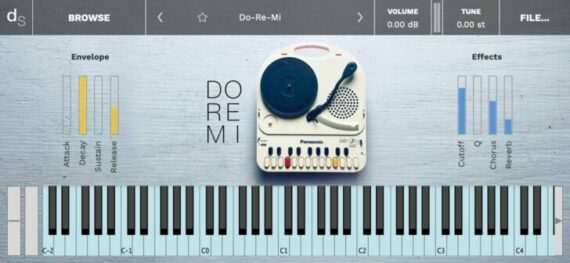

David Hilowitz – In his latest video – takes an in-depth look at a forgotten record player keyboard for kids from 1977, the Panasonic Do-Re-Mi.

Hilowitz demonstrates how the keyboard worked when he got it, what he did to fix its problems, and then how it works repaired:

Video Summary:

“I recently got my hands on a pretty neat vintage item: the Panasonic Do-Re-Mi. It’s essentially a little analog synth / organ with a built in record player. Panasonic also sold a version with a built-in tape deck, and another even rarer unit that just contained the synth portion on its own. All three versions were released in 1977, along with the Panapic multimedia system.

The one I got was not in very good condition: I had to replace the capacitors, clean the keyboard, and replace the record needle, but I did eventually manage to get it back on its feet.

Naturally, the very first thing I did once I got it working was sample it. This proved to be quite an easy task as it has only one sound. “
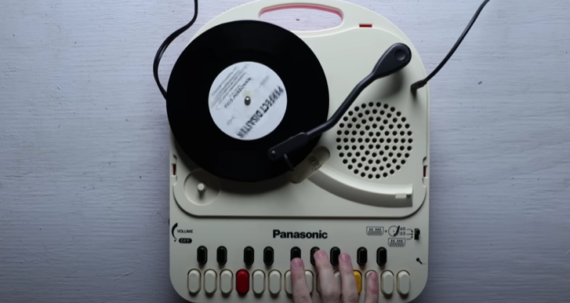

The Panasonic Do-Re-Mi is a very limited instrument, but it also has a sound that’s very evocative of its time.

Hilowitz has sampled the Panasonic Do-Re-Mi and made it available as a free sample library.
 

How To Program Yamaha CS-80 Synthesizer


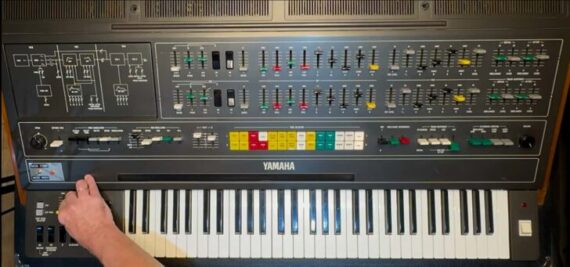
Synthesist Andy Whitmore – In his latest video – demonstrates how to program the classic Yamaha CS-80 synthesizer.

Whitmore discusses how each control on the CS-80 affects its sound, and how patch memory works on the classic synth. He also covers how to use the CS-80’s performance controls:

Video Summary:

“Master the Yamaha CS-80 with this in-depth programming guide! Explore filters, ADSR, LFO, aftertouch, ring modulator, chorus, tremolo, and presets to unlock its legendary sound.

Discover the secrets of the iconic Yamaha CS-80 in this comprehensive tutorial. We break down every control, slider, and button to help you understand its powerful features. Learn how to program its legendary filters, ADSR, LFO, aftertouch, ring modulator, brilliance, tremolo, and presets. Whether you own a CS-80 or use one of the famous CS-80 Clones (Arturia, Softube, Cherry Audio GX80), this video is your ultimate guide to this classic synthesiser.”

Topics covered:

0:00 – Introduction

0:38 – Patch memories: How they work on both sound banks

2:19 – Pulse width and sawtooth waveforms

3:05 – LFO and noise settings in the sound bank

3:27 – High-pass and low-pass filters

4:18 – CS-80 filter and ADSR (Attack, Decay, Sustain, Release)

4:52 – Sub-oscillator and amplifier ADSR

5:38 – Sound Bank 1: Aftertouch features

6:03 – Programming a brass pad sound

6:54 – Aftertouch filter (global controls)

7:13 – Keyboard volume and brilliance controls

8:12 – Global brilliance (cutoff frequency) and resonance

8:49 – Aftertouch modulation

9:03 – Global sustain settings

9:28 – Sub-oscillator (LFO) functionality

10:15 – Ring modulator: Exploring the feature

11:01 – “Doctor Who” intro sound design

11:23 – Ring modulator with four LFOs simultaneously

12:02 – Chorus effect

12:13 – Tremolo effect

12:21 – Glissando and portamento features

13:12 – Programming a bell sound

13:39 – Combining oscillators with the sub-oscillator: Creating brittle yet warm sounds

14:09 – Explanation of the two sound banks

15:03 – Summary and application to CS-80 simulations


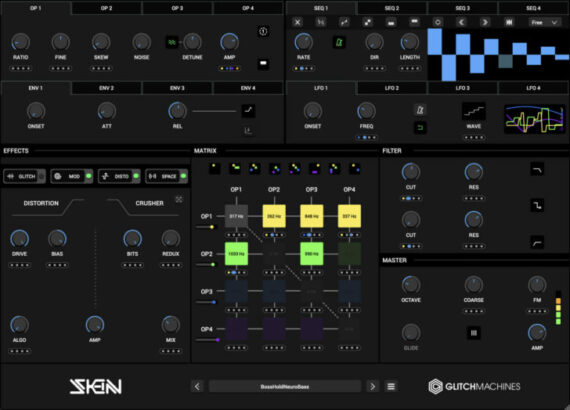
Glitchmachines Skein Offers ‘Unconventional’ Take On FM Synthesis


Glitchmachines has introduced Skein, an FM synthesizer that they say is “focused on experimental sound design and electronic music production.”

Skein features 4 operators with skew controls and noise, as well as a flexible modulation matrix with per-cell modulation, per-operator feedback and eight user-definable algorithm presets.

Key parameters can be targeted by numerous modulation sources, including 4 LFOs with 15 wave shapes, 4 modulation sequencers with various utilities and up to 32 steps, and 4 multi-mode envelopes. Other features include two versatile multi-mode filters, and an effects processing chain that offers 4 multi-effects.

What they have to say about it:

“We’ve taken an unconventional approach with Skein.

Instead of replicating the classic digital FM synths of the past, we set out to create a new instrument that is primarily focused on sound design and sonic experimentation.

With a multitude of powerful modulation sources and a variety of processors such as distortion, bit crusher, chorus, phaser, delay, reverb and buffer effects, Skein is capable of generating an incredibly diverse and expressive range of tones and timbres.”

The official video intro:

Features:

  • 4 Operator Modules with Skew & Noise
  • FM Matrix with Per-Cell Modulation
  • 8 Overwritable Factory FM Algorithms
  • Flexible Modulation Panel System
  • 4 LFOs with 15 Wave Shapes & Scopes
  • 4 Sequencers with 32 Steps & Utilities
  • 4 Multi-Mode Amplitude Envelopes
  • 2 Versatile Multi-Mode Filters
  • Poly Mode with 12 Voice Polyphony
  • Monophonic Mode with Glide
  • Quad Multi-Effects Chain with 7 Effects
  • 160 Presets across 4 Preset Banks
  • Windows & Mac VST3/AU 64bit

Glitchmachines Skein Audio Demo:

Skein is available now for Windows & macOS for $89.