2025 NAMM Show: Native Instruments has announced its NKS Hardware Partner Program, which will enable third-parties to create NKS devices.
Today, NI says that Akai Professional, Novation, Nektar, Korg, and M-Audio will now be supporting the NKS ecosystem, to provide seamless integration with Native Instruments software. They say that will expand support to over 2,000 NKS-compatible instruments and effects from more than 250 brands.
If you’re not familiar with Native Instruments products, you might be wondering what exactly that last part means. NKS (Native Kontrol Standard) is a technical standard, used by hundreds of developers across thousands of plugins, to ‘pre-map’ hardware devices to virtual instruments. It essentially means that NKS devices are compatible, out of the box, with NKS software instruments.
Once opened within NI’s Komplete Kontrol software (available as both a plugin and standalone application) NKS-compatible plugins, instruments and effects are immediately hooked up with your hardware controller via pre-mapped control layouts designed by the developers, giving you instant hands-on control without having to engage in the bothersome process of manual MIDI mapping. Not only that, but parameters can be viewed and presets can be browsed via the controller’s display thanks to bidirectional communication between software and hardware.
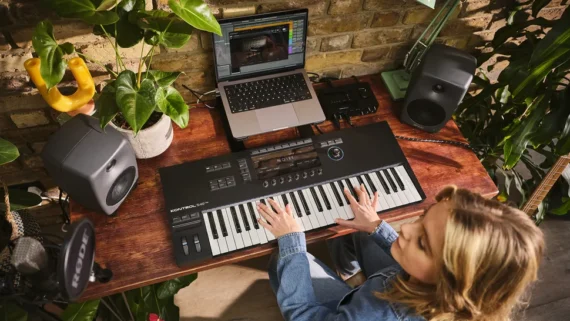
Up until now, NKS has only been fully integrated with Native Instruments hardware, like Maschine and the Kontrol series of MIDI controller keyboards. Today, the company has announced an NKS Hardware Partner program that invites manufacturers to integrate NKS with their products, giving their customers access to a fast-growing collection of more than 1800 NKS-compatible instruments and effects – a list that includes popular plugins like Arturia V Collection, u-he Diva and NI’s own Kontakt 8 – over which they’ll be able to enjoy seamless and intuitive control.
While the program is launching with basic NKS support on a limited range of existing devices, Native Instruments’ Chief Product Officer Simon Cross tells us that later in the year we’ll be seeing new products hitting the market with NKS integration incorporated “in a much deeper way”. This expansion highlights the impact of collaboration. It marks an important milestone in our mission to provide musicians with an open, connected platform, making professional-grade tools, instruments, and technology more accessible to creators everywhere.”
Cross believes that the expansion of NKS provides the answer to a longstanding question: how to integrate the varied ecosystem of hardware controllers with the vast universe of plugins and instruments available to the modern music-maker in a way that’s simple and convenient. “All of the controller brands have good DAW integration, because there’s only around 10 major DAWs,” he says. “But when it comes to plugins, it’s a huge universe, and there’s not really any solution that connects knobs, faders and buttons to the massive ecosystem of plugins that exists. That’s what NKS does.”

What we’re solving here is a very clear user problem that’s been very hard for these partners to solve themselves,” Cross continues. “Designing a standard way for controllers to control thousands of plugins from thousands of different brands is very difficult to do, but that’s what we bring to the table. The reason why these companies are partnering with us – and why we’re lucky to be launching with five of the best brands – is because they see this as an opportunity to dramatically level up the experience they can offer to their users.”
Launching in February with a basic level of integration, the partner program will ultimately expand to make a much deeper form of integration accessible to owners of compatible products. “Step one is based around MIDI mapping; just being able to load a MIDI map for your specific device so that everything just works,” Cross says. “Later in the year, we’re launching software that will allow us to write data back to the device and give the device more advanced DAW control, along with more control over loading and managing plugins.”
“This is just the beginning of a really long journey,” says Joe Richardson, Chief Marketing Officer of Akai’s parent company inMusic. “It’s not often that you get to pressure-test your best thinking with someone who may have been a competitor a year ago. But we’re a better brand because of it. Native looks at us with a fresh set of eyes, we look at their offering with a fresh set of eyes – and to be unified in trying to create something great for musicians, it’s making us both better. It’s going to make us tough to compete with.”
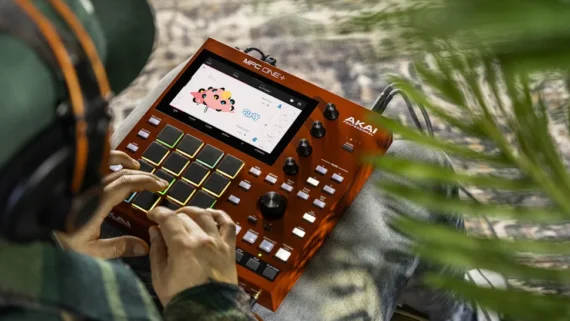
Considering that exclusive compatibility with NKS has historically been a not-insignificant selling point for the company’s hardware, it wouldn’t be unreasonable to assume that today’s announcement signals a change in direction, suggesting that Native Instruments will be prioritizing its software offering over the development of new hardware from this point forward.
Cross tells us that Native Instruments is, at its core, “a platform company and a partnerships company”, he assures us that it has no intention of shifting its focus away from the hardware market altogether. “What we want to do is give customers more choice,” he continues.
“The majority of our customers are using NI software with other people’s hardware, and those people have not had the great integration with our software and the NKS ecosystem that our hardware customers have enjoyed. So we’re expanding the reach of that experience. Over time, there’s going to be many more devices that support NKS and can provide users with a seamless experience to control plugins, instruments and effects, far beyond what’s possible today.”
In keeping with this co-operative, platform-first ethos, Native Instruments has also revealed that it will be opening up Leap and Tools – two new features introduced with the latest version of Kontakt – to third-party developers. Leap is an Arcade-style sampler instrument that can be used to transform loops and one-shots into new hooks and textures, while Tools is a suite of generative MIDI tools that act as a kind of compositional assistant within Kontakt.
By releasing SDKs for Tools and Leap, Native Instruments hopes to give Kontakt developers scope to create even more powerful and versatile instruments. “There are companies all around the world that create instruments for Kontakt – in fact, there are entire companies that only exist because of Kontakt,” Cross says. “So when we built Tools and Leap, we could have decided to make these things that only Native Instruments could use. But actually, what’s so great about Kontakt is how third parties use it to innovate, when given the tools.”
Today’s announcement finds a handful of companies that have historically been in close competition teaming up to improve customer experience: Native Instruments’ software and sounds will reach the hands of more musicians and producers, while hardware from its partner brands will be granted a more sophisticated and frictionless level of control over an expanding catalogue of almost 2000 plugins, instruments and effects.
For inMusic’s Joe Richardson, the most transformative aspect of the partnership is how it will empower music-makers to focus solely on their creativity. “There’s a universal understanding that we’ve gained, that all creators want to stay in the creative flow,” he says.
“The things that take them out of that creative moment – that leave them thinking more than producing and creating – that’s where the friction is going to be taken away. This relationship will allow them to use the best sounds on the best, high-performance hardware, so that they can capture what they’re doing in the flow and not have to overthink the mechanics of how these things work together. That simplicity is golden.”
The new NKS Hardware Partner program enables basic integration for partner’s existing keyboard controllers, allowing musicians and producers to use the Komplete Kontrol desktop software to access a portfolio of over 2,000 NKS-compatible instruments and effects.
With mappings to supported controllers, this integration provides hands-on control without the need for lengthy setups or distractions.
Native Instruments’ expanded partnerships will extend NKS compatibility to the following devices:
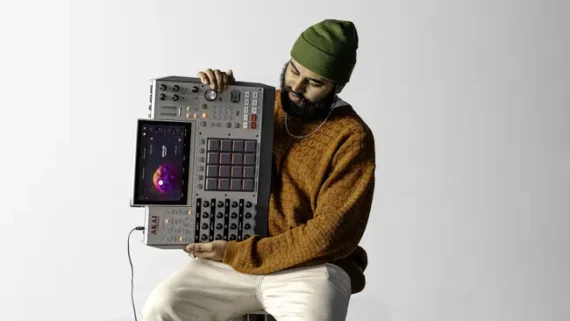
- Akai Professional: NKS integration now supports the MPK Mini Series (MPK Mini, MPK Mini Play, and MPK Mini Plus).
- Novation: NKS will be supported with the Launchkey MK3 and MK4, FLkey, and SL MK3 controllers.
- Nektar: The velocity-sensitive LX MK3 adds NKS integration.
- Korg: The advanced MIDI 2.0-compatible Keystage controllers bring enhanced flexibility and sound design options through NKS, catering to both studio producers and live performers.
- M-Audio: The current-generation Oxygen Series keyboards will feature NKS compatibility.
NKS integration will be available to all partner brands in the coming months. Interested owners can sign up for updates and more details at NI site.
Additional Offerings for Akai Professional MPC users
In addition to NKS integration, Native Instruments and Akai Professional are collaborating to bring their existing content to the MPC platform:
- Expansions: Five MPC Expansions include one-shots, samples, and FX chains designed to elevate production and performance.
- MPC Edition Play Series: Five MPC Play Editions instruments.
Both the Expansions and MPC Editions Play Series Editions are available mid-February.
Komplete 15 Select: Premium Sounds Included
As part of the NKS Hardware Partner program, owners of NKS-ready hardware from Novation, Nektar, Korg and M-Audio will be eligible to receive Native Instruments’ flagship production bundle, Komplete 15 Select, free of charge.
Creators can choose from three editions tailored to specific workflows:
- Beats Edition: Synths and sound packs ideal for pop, hip-hop, and R&B.
- Band Edition: Guitars, keys, and studio effects designed for songwriters and live performers.
- Electronic Edition: Advanced synths and tools for house, techno, and trance producers.