PSP Audioware Collaborates With Alan Parsons Create PSP Wobbler
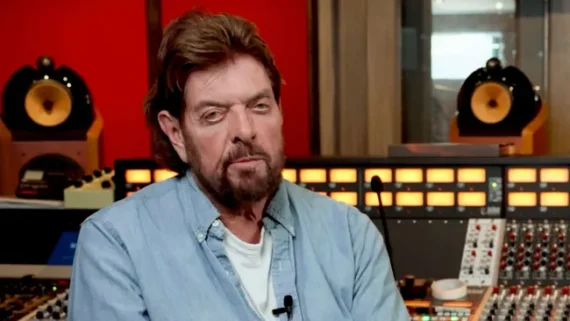

“The Alan Parsons Plugin Project” – PSP Audioware helps the legendary engineer to recreate the famous Wobbler effect that he used on Pink Floyd’s The Dark Side Of The Moon.

NAMM 2025: PSP Wobbler is a modulation effect plugin created by the famous brains at PSP Audioware (creator of VintageWarmer, Impressor, Saturator and many more) in collaboration with legendary recording engineer, producer, and musician Alan Parsons.

Parsons himself, of course, scarcely needs an introduction. After engineering for The Beatles on their Abbey Road and Let It By albums, he carved his own particular niche in history as the engineer for Pink Floyd’s hugely influential and multi-million selling Dark Side of the Moon in 1973.

As part of The Alan Parsons Project he subsequently had hits of his own, being nominated for 13 Grammy Awards. Parsons currently owns and continues to works from his own ParSonics Studio, his state-of-the-art recording facility at his home in Santa Barbara.

The new plugin collaboration aims to faithfully recreate the sound of what became known as Parsons’ secret weapon, the Frequency Translator device, a handmade experimental unit built for Parsons by Keith Adkins, the technical engineer at Abbey Road.

The effect was used extensively on Parsons’ contributions to Dark Side of the Moon, most specifically the track Time, where it produces a steady phase and time shifting effect that imbues movement without adversely affecting pitch – you can hear it on the track’s backing vocals in particular.

It’s a sound that’s difficult to describe, but once you’ve heard its legendary thickening and widening properties then you’ll want to add to your arsenal.

Now, via painstaking work by Parsons and the PSP team, that’s possible for the very first time.

“It’s a much more controllable and deeper effect than any phaser I’ve ever heard,” says Parsons

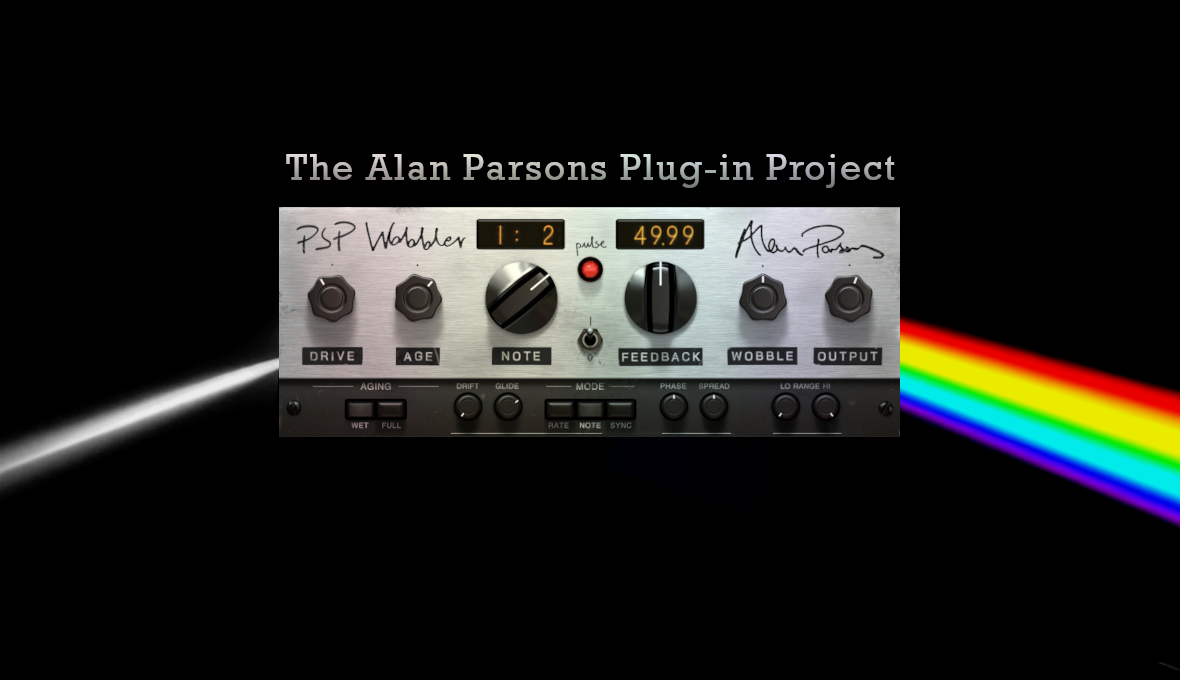
And building on the original Frequency Translator’s controls, PSP Wobbler adds controllable Drive and Age to add warm and vintage charm, Drift and Spread to add an additional, unpredictable ‘live’ quality to the sound, plus the ability to adjust the Rate infinitely or in perfect note values to accurately sync the ‘wobble’ to the tempo of your track.
Features:

  • Frequency shift up to ±25 Hz, manually controlled or set as a clock division of your DAW tempo
  • Frequency shift can be set to follow tempo changes or stay at a fixed amount through a song
  • Wobble amount is controlled via wet/dry mix
  • Drive and Age controls let you dial in saturation and character
  • Ageing modes for adding Drive / Age to wet signal alone or to both wet and dry signals
  • Separate controls for Feedback, thermal and voltage Drift, Phase, and stereo Spread
  • Adjustable lower and upper limits for effect frequency range

Watch Parsons put it through its paces below.

A pair of EQ filters control the effect’s frequency range, enabling you to shape the sound to fit your mix and explore modulation effects that PSP promises will be as groundbreaking as the original hardware was.

And in a special offer, PSP Wobbler will be available at the introductory price of $49.99 until 13 February, becoming $99 from 14 February.

Find out more and download a demo on the PSP Audioware website.
Korg Teases MicroAudio 22 & 722 ‘Concept’ Audio Interfaces At NAMM Show


2025 NAMM Show News: Korg has a habit of turning up at the NAMM Show with not only its ‘official’ new products, but also a few things that it’s working on but may or may not get a commercial release. And this year, one of those things happens to be a new range of audio interfaces.

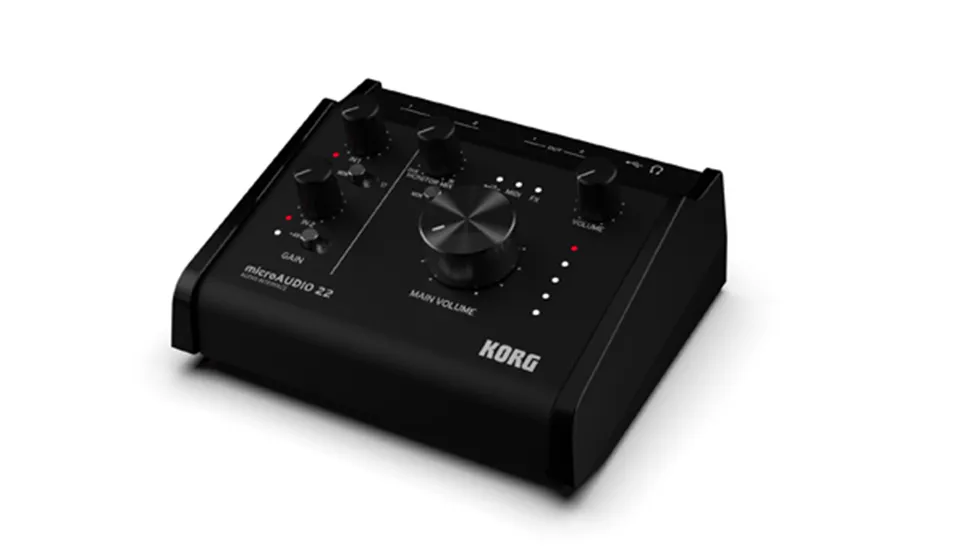
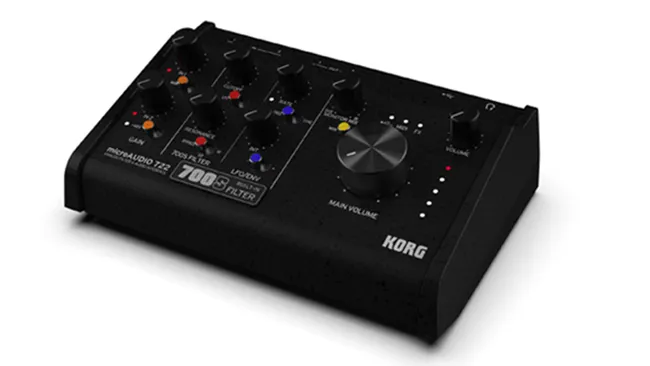
The MicroAudio 22 and 722 are “tabletop-optimised” USB-C devices with “easy-to-grab knobs”. Each offers direct monitoring, up to 24-bit/192kHz quality, a Hi-Z input and a phantom power option. There are also built-in effects, including a noise gate and a compressor.

Most of which sounds fairly by-the-numbers, and not really what you’d call – to use Korg’s words – “concept prototypes – products in their exploratory phase that push the boundaries of what’s possible in music creation.” The MicroAudio 722, however, has something special up its sockets – Korg’s 700S analogue filter.

Taken from the MiniKorg 700S, this includes both low-pass and high-pass flavours and is tweakable from the top panel. As such, the 722 definitely has a unique point of difference in comparison to other audio interfaces; whether it’s one that’s useful remains to be seen.

Other concept prototypes include the E1 Air, a slimline digital piano, and the MetroClip, an LED metronome. And, of course, we’ve already mentioned about Korg’s big new releases: a new version of the Kronos workstation, module  and plugin version of the Multi/Poly synth, and the MiniKorg 700Sm, a downsized version of the rebooted ‘70s synth.

Features:

  • Tabletop-optimized design – Compact size & easy-to-grab knobs on the front panel.
  • Direct Monitoring – Listen to the input-signal in real time with no latency.
  • Up to 24bit / 192kHz, a Hi-Z input, USB Type-C, +48V phantom power.
  • Dynamics DSP Effects – Process audio with a built in noise gate, compressor and more.
  • Software Bundle
  •  microAUDIO 722 includes the “700S” Analogue Filter.

Here’s what we know about the MicroAudio 22 and 722, which may or may not be going into production.

You can get an overview of all the company’s NAMM news on the Korg website.

Free Universal Audio Luna Gets Major Update


Ahead of NAMM 2025 Universal Audio has announced Luna v1.8, with some big updates to a DAW that was already free. So how much more of a bargain do you want? There’s got to be a catch, right?

Luna is Universal Audio’s free DAW, although UA doesn’t really like us using the term ‘DAW’. That’s because Luna offers a near latency-free recording environment, very much based on hardware studios of old, with a slick vintage feel and one of the most seamless recording experiences yet.

Yes, it is pushing the UA ecosphere and plugins, but the base version is free, no longer requires you to partner with UA hardware, runs third-party plugins and records unlimited tracks. To our feeble brains, then, Luna has enough qualities to call it… a DAW. An attractive and slick one at that.

There is, of course, a more fully-endowed, paid-for version of Luna should you wish to part with some cash, but the v1.8 updates apply to the free version as well so all the new goodies are yours for nowt, and these include some worthy additions.

Yes, many of these you might already find in your (very likely) much older and mature DAW, but Luna is very much the new kid on the block – a mere five years old, compared to some DAWs which have been around for decades – so we can forgive these features not arriving until now.

First up there’s Bounce in Place, allowing you to render your tracks to audio at the touch of a button. A once essential practice in the old days of slow processor speeds, this enables you to free up CPU headroom by losing active plugins.

Track presets, meanwhile, enable you to save plugin chain setups and routing configurations for easy recall and time saving. An enhanced browser – very much ‘the thing’ of many recent DAW updates – is also present and correct, with Browser Tabs enabling you to home in on sounds and plugins.

Various bug fixes and workflow enhancements have also been included in the 1.8 update, so should you be heading over to the UA website for the freebie version?

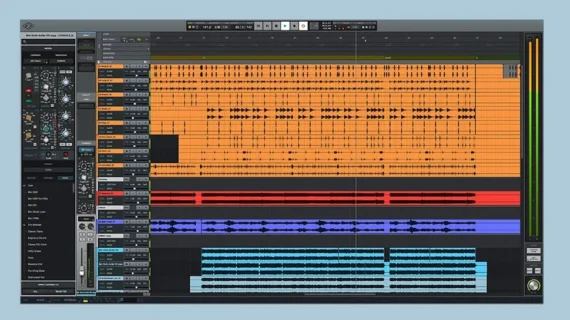
Well, that free version gets you unlimited tracks (OK, limited by your processor grunt), full analogue summing, Tape Machines recording, plus channel strips, bus and parallel compression built into the Luna mixer. Needless to say, it’s very easy to buy UA plugins to fit into the Luna environment – which UA would obviously love you to do – but the free Luna option does deliver a very pleasing and slick recording environment.

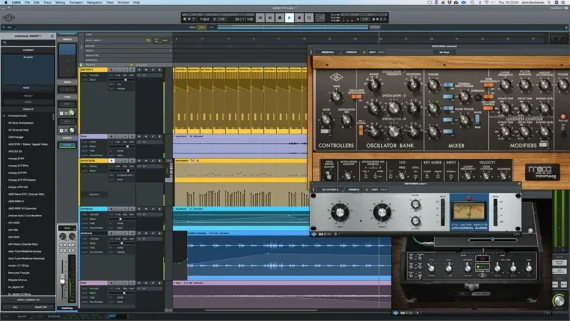
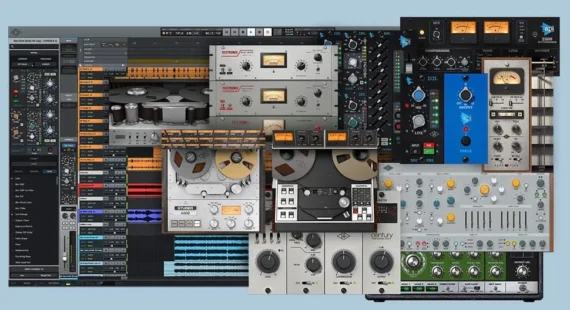
The Pro version (above) adds a bundle of over a dozen classic UA plugins to effectively recreate a vintage studio in your DAW. Think Pultec, API, Ampex… you can almost smell the reel-to-reel tape. The Pro Luna bundle usually retails for $399, but as part of the 1.8 Luna launch, you can currently get it for just $99.

Which only leaves us to insert some puns featuring the words ‘sheer lunacy!’, which thankfully we’ve resisted. Head on over to the UA website for more (information that is, not lunacy).