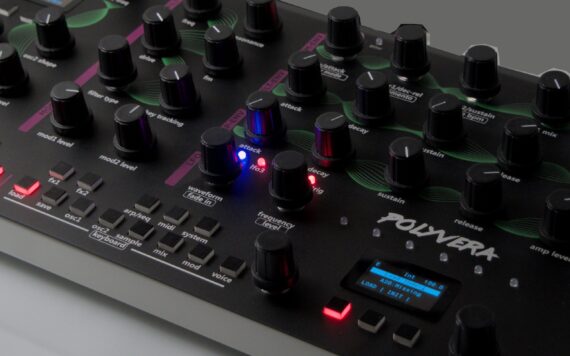
Suonobuono shared this in-depth hands-on demo of their upcoming Polyvera synthesizer, a hybrid synth design.
Here’s what they have to say about it:
“Polyvera is Suonobuono’s first synthesizer. It is not a copy of old gear, but a modern homage to the iconic wavetable synths and samplers of the early 80s. It combines the characteristic digital artifacts of that era with true analog multimode filters for added warmth and versatility.”
Topics covered:
00:00 Intro
00:36 Summary overview
02:14 Alias models and wavetable oscillator
04:28 Bassline example
05:40 Sampler oscillator
06:11 Wavetable + sampler example 1
06:50 Wavetable + sampler example 2
08:19 Analog pad example
09:29 Filters sweeps
11:50 Filter FM
12:50 80s stack example
13:19 Drone example
15:04 Electro sequence with analog distortion
16:27 Modulations
16:54 Osc sync and mod-envelope
17:08 Osc FM and mod-envelope
17:47 Effects, performance, voicing
18:27 Chord mode
18:45 Sample recording and user wavetables/samples
Details on pricing and availability are still to be announced.
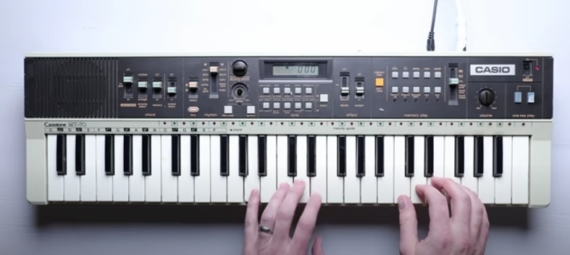
Here’s an in-depth look at the Casio MT-70, a ‘forgotten gem’ electronic keyboard/synthesizer from the early ’80s.…
The latest video from David Hilowitz takes an in-depth look at the Casio MT-70, a ‘forgotten gem’ electronic keyboard/synthesizer from 1982.
It’s not a classic, but it’s still an interesting keyboard and Hilowitz demonstrates how you can use it to create interesting soundscapes. If you like what you hear, though, Hilowitz has made a Casio MT-70 sound library available via Patreon.
Watch the video and share your thoughts in the comment
Back in 2023, Song Athletics teamed up with Grammy-nominated composer Max Richter for a software instrument that captured the sounds of Richter’s Steinway D SPIRIO | r grand piano, before releasing the free Dark Mode plugin late last year.
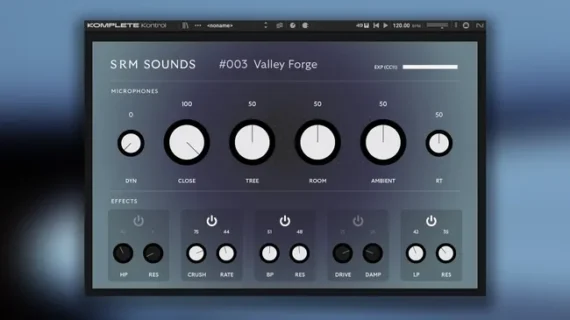
This week, the British company, headed up by former Spitfire Audio CEO Will Evans, has released another Kontakt instrument developed in collaboration with Richter under the SRM Sounds banner. Valley Forge is a sci-fi inspired virtual instrument and “celestial toolkit” based on the sounds of a 15-piece timpani ensemble, an original Minimoog and an array of analogue effects processors.
Recorded at Richter’s personal studio, Studio Richter Mahr, the timpani recordings were made using a number of different microphone types and placements that can be be blended together on Valley Forge’s interface. The timpani library features hits, rolls, and clusters performed with a variety of mallets and percussive objects.
Those recordings were run through a selection of Richter’s analogue effects to produce cinematic and textural drones, while his own Minimoog Model D has been sampled and included as a synth accompaniment. There are also a range of built-in effects onboard for further processing, including delay, chorus, phaser, saturation and tape emulation.
Here’s the video walkthrough:
Key Features
8 instruments total ~9.7GB
6 timpani instruments
Drone instrument
Analogue synthesizer instrument
Multi-effects (also linked to keyswitches)
Custom effects and controls per instrument
Kontakt Player library (Version 6.8.0 or higher required)
NKS compatible
“Valley Forge is a place of sonic exploration,” Richter says of the instrument. “Like all musical instruments, it’s an act of the imagination. And in this case, it’s a place where these strange sounds exist.
“Named after the spaceship in Douglas Trumbull’s prescient 1972 sci-fi eco-parable “Silent Running”, these sounds are evocative of a spaciousness, with a darkness about them. There’s resonance and memory, and a sort of alien warmth in this material. And that comes from the fact that it has mostly organic origins. In a way Valley Forge is a kind of ode to an imaginary spaceship. And this is what it would sound like.”
Valley Forge is available now with an intro price of £99 (normally £129).