Universal Audio Releases Woodrow ’55 Pedal Plugin, UAD Woodrow ’55 Instrument Amplifier
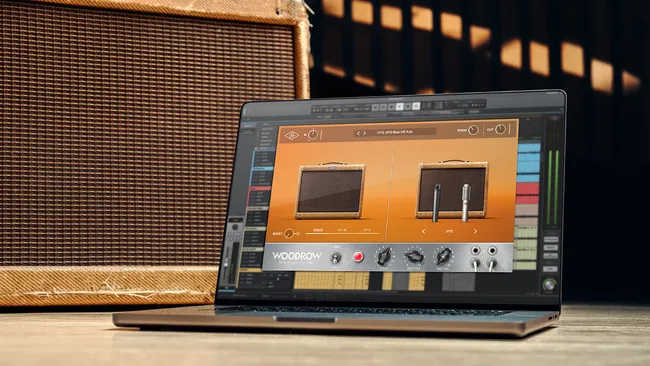

UA expands its collection of amp modelling plugins with the UAD Woodrow ’55 Instrument Amplifier, a software version of its Woodrow ’55 pedal that recreates the vintage tones of the 1955 Fender 5E3 Tweed Deluxe.

Today, Universal Audio releases its UAFX Woodrow ’55 pedal as a plugin, putting an “American classic” in your DAW, and ‘This is the amp that defined what electric guitar sounds like.’

Closely emulating its every component via painstaking circuit analysis, Woodrow ’55 is said to authentically capture the sonic nuances of an amp beloved by everyone from Neil Young and Chuck Berry to Joe Bonamassa and Ariel Posen, delivering the “punchy cleans, rich tube-driven overdrive and natural compression” that made the original a bona fide classic.

Woodrow ’55 features a considerable assortment of modelled speaker responses and virtual mics with which to play with, along with a healthy range of artist-crafted presets that provide an easy route to imitating some of the 5E3’s most memorable moments in musical history.

“This is the amp that defined what electric guitar sounds like – from the first fuzzed-out rock records to today’s alt-country and Americana,” Universal Audio’s Lev Perrey says. “With UAD Woodrow ’55, we’ve made that iconic tone accessible to anyone producing music in the box.”

Here’s the official intro video:

UAD Woodrow ’55 is available now with intro price of $59 (regular $199). The plugin is also available as part of Universal Audio’s subscription service, along with 50+ UAD plugins. In recognition of Spark’s third birthday, the company are offering a two-year subscription for $99/year.
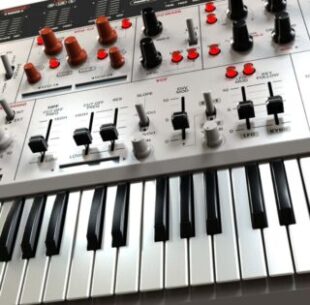
Acustica Audio Introduces Alice-9 Software Synth


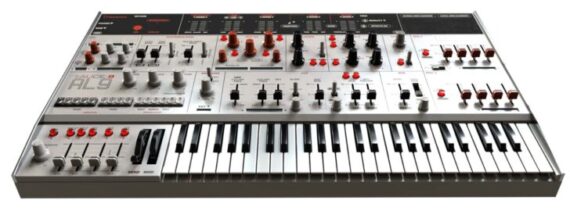
Acustica Audio has introduced a new software synth, Alice-9, described as a “next-generation sample-based synthesizer.”

And, would it be a soft synth introduction without some gratuitously sexy 3D renderings? The world may never know:

Alice-9 is powered by Modular Unified Synthesis Technology (MUST) – a hybrid synthesis technology that Acustica says integrates the precision of analog circuit behavior modeling with a convolution-based approach. It incorporates advanced features such as nonlinear convolution, dynamic Volterra series, and time-varying models to reproduce the complexities and nuances of analog hardware.

Features:

  • Next-Generation SCO Oscillators – AL9’s Sample-Controlled Oscillators go beyond traditional sampling and wavetables, delivering dynamic, time-evolving waveforms with natural drift, modulation, and analog-like behavior.
  • Enhanced MUST Engine – Powered by a refined Modular Unified Synthesis Technology (MUST), AL9 blends analog circuit modeling with convolution-based processing for exceptional realism and responsiveness.
  • Hybrid Sound Architecture – Combines high-resolution sampling, analog-modeled filters, and dynamic modulation into a unified engine — bridging the gap between VCO, DCO, and sampler.
  • Extensive Waveform Library – Hundreds of carefully curated sounds, from vintage analog tones to orchestral textures, including rare instruments and hybrid timbres.
  • Superstereo Imaging & Aging Control – Create wide, immersive stereo fields with natural decorrelation, and add analog imperfection through adjustable aging for a vintage character.
  • Advanced Modulation & Envelopes – Flexible but focused tools: intuitive LFOs, fast envelopes, key tracking, velocity sensitivity, and creative modulation paths without unnecessary complexity.
  • Integrated Studio-Quality Effects – Includes Acustica-grade Chorus, Delay, Reverb, and EQ, plus a Saturator with a powerful OTT-style multiband dynamics processor for impactful, polished sound.
  • Complete Performance Toolkit – Features like real-time MIDI Learn (local/global), arpeggiator, portamento, MPE functionality, modulation sliders, and visual feedback make AL9 a true instrument — not just a sound source.
  • Professional Sound Design – Over 500 presets created by top-tier musicians and engineers demonstrate AL9’s full sonic palette and versatility across genres.


Alice-9 (AL9) is available now, with an intro price of €169 through May 13th, 2025 (regularly €249).


Ableton Note v1.3 Major Update Lets You Sequence Melodies, Beats, Chords & More


With its latest free update, Ableton has finally turned Note into the app we all always wanted it to be.

With its Offline MIDI editing makes Ableton’s iPhone and iPad app more of a must-have iOS companion for Live users.

Ableton Note launched in late 2022 has always been an app with a lot of potential. Based around a similar workflow to Ableton Live’s clip-launching Session View, Note is designed as a simple platform for sketching musical ideas.

Its minimalist interface and limited selection of instruments and effects are a far cry from being a full DAW for your phone, but with staple Live devices under the hood and a simple app-to-Live workflow, Note arrived looking like it could be the perfect tool for Live users to capture ideas away from the studio.

The early version Of Note – the combination of synths and sampled instruments offers a broad sound selection, which can be expanded by importing your own sounds or sampling directly using your phone or iPad.

Crucially, Ableton offers several simple ways to quickly import ideas into Live, where they can be opened in fully editable form, meaning that those rough melodies or drum patterns you sketched out on the bus can really form the basis of a fully fledged tune.

Given that Apple has removed headphone ports from most of its devices, being unable to work with wireless headphones is a pretty significant hindrance for a tool designed to be used on-the-go.

Moreover, while playing parts in real time is all well and good, it’s not a workflow that suits Live users more used to inputting patterns via a step sequencer or ‘offline’ MIDI editing – i.e., using a mouse and keyboard.

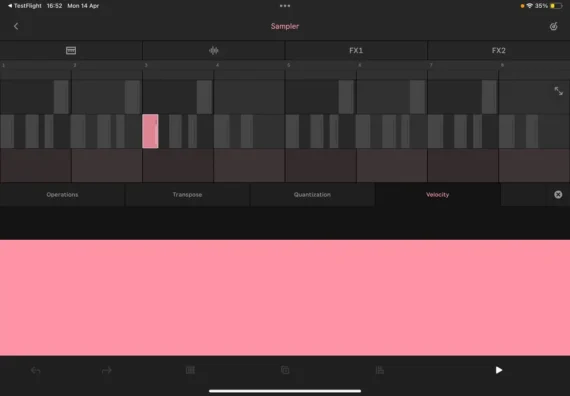
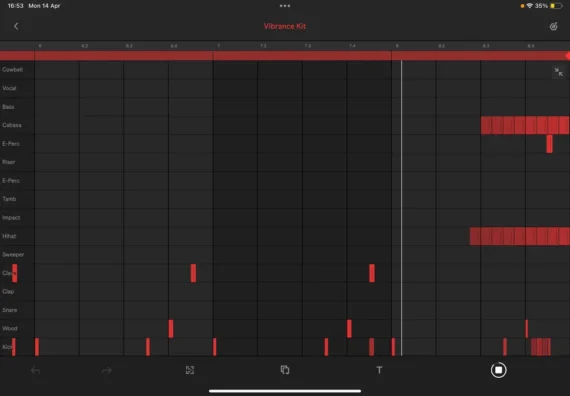
With the release of version 1.3 this month, Ableton has rectified this. The major update, which is free for existing users, introduces offline MIDI input and editing, allowing users to create empty MIDI clips and then tap to input notes, drum patterns or chords. The editing functionality is really nicely implemented.

Holding a note input brings up a menu allowing it to be moved, transposed, quantised or to alter the velocity. Users can pinch to zoom in on the MIDI grid, or turn their device into portrait orientation in order to use the MIDI editor in full screen mode, which is particularly handy on iPhone.

The update also adds the 16 Pitches feature that Ableton introduced with its Note-adjacent hardware device, Move. This lets Drum Sampler instruments be sequenced melodically, allowing 16-pad drum instruments to sequence multiple melodic parts at once.

Ableton has also significantly improved the range of effects in the app.

Note 1.3 is available now on the Apple App Store priced at £8.99/$8.99 and it’s free for all Note users.

Head to the Ableton site for full details.