‘Meet Legendary Analog Sound for the Whole Band’: Universal Audio Volt 876 USB Recording Studio
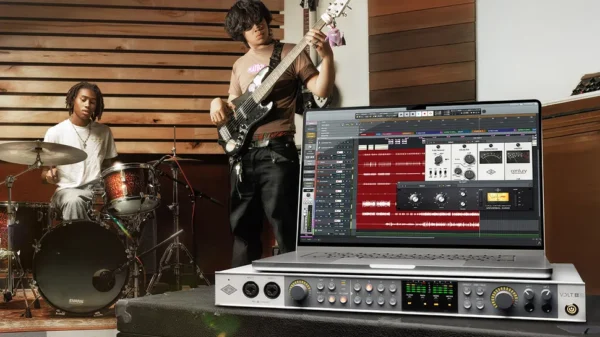

Universal Audio launches Volt 876 USB Recording Studio, the first rackmount interface in the Volt series.

Universal Audio’s Volt series of audio interfaces was launched in 2021, promising “classic studio sound” at a price that’s within reach of budget-conscious musicians and presenting a more affordable alternative to the company’s popular Apollo series.

Four years on and the range has expanded to encompass eight different models, with the latest Volt interface announced by UA this week: Volt 876 USB Recording Studio. Whereas other models in the Volt line are desktop interfaces designed primarily for solo recording, Volt 876 is a rackmount unit aimed at more complex multi-instrument recording scenarios.

A 32-bit/192kHz, 24-in/28-out interface, Volt 876 is equipped with eight of UA’s tube-emulating Vintage mic preamps and eight 1176-style compressors, which can be activated via buttons on the front panel, offering a selection of presets tailored for guitar, drums and vocals. These are joined by two LED-ringed dials for input gain and monitoring level, along with various controls for talkback, metering, clocking and headphone levels.
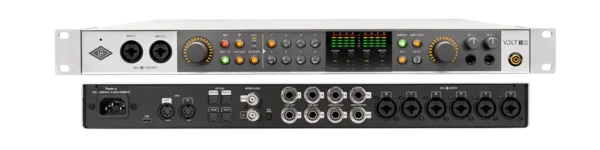
Volt 876 features two mic/line inputs with XLR/TRS combo jacks on the front panel that double as Hi-Z instrument inputs, joined by six more mic/line inputs on the interface’s rear. There are eight line-level TRS outputs on the back and two headphone outs on the front with dedicated level controls. MIDI I/O is available via dual 5-pin DIN connections and two ADAT/SPDIF ins and outs can be used to digitally expand the interface’s I/O.

Volt 876 arrives bundled with a variety of software, including UA’s companion Console app which offers assistive Auto-Gain and convenient recall of front-panel settings. You’ll also get UA’s Producer Suite, a collection of plugins that includes the company’s LA-2A and 1176 emulations and the PolyMAX synth, and a copy of LUNA, Universal Audio’s free, AI-powered DAW.

Features:

  • Get rich analog tone with eight onboard Vintage preamps and classic compressors inspired by UA’s iconic 610 tube console and 1176 limiter
  • Hear every detail with professional-quality 32-bit / 192 kHz conversion on Mac, PC, iPad, and iPhone*
  • Use the UAD Console app for Assistive Auto-Gain, full session recall of front-panel settings, and two low-latency cue mixes with talkback
  • Record with LUNA for analog studio sound, unlimited tracks, and smart AI-powered tools like Voice Control, Instrument Detection, and Tempo Listen
  • Produce with a suite of premium UAD plug-ins and instruments including Teletronix LA‑2A and UA 1176 compressors, Pultec EQs, PolyMAX Synth, Showtime ’64 Tube Amp, and more
  • Expand your system by combining up to three Volt 876 interfaces or integrating with Apollo and ADAT-equipped gear

Details:

  • 24-in / 28-out USB audio interface with eight preamps and cutting-edge 32-bit / 192 kHz audio conversion
  • Vintage Mic Preamp mode on every channel for recording your voice, guitar, synths, or band with the rich, full sound of an iconic UA 610 tube preamp
  • UA 76 Compressors on every channel to add clarity and punch to vocals, drums, instruments, and other sources with analog circuit based on the renowned 1176
  • Digitally-controlled mic preamps with Assistive Auto-Gain and full session recall with UAD Console app and LUNA Digital Audio Workstation
  • 16-in / 16-out ADAT connectivity for digital expansion and linking of up to three Volt 876 interfaces to form the ultimate 24 x 28 recording system
  • Standalone ADAT mode to connect Volt 876 to third-party interfaces or Apollo over ADAT as an 8 x 8 I/O preamp expander
  • Onboard talkback microphone for effortless studio communication
  • Realtime direct monitoring with dedicated front panel controls, plus two stereo low-latency cue mixes when used with UAD Console or LUNA DAW
  • Class-compliant for hassle-free set-up with Mac, iPad, and iPhone
  • Windows systems require the ASIO driver, available within the UA Connect app
  • Two studio-quality headphone amplifiers for loud, clear monitoring and effortless collaboration
  • 48V phantom power for condenser microphones (selectable per channel)
  • Stylish, rugged construction built to withstand years of use, with included rack ears and rubber feet for desktop or 1U rack mounting options

What’s Included

Included Software for Mac & PC

  • LUNA Digital Audio Workstation
  • UAD Producer Suite:
  • Teletronix LA-2A Tube Compressor
  • UA 1176 Classic FET Compressor
  • Pultec Passive EQ Collection
  • Century Tube Channel Strip
  • Oxide Tape Recorder
  • Verve Analog Machines Essentials
  • Pure Plate Reverb
  • Galaxy Tape Echo
  • PolyMAX Synth
  • Showtime ‘64 Tube Amp

Included 3rd Party Software (subject to change):

  • Ableton Live Lite
  • Melodyne Essential by Celemony
  • Ampeg® SVT-VR Classic Bass Bundle by Plugin Alliance
  • Marshall® Plexi Classic Amp Bundle by Softube
  • Virtual Drummer DEEP by UJAM
  • Virtual Bassist DANDY by UJAM
  • LABS by Spitfire Audio

Here’s an in-depth look UA Volt 876 USB Recording Studio by André Skinner from Long & McQuade video:

Coming in at the top of the Volt range, the 876 interface is priced at $999. Pre-order now, available mid-October 2025.

Find out more on Universal Audio website.
Roland Officially Introduces TR-1000 Rhythm Creator ‘Is The Most Advanced Drum Machine They’ve Ever Made’


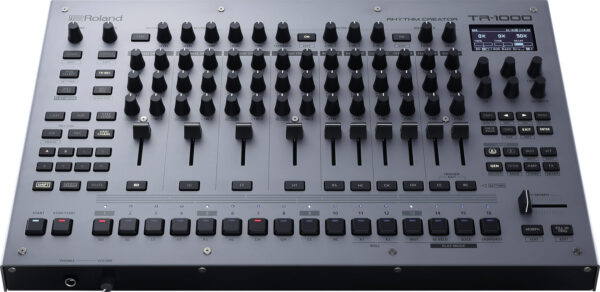
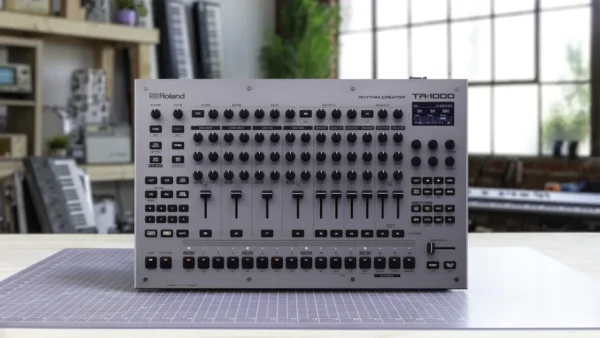
Last week, Roland posted a teaser to its website headlined by the words ‘tomorrow returns’ accompanied by what sounded like a processed TR-808 drumbeat. Today, the company officially introduced its new flagship TR-1000 Rhythm Creator, a new drum machine that they say is the most advanced drum machine that they’ve ever made.

The TR-1000 is not only a feature-packed, multi-functional instrument that sits right at the top of the company’s range of drum machines and grooveboxes, but it’s also the first Roland drum machine in over 40 years to come equipped with true analogue voices.

Those analogue voices are powered by 16 circuits based on elements of the iconic TR-808 and TR-909 drum machines, which Roland says have been “faithfully recreated from the original designs with detailed engineering and carefully selected modern components.”

The original TR-808 and TR-909, released in 1980 and 1983 respectively, are two of the most influential electronic instruments of all time, and likely need little introduction to most music makers thanks to the pivotal role they played in the evolution of genres including house, techno and hip-hop.

This is far from the first time Roland has returned to the sound of those classic drum machines, having released a multitude of Aira, Boutique and Cloud-branded iterations over the past few years. Those instruments have all been powered by a combination of the company’s virtual analogue ACB (Analog Circuit Behavior) tech, or its sample-driven Zen Core engine.

While Roland boasts about the authenticity of the TR-1000’s analogue engine, several of the voices add capabilities that go beyond the simplistic parameters of the original units.

This includes adding things such as tuning controls and amp envelopes to sound elements that didn’t previously have them, allowing the TR-1000 to create things like tuned 808 basslines and refined, punchy beats.

The analogue voices are only part of the story here though. The TR-1000 also features a powerful array of digital elements that build on the capabilities of the impressive TR-8S.

These include virtual analogue voices that make use of ACB tech to replicate a variety of circuit bent iterations of the TR-808 and TR-909 sounds. The TR-1000 also comes stocked with a variety of FM and PCM-powered drum sounds.

What’s more, the drum machine is capable of stereo sampling via its rear panel external inputs, or internal resampling. The machine comes with a 64GB internal memory stocked with 2000 factory samples, leaving 46GB free for user sounds.

The sample engine itself bears a fair similarity to that of Roland’s SP-404 MkII, allowing for the playback of both one shots and tempo synced loops. Loops can also be sliced and played across the TR-1000’s tracks, with the ability to warp and timestretch both full loops and individual slices.

The TR-1000 has ten drum tracks in total, the first four of which are layered tracks, which allow users to pair two different analogue or digital sound generators and blend between them.

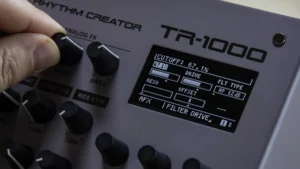
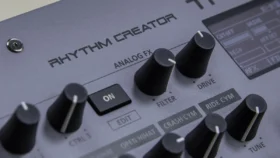
The mix of analogue and digital continues in the TR-1000’s effects section. This includes an analogue state variable filter based on the OTA designs used in Roland classics such as the Jupiter-6. There’s also an analogue drive circuit for adding grit and saturation.

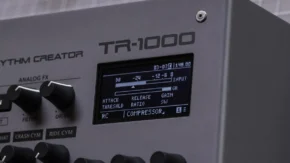
On top of these analogue effects are a comprehensive range of digital processors, including delay, reverbs, modulation effects, a compressor, bitcrushing, a DJ-style looper and the glitchy Scatter effects found on Roland’s Aira drum machines.

The sequencing workflow has its roots in the classic button sequences of Roland’s X0X boxes, with all the refinements found on the more recent TR drum machines including parameter automation, rolls and ratchets, and a comprehensive song mode.

The TR-1000 expands on these capabilities further still with so-called ‘next gen’ features that facilitate off-the-grid sequencing as well as options to set step probabilities and adjust the length of individual loop cycles.

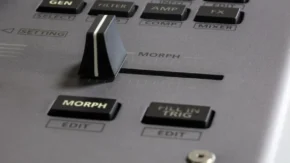
There’s also a new crossfader-controlled Morph control, which allows users to fluidly move between multiple parameter configurations. A Snapshot function can be used to quickly recall saved parameter settings.

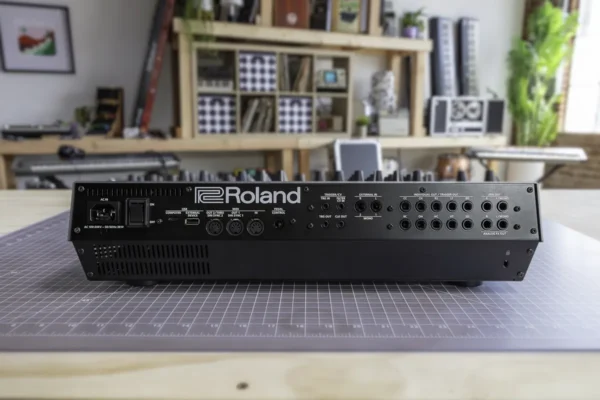
The TR-1000 hardware – which comes in an angular silver and black chassis – is well stocked with connectivity options. There are individual audio/trigger TRS outputs for each of its ten drum channels, plus a master stereo pair of TRS outputs and a secondary pair of analogue effects outputs.

There is a pair of TRS audio inputs, plus trigger and filter CV inputs and mini-jack trigger and clock outputs. These are joined by MIDI in, out and thru ports, plus a pair of USB connections for hooking the drum machine up to a computer and external MIDI device.

The final element of the TR-1000’s setup is its desktop companion app, which allows users to edit the sound engine from an onscreen interface and acts as a librarian for presets and samples.

Here’s an example of the TR-1000 in action with Egyptian Lover:

The TR-1000 certainly looks like a comprehensive and capable machine, and one that’s clearly aimed at being the centrepiece of your studio workflow. The TR-1000 has a price of $2,699.99

The TR-1000 is available to order now. Visit Roland website for more details.


Audient ORIA Mini Room Correction System “Fix Your Room & Fix Your Mix”


British audio specialists Audient have partnered with Sonarworks to announce the release of Oria Mini.

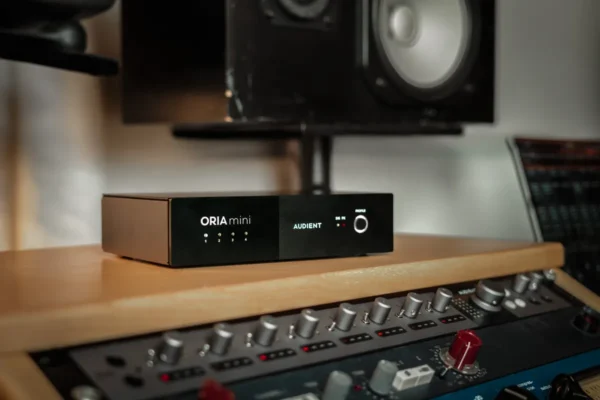
A room correction system housed in a dedicated hardware device that sits between your interface and speakers, Oria Mini is designed to take the hassle out of acoustic calibration and “make any speakers sound better”.

Oria Mini is powered by Sonarworks SoundID Reference technology, which measures and corrects the acoustic imperfections of any space, whether that’s a home studio or a professional control room.

Corrective processing that would usually be introduced via the computer is applied directly via Oria Mini’s onboard DSP, ensuring accurate monitoring without hogging CPU power or introducing latency to your set-up. Users can create up to four unique calibration profiles, save these on the hardware and switch between them with ease.

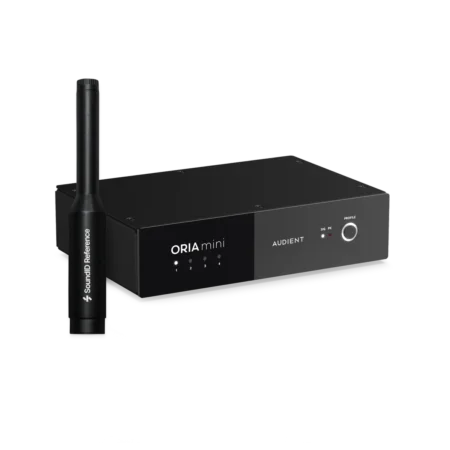
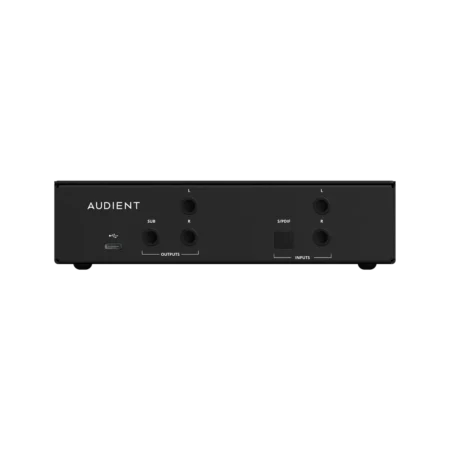
The USB bus-powered Oria Mini features 32-bit converters and delivers 127dB dynamic range, and is compatible with any audio interface and speaker system up to 2.1. Connectivity is provided by TRS analogue and S/PDIF digital inputs and a TRS output, along with a dedicated subwoofer output.

Though Oria Mini is designed to work with Sonarworks software, you can purchase it without a Sonarworks license and use it with software from other providers, such as Smaart and RoomEQ Wizard. Manual calibration is also available with controls for EQ, trim, delay and bass management.

Audient describes Oria Mini as a “set-and-forget” device that can be set up and calibrated in under 20 minutes. “We understand whilst room correction has such a positive impact on your ability to achieve great mixes it is also complicated,” says Audient’s Andrew Allen.

“It is for that reason that Oria Mini is designed to be a set-and-forget box – offering consistent, reliable performance with ultra-low latency, doing its job quietly in the background with zero fuss. No crashes, no CPU strain – just high resolution, consistently accurate monitoring whether you’re mixing in your DAW or simply streaming music via Spotify.”

Features:

  • Room Correction System
  • Powered by Sonarworks SoundiD Reference*
  • Supports up to 2.1 Speaker Setups
  • Ultra low-latency Monitoring
  • Advanced 32-bit AD/DA Converter Technology
  • Create and Store 4 Custom Calibration Profiles
  • Switch between Profiles via Hardware
  • Onboard Room Calibration Processing
    • EQ, Delay, Trim & Bass Management
  • 1 x Stereo Input (TRS)
  • 1 x Digital Input (S/PDIF)
  • 1 x Stereo Speaker Output (TRS)
  • 1 x Subwoofer Output (TRS)
  • 24 bit / 96kHz
  • USB 3.0 / USB Type-C
  • USB Bus Powered
  • Includes Sonarworks Measurement Mic
  • MacOS and Windows Compatible
  • Remote Control
    • iOS iPad Remote
    • Stream Deck Support

Oria Mini is available for purchase with a bundled SoundID Reference license and measurement microphone for £379/€439/$449. The hardware can be purchased standalone without a Sonarworks license for £249/€299/$299, and existing SoundID users can purchase an add-on bundle for £335/€398/$398.

Find out more via Audient website.