Focusrite x Klevgrand Launch First Joint VST Plug-in: Altitude Harmony


Today Focusrite and partner Klevgrand launched Altitude Harmony, their first joint VST-plugin: Instant harmonies and pitch correction in two simple moves that demands little from the user leaving astonishing results, a lighter and more easily navigated spin on the full product released earlier this year.

Two links from the same signal chain. Focusrite has spent decades perfecting the preamp, the converter, the interface that sits on your desk. Meanwhile, Klevgrand has crafted world-class software instruments and effects with focus on design and creativity, a unique less-is-more-workflow and a high-quality signature sound.

The two companies have worked together for many years now, but Altitude Harmony marks a new milestone in the partnership as this marks the first time the collaboration takes the form of a joint product.

“We knew we had a lot in common – and we loved working together – but now we have the chance to create something great for our customers: Altitude Harmony. The result is something simple that creates that instant smile and moment of joy that we’re all looking for when making music. That’s what this partnership is really all about” -Tim Dingley, Managing Director, Focusrite

“We have loved working with the Focusrite team since day one and when we got the chance to to bring the Altitude concept to a a much wider audience with Focusrite it was kind of a no-brainer” Tobias Engström, CEO, Klevgrand

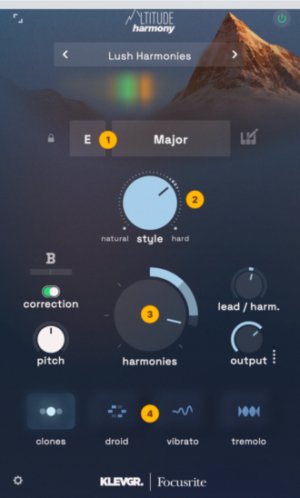
Altitude Harmony: Instant harmonies, always in tune. Altitude Harmony tunes the user’s vocal and stacks harmonies around it in just two simple moves. Under the hood, an advanced pitch engine decides which notes fit the song, so you can stay focused on the performance. Four one-button character effects sit alongside them, so you can reach a finished take without losing the flow of the session.

Altitude Harmony Key features:

  • Harmonies from a single control: One dial sets how many harmonies/voices you get and whether they sit above or below the lead. The musical decisions happen underneath, in the chosen scale.
  • Pitch correction with character intact. The Style dial moves pitch correction from transparent to fully locked. Formants stay corrected throughout, so the voice keeps its character wherever you set it.
  • Four characters, one button each. Droid, Clones, Vibrato and Tremolo sit under the main controls. There’s nothing to configure: press one and the vocal arrives somewhere new, already usable.
  • Your key, your notes. Set the key from the scale strip, or pick your own notes.
  • Built for tracking and stage. Low-latency and vocal register settings live in the settings panel.

Normally priced at $49.99, Altitude Harmony is available now at an intro price of $29.99. It runs as VST3, AU, AAX on macOS / Windows. For more information on the collaboration and the product, visit the Altitude Harmony product page on the Klevgrand website.
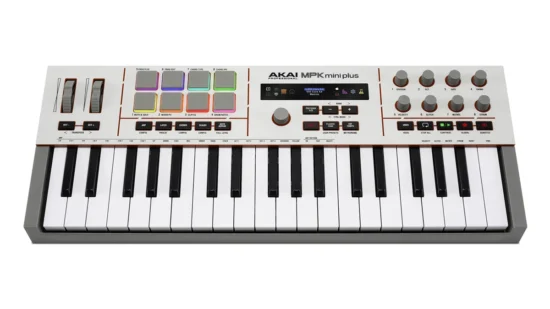
Akai Launches MPK Mini Plus II


Released in 2022, the MPK Mini Plus is a plus-sized version of the MPK Mini, a budget MIDI keyboard that delivers a respectable amount of functionality in a compact and affordable package. With more keys, more control and more connectivity than its 25-key sibling, it’s since become a rival to established controllers like the Arturia KeyStep.

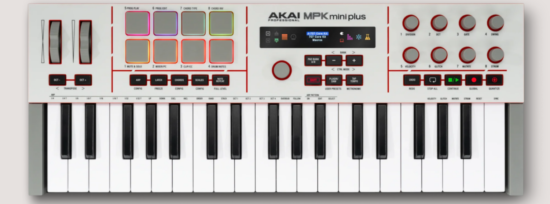
Today, Akai Professional has announced the second generation of MPK Mini Plus, bringing an improved keybed, aftertouch-enabled RGB pads, a full-colour display and generative sequencing tools to this $169 MIDI/CV controller, while adding direct integration with Akai’s MPC software.

Akai MPK Mini Plus 11 combines an upgraded 37-key mini keybed that the company says delivers superior playability and response, while adding polyphonic aftertouch to its already velocity-sensitive RGB pads. The keys and pads are joined by 8 assignable encoders, transport controls and pitch and mod wheels.

The controller’s sequencing tools have also been expanded: you get a refreshed arpeggiator, Scale and Chord Modes for staying in key and building chord progressions, and an array of new generative functions for transforming melodies, rhythms and chords, including Glitch, Mutate, Strum, Freeze and Follow tools.

Here is a video overview of MPK Mini Plus II:

Alongside out-of-the-box integration with most of the major DAWs, MPK Mini Plus II has been built to integrate directly with Akai’s MPC Standalone and MPC Desktop software, making it quick and easy to control other Akai hardware without the hassle of manual mapping.

Direct MPC Standalone and MPC Desktop integration brings deeper MPC control to the keyboard, while USB-C, five-pin MIDI, and CV/Gate connectivity allow MPK Mini Plus II to move easily between software instruments, hardware synthesizers, and modular setups.

The controller ships with a generous collection of bundled software: the Studio Instrument Collection features over 1000 sounds from AIR Music Technology, Moog and Akai, and you also get a special edition of Native Instruments’ Komplete Select, along with the free MPC Beats DAW.

“MPK Mini has introduced a lot of creators to hands-on making music, and MPK Mini Plus II is built for the creator who’s ready for the next step,” Akai Professional’s Andy Mac said in a press release.

“Tools like Glitch, Mutate, and Strum help turn simple ideas in new directions, while deeper MPC, DAW, MIDI, and CV integration gives creators room to build a much bigger setup around one compact keyboard.”

KEY FEATURES:

PERFORMANCE & PLAYABILITY

  • Upgraded 37-key mini keybed with three-octave range
  • 8 velocity- and pressure-sensitive RGB-backlit MPC pads with dual-bank control
  • Dedicated pitch bend and modulation wheels
  • 8 assignable 360° knobs and a 360° push encoder
  • 160 × 80 full-color LCD display with direct parameter feedback

CREATIVE TOOLS & WORKFLOW

  • Expanded Arpeggiator, Chord Creator, and Note Repeat modes with custom arpeggiator patterns
  • Glitch, Mutate, Strum, Freeze, and Follow creative tools
  • User Progressions and advanced Chord workflows
  • Direct integration with MPC Standalone and MPC Desktop
  • Deep scripted DAW integration with real-time display feedback

CONNECTIVITY

  • USB-C for power and MIDI in/out
  • Full-size 5-pin MIDI out
  • 3 × 1/8″ (3.5 mm) TS CV/Gate outputs
  • 1/4″ (6.35 mm) TS sustain pedal input

SOFTWARE & CONTENT

  • Studio Instrument Collection: more than 1,000 sounds from AIR Music Technology, Moog Music, and Akai Professional
  • Native Instruments Komplete Select (Akai Edition)
  • MPC Beats


Akai MPK Mini Plus II is available now and priced at $169. Find out more on Akai website.

Yamaha Expands CK Series Lineup With CK76 Stage Keyboard & OS 2.0 Firmware Update


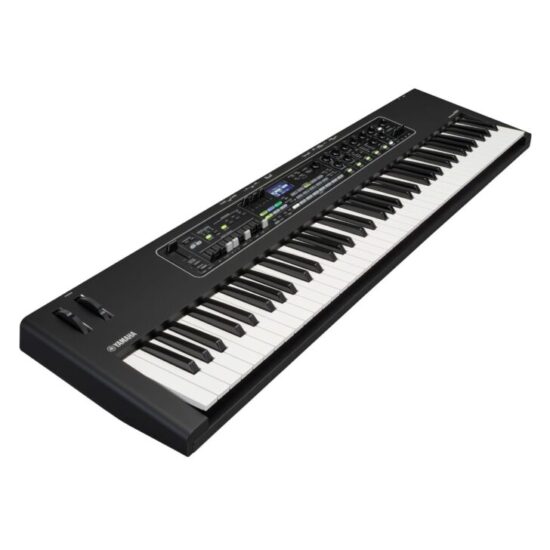
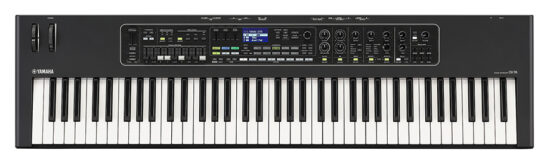
Three years on from the launch of its CK Series of stage keyboards, Yamaha has unveiled a 76-key CK76, positioned between the 61-key CK61 and the 88-key CK88, and shared a 2.0 OS update for all CK owners.

A compact, lightweight and battery-powered keyboard with built-in stereo speakers and Bluetooth connectivity, the CK76 is geared towards players looking for a balance between the portability of the CK61 and the full-size piano-style experience of the CK88.

The CK76 combines with over 360 sounds, including acoustic and electric pianos, organs, strings, brass, guitar and modern synthesizer sounds in a streamlined instrument built for performance and creativity.

Its “one-to-one” interface design limits menu-diving by providing hands-on controls for the most commonly used features: 9 physical drawbars for its vintage organ emulations, filter and envelope controls for the synth, and dedicated controls for drive, delay, reverb and EQ, alongside two additional effects slots.

The keyboard features the same semi-weighted Future System Basic (FSB) action that you will find on the CK61, but Yamaha says the CK76 offers heavier initial key resistance and increased key travel for more expression and stability. In contrast with the CK88’s Graded Hammer Standard (GHS) action, which mimics the feel of a Yamaha grand piano, the CK76’s FSB action is more suited to synth and organ players.

Yamaha includes plenty of connectivity to the CK76, its audio outputs joined by 5-pin MIDI In and Out, dual foot pedal inputs, Bluetooth audio and a built-in stereo USB audio interface for hooking up to microphones or external instruments or recording to your computer.

Alongside the CK76, Yamaha has also shared CK OS V2.0, a firmware update for owners of any keyboard in the CK Series. This adds three new electronic piano sounds, 16 new Live Sets and extra configurations for splitting and layering multiple sounds across the keyboard.

“Designed for musicians on the go, the portable 76-key CK76 stage keyboard brings together realistic acoustic pianos, vintage organs and modern synths from our CP and YC lines into a streamlined, highly intuitive interface,” said Nate Tschetter, senior manager, product marketing for synth, at Yamaha. “From the rehearsal room to the stage, the CK76 delivers the sounds, control and portability musicians need to create, perform and play anywhere.”


Yamaha CK76 is priced at $1,249.99. Find out more on Yamaha website.